

Table of contents
- Latest SAVGE Fire Pit Legal and Safety Developments
- What Is a SAVGE Fire Pit?
- What Fuel Do SAVGE Fire Pits Use?
- What Is the SAVGE Tornado Tabletop Firepit?
- What Is the SAVGE Halo Tabletop Firepit?
- Why Can Alcohol-Burning Tabletop Fire Pits Be Dangerous?
- What Is Flame Jetting?
- How Can a Pool Fire Develop?
- Why Refilling May Be Especially Important
- Why Burn Time May Affect Accident Analysis
- Why Glass Components May Matter
- Why the Extinguisher May Matter
- Other Alcohol Fire Pit Recalls and Warnings
- Why the Colsen Recall Is Relevant but Different
- What Injuries Can Tabletop Fire Pit Accidents Cause?
- How May a SAVGE Fire Pit Accident Occur?
- Who May Be Affected?
- Who May Be Liable?
- What Is the Current SAVGE Fire Pit Lawsuit Status?
- Do I Qualify?
- What Evidence Should I Preserve?
- Why Product Identification Matters
- Do I Have a SAVGE Fire Pit Lawsuit?
- Important Legal Actions or Recalls
- Potential Compensation
- Legal Process Overview
- Frequently Asked Questions About SAVGE Fire Pits
- References
Federal regulators have warned that certain open-container alcohol fire pits can cause flame jetting and uncontrolled pool fires capable of producing catastrophic burns. Those CPSC actions involve other brands or the broader product category unless specifically stated otherwise.
Consumers affected by a SAVGE fire-pit incident should preserve the fire pit, burner, glass inserts, fuel bottle, extinguisher, instructions, order records, photographs, and medical documentation when safe to do so.
Quick Facts
- SAVGE is specifically listed among tabletop fire pit brands being reviewed in a nationwide burn-injury investigation.
- SAVGE currently markets Tornado and Halo tabletop fire pits that burn alcohol-based fuels.
- The manufacturer recommends 91–99% isopropyl alcohol and lists 71% isopropyl alcohol and bioethanol gel as alternatives.
- Potential claims may depend on refilling, fuel containment, flame visibility, warnings, injuries, damages, and preserved evidence.
Table Of Contents
- Latest SAVGE Fire Pit Legal and Safety Developments
- What Is a SAVGE Fire Pit?
- What Fuel Do SAVGE Fire Pits Use?
- What Is the SAVGE Tornado Tabletop Firepit?
- What Is the SAVGE Halo Tabletop Firepit?
- Why Can Alcohol-Burning Tabletop Fire Pits Be Dangerous?
- What Is Flame Jetting?
- How Can a Pool Fire Develop?
- Why Refilling May Be Especially Important
- Why Burn Time May Affect Accident Analysis
- Why Glass Components May Matter
- Why the Extinguisher May Matter
- Other Alcohol Fire Pit Recalls and Warnings
- Why the Colsen Recall Is Relevant but Different
- What Injuries Can Tabletop Fire Pit Accidents Cause?
- How May a SAVGE Fire Pit Accident Occur?
- Who May Be Affected?
- Who May Be Liable?
- What Is the Current SAVGE Fire Pit Lawsuit Status?
- Do I Qualify?
- What Evidence Should I Preserve?
- Why Product Identification Matters
- Do I Have a SAVGE Fire Pit Lawsuit?
- Important Legal Actions or Recalls
- Potential Compensation
- Legal Process Overview
- Frequently Asked Questions About SAVGE Fire Pits
- Do I Have a SAVGE Fire Pit Lawsuit?
- What Evidence May Support a SAVGE Fire Pit Lawsuit?
- What Fuel Does SAVGE Recommend?
- What Is the SAVGE Tornado Firepit?
- What Is the SAVGE Halo Firepit?
- What Is Flame Jetting?
- Have Similar Alcohol Fire Pits Been Recalled?
- What Should I Do After a SAVGE Fire Pit Accident?
- References
Latest SAVGE Fire Pit Legal and Safety Developments
July 2026
- July 16, 2026 – CPSC warned consumers to immediately stop using Houswise Tabletop Fire Pits because pooled or spilled alcohol can create uncontrolled pool fires and refilling can cause flame jetting. CPSC reported more than two dozen incidents and seven injuries, including third-degree burns; this warning involves Houswise products rather than SAVGE [1]
April 2026
- April 29, 2026 – Attorneys investigating tabletop fire pit burn injuries reported that they were reviewing products from numerous manufacturers and specifically listed SAVGE among the brands under investigation. The investigation does not establish that a SAVGE product is defective or that a manufacturer, seller, or retailer is legally liable [2]
December 2024
- December 19, 2024 – CPSC warned consumers against certain alcohol or other liquid-burning fire pits that require fuel to be poured into an open container and ignited where it pools. CPSC reported two deaths and at least 60 injuries involving hazardous products in this category since 2019 [3]
What Is a SAVGE Fire Pit?
SAVGE sells portable tabletop fire pits designed to create a decorative open flame for indoor or outdoor gatherings.
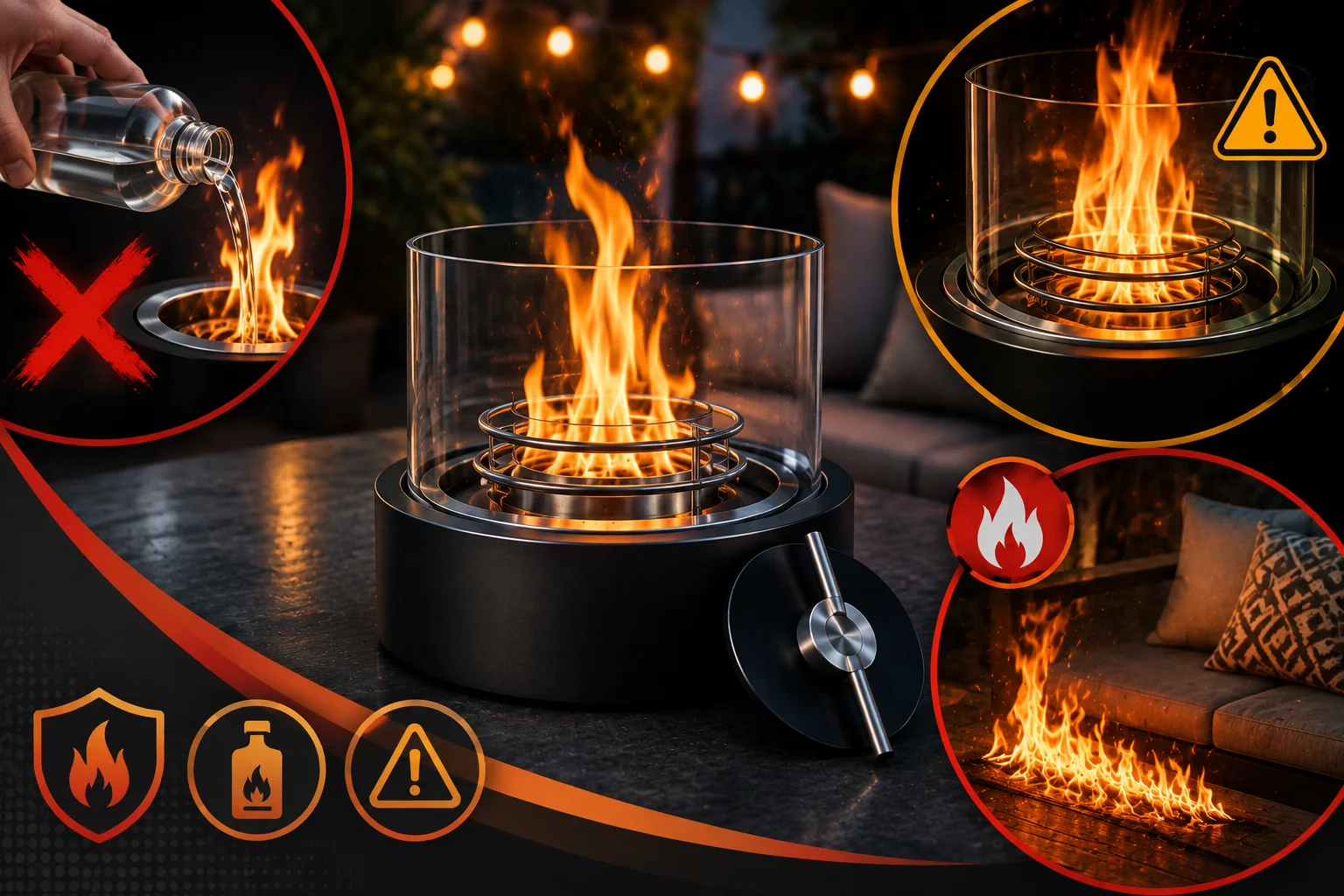
The manufacturer’s current shop lists the SAVGE Tornado Tabletop Firepit and SAVGE Halo Tabletop Firepit. SAVGE says the products use a fire-pit base, two stainless-steel burn chambers, glass inserts, and an extinguisher [4]
SAVGE instructs consumers to add fuel to the center area of the burn chamber, avoid overfilling, insert the glass pieces, ignite the fuel vapor, and use the extinguisher lid to put out the flame.
What Fuel Do SAVGE Fire Pits Use?
SAVGE currently recommends 91–99% isopropyl alcohol. Its website also lists 71% isopropyl alcohol and bioethanol gel as alternative fuels.
That product-specific fuel information is important because CPSC’s broader fire-pit warnings focus on certain products that burn pooled alcohol or similar liquid fuel.
The actual fuel used in an incident should still be confirmed from the bottle, concentration, purchase records, product instructions, and physical evidence.
What Is the SAVGE Tornado Tabletop Firepit?
SAVGE describes the Tornado as a modern tabletop fire pit with a cylindrical glass chamber designed to create a rotating or tornado-like flame.
The manufacturer identifies bioethanol as a fuel and advertises a burn time of approximately 45 to 60 minutes [5]
Because the Tornado uses liquid alcohol fuel around an open flame, investigators may consider fuel volume, burner condition, glass placement, extinguishing procedure, and whether refilling occurred.
What Is the SAVGE Halo Tabletop Firepit?
SAVGE also sells the Halo, another glass-enclosed tabletop product designed to create a tall moving flame.
The Halo product page describes bioethanol fuel and advertises more than 90 minutes of burn time under the manufacturer’s stated conditions.
Different SAVGE models may have different burn durations and configurations, so the physical product and order record should control product identification after an accident.
Why Can Alcohol-Burning Tabletop Fire Pits Be Dangerous?
Alcohol fuels can burn with flames that are difficult to see under some lighting conditions. A consumer may mistakenly believe the fire is completely extinguished while a small flame remains near the burner.
If liquid fuel spills, leaks, splashes, or overflows, it may continue burning after leaving the intended combustion area.
CPSC has identified flame jetting and uncontrolled pool fires as especially serious hazards associated with certain open-container alcohol fire pits.
What Is Flame Jetting?
Flame jetting can occur when fresh liquid fuel is poured toward a burner while a flame remains present.
Ignition can travel toward vapor or fuel near the container and suddenly project flame or burning liquid toward the person refilling the product or nearby bystanders.
Whether a SAVGE accident involved flame jetting must be determined from the specific burner, fuel, refilling sequence, witness evidence, and resulting burn patterns.
How Can a Pool Fire Develop?
An uncontrolled pool fire can develop when burning alcohol escapes the burner and spreads across another surface.
Fuel may travel across a table, counter, floor, rug, clothing, cushions, furniture, or other combustible material while continuing to burn.
Glass inserts and a metal burn chamber do not necessarily contain liquid fuel after it has spilled outside the intended reservoir.
Why Refilling May Be Especially Important
SAVGE’s operation instructions tell consumers to fill the burn chamber and avoid overfilling before ignition.
After a serious accident, investigators may examine whether additional fuel was added after the product had already been used, whether a visible or faint flame remained, and whether the burner had cooled.
The fuel container should be preserved because its opening, cap, nozzle, concentration, and remaining contents may help reconstruct the event.
Why Burn Time May Affect Accident Analysis
SAVGE advertises approximately 45–60 minutes of burn time for the Tornado and more than 90 minutes for the Halo.
Advertised burn duration can affect a consumer’s expectations about when fuel will run out and whether refilling might occur during a gathering.
Burn time does not establish a product defect, but the duration of use, amount of fuel added, and timing of any refill may be relevant evidence.
Why Glass Components May Matter
SAVGE uses glass elements around the flame area to create its visual effect.
Glass positioned near an active alcohol burner may become hot during operation. It also does not eliminate hazards involving fuel that spills beneath or beyond the flame enclosure.
After an accident, preserve the original glass inserts, mounting points, burner chamber, base, and any heat or fire damage whenever safe to do so.
Why the Extinguisher May Matter
SAVGE includes an extinguisher that is placed over the chamber to put out the flame.
Investigators may consider whether the extinguisher was used, whether the flame appeared completely out afterward, how long the product cooled, and whether additional fuel was later introduced.
The accessory and the original operating instructions should be preserved with the fire pit after a serious incident.
Other Alcohol Fire Pit Recalls and Warnings
CPSC has taken action involving other alcohol-burning tabletop fire pits after severe burn incidents. Those products provide regulatory context but should not be treated as SAVGE-specific incidents.
In October 2024, CPSC recalled about 89,500 Colsen fire pits after receiving 31 reports of flame jetting or flames escaping the containers. Nineteen burn injuries were reported, including third-degree burns and incidents involving surgery, loss of function, or permanent disfigurement [6]
The July 2026 Houswise warning likewise involved uncontrolled pool fires and flame jetting. Neither action establishes that SAVGE products share every design characteristic or alleged defect involved in those products.
Why the Colsen Recall Is Relevant but Different
Colsen’s recalled products burned liquid alcohol in concrete containers and were associated with documented flame-jetting and spreading-fire incidents.
SAVGE also sells alcohol-fueled tabletop products, making fuel handling, flame visibility, and refilling mechanisms relevant to a broader safety analysis.
However, Colsen incidents are not SAVGE incidents. Differences in burner construction, glass components, fuel capacity, instructions, and extinguishing systems may materially affect causation.
What Injuries Can Tabletop Fire Pit Accidents Cause?
Alcohol-fire accidents can cause thermal burns when flame or burning liquid contacts skin, clothing, or nearby property.
Serious burn injuries may require emergency care, hospitalization, burn-center treatment, surgery, skin grafting, rehabilitation, and scar treatment.
The severity and cause of a particular SAVGE-related injury should be established through medical records and incident evidence rather than inferred from another product’s recall.
How May a SAVGE Fire Pit Accident Occur?
A potential incident may involve refilling near a remaining flame, spilled alcohol, overfilling, a hot burner, direct flame contact, instability, or ignition of nearby combustible material.
The actual mechanism should be reconstructed from the SAVGE product, fuel container, instructions, photographs, videos, witness accounts, and fire or burn patterns.
Who May Be Affected?
Potentially affected people include consumers injured while filling, lighting, using, refilling, extinguishing, moving, or sitting near a SAVGE tabletop fire pit.
The injured person does not need to own or operate the product. Guests, children, relatives, roommates, and other bystanders may also be exposed when flame or burning fuel moves outside the burner.
Property owners may experience additional losses involving furniture, floors, patios, rugs, clothing, electronics, or nearby structures.
Who May Be Liable?
Potentially responsible parties may include a manufacturer, importer, distributor, retailer, marketplace seller, component supplier, fuel supplier, or another entity involved in placing the product into commerce.
Potential claims may involve defective design, manufacturing defects, inadequate warnings or instructions, negligence, breach of warranty, or other theories available under applicable law.
The attorney investigation and CPSC actions involving other brands do not establish liability for SAVGE. Product identification, alleged defect, warnings, causation, injuries, damages, and governing law must be evaluated individually.
What Is the Current SAVGE Fire Pit Lawsuit Status?
An April 2026 attorney-investigation page specifically lists SAVGE among tabletop fire pit brands being reviewed for burn-injury claims.
An attorney investigation is not a court judgment, certified class action, settlement, CPSC recall, or finding that a SAVGE fire pit is defective.
Any individual claim still requires evidence identifying the product, fuel system, accident mechanism, alleged defect, injuries, and damages.
Do I Qualify?
- Were you or a loved one seriously burned while using or sitting near a SAVGE tabletop fire pit?
- Did the incident involve alcohol refueling, spilled fuel, a remaining flame, hot components, flame jetting, or spreading fire?
- Did you require emergency treatment, hospitalization, surgery, skin grafting, burn-center care, or other significant medical treatment?
- Do you have the SAVGE fire pit, fuel container, extinguisher, packaging, order records, photographs, or medical documentation?
An individualized legal review can determine whether product identification, accident mechanism, causation, damages, available evidence, potential defendants, and filing deadlines support a claim.
What Evidence Should I Preserve?
Preserve the SAVGE fire pit, stainless-steel burn chambers, glass inserts, extinguisher, fuel bottle, packaging, instructions, labels, and damaged components whenever safe to do so.
Save online order records, receipts, product screenshots, seller information, photographs, videos, fire reports, medical records, witness information, and property-damage documentation.
Why Product Identification Matters
SAVGE currently sells more than one tabletop fire-pit design, including the Tornado and Halo.
Photographs, purchase records, product color, glass configuration, burner design, packaging, and the physical fire pit can help identify the exact model involved.
Model-specific identification is important because burn time, construction, and other design details can differ.
Do I Have a SAVGE Fire Pit Lawsuit?
If you or a loved one suffered serious burns involving a SAVGE tabletop fire pit, you may have legal options. Contact Schmidt & Clark for a free case review.
Important Legal Actions or Recalls
| Event | Month/Year | Type | Status | Source | Notes |
|---|---|---|---|---|---|
| Houswise fire pit warning | July 2026 | Consumer safety warning | Immediate stop-use | CPSC | Comparable alcohol products |
| SAVGE claims investigation | April 2026 | Attorney investigation | Claims under review | Top Class Actions | SAVGE specifically listed |
| Liquid-fire-pit alert | December 2024 | Consumer safety alert | Category-wide warning | CPSC | Two deaths reported |
| Colsen fire pit recall | October 2024 | Consumer product recall | Disposal remedy | CPSC | 19 burn injuries |
Potential Compensation
Potential compensation may include emergency treatment, hospitalization, burn-center care, surgery, skin grafting, medication, rehabilitation, scar treatment, and future medical expenses supported by an individual case.
Additional damages may include lost wages, reduced earning capacity, pain and suffering, permanent scarring, disfigurement, property damage, and other losses available under applicable law.
Compensation amounts vary by case. Past results do not guarantee future outcomes.
Legal Process Overview
Free case review: The initial review may address the SAVGE model, fuel used, purchase source, accident sequence, injuries, property damage, and available evidence.
Investigation. Attorneys may examine the fire pit, burn chambers, glass inserts, extinguisher, fuel container, instructions, purchase records, photographs, medical evidence, and witness accounts.
Filing. A lawsuit may be filed when available evidence and governing law support one or more claims. Filing deadlines vary by jurisdiction.
Discovery/negotiation: The parties may exchange product-design information, warning materials, testing records, seller records, medical evidence, expert opinions, photographs, and testimony while discussing possible resolution.
Resolution: A case may conclude through settlement, dismissal, court ruling, or trial. No outcome or timeline can be guaranteed.
Frequently Asked Questions About SAVGE Fire Pits
Do I Have a SAVGE Fire Pit Lawsuit?
A potential claim may warrant review if a SAVGE tabletop fire pit was involved in a documented burn or spreading-fire accident. Eligibility depends on product identification, causation, damages, available evidence, and applicable law.
What Evidence May Support a SAVGE Fire Pit Lawsuit?
Evidence may include the fire pit, burn chamber, glass inserts, fuel bottle, extinguisher, packaging, instructions, order records, photographs, medical documentation, and witness statements. Preserving the original fuel container may also help establish the fuel used.
What Fuel Does SAVGE Recommend?
SAVGE recommends 91–99% isopropyl alcohol. Its website also lists 71% isopropyl alcohol and bioethanol gel as alternative fuels.
What Is the SAVGE Tornado Firepit?
The Tornado is a tabletop model with a cylindrical glass chamber designed to create a rotating flame effect. SAVGE advertises approximately 45–60 minutes of burn time.
What Is the SAVGE Halo Firepit?
The Halo is another glass-based SAVGE tabletop fire pit fueled by bioethanol. SAVGE advertises more than 90 minutes of burn time under its stated conditions.
What Is Flame Jetting?
Flame jetting can occur when liquid fuel is poured while a flame remains in or near the burner. Ignition may travel toward the fuel container and project flame or burning liquid toward users or bystanders.
Have Similar Alcohol Fire Pits Been Recalled?
Yes. CPSC recalled about 89,500 Colsen fire pits after 31 reports involving flame jetting or escaping flames resulted in 19 burn injuries. Those incidents involved Colsen products and should not be attributed to SAVGE.
What Should I Do After a SAVGE Fire Pit Accident?
Seek appropriate medical treatment and preserve the product when safe to do so. Photograph the fire pit, fuel container, injuries, surrounding damage, packaging, and purchase information.
References
- https://www.cpsc.gov/Warnings/2026/CPSC-Warns-Consumers-to-Stop-Using-Houswise-Tabletop-Fire-Pits-Immediately-Due-to-Risk-of-Serious-Burn-Injury-or-Death-from-Flame-Jetting-and-Fire-Hazards
- https://topclassactions.com/lawsuit-settlements/lawsuit-news/tabletop-fire-pit-burn-injury-lawsuit/
- https://www.cpsc.gov/Warnings/2025/Consumer-Alert-Stop-Using-Alcohol-or-Other-Liquid-Burning-Fire-Pits-That-Violate-Voluntary-Standards-and-Present-Flame-Jetting-and-Fire-Hazards-Two-Deaths-and-Dozens-of-Serious-Burn-Injuries-Reported
- https://savgehome.com/shop
- https://savgehome.com/products/tornado-tabletop-firepit
- https://www.cpsc.gov/Recalls/2025/Colsen-Recalls-Fire-Pits-Due-to-Risk-of-Serious-Burn-Injury-from-Flame-Jetting-and-Fire-Spreading-Hazards