

Table of contents
- Latest Jalapeño Pepper Lawsuit Updates
- October 2, 2026: CDC Declares the Outbreak Over
- August 20, 2026: FDA Creates a Major Product Recalls Page
- August 19, 2026: CDC Raises the Outbreak Count to 431
- August 12, 2026: Whole Foods Market and Dairyland Produce Recall Jalapeño Products
- August 11, 2026: Salata Dressings Recalls Jalapeno Avocado Dressing
- August 9, 2026: Taylor Fresh Foods Recalls Products with Jalapeños
- August 8, 2026: NatureBest Recalls Products Containing Jalapeños
- August 5, 2026: Coast Citrus Agrees to Recall Remaining Jalapeños
- August 4, 2026: Kristen Behne Sues Chipotle in Minnesota
- July 28, 2026: QDOBA Stops Using Jalapeños
- July 22, 2026: Coast Citrus Begins a Limited Recall
- July 20, 2026: Chipotle Begins Switching Jalapeño Suppliers
- What Is Salmonella?
- Who May Be Affected?
- Reported Injuries or Damages
- Recall and Regulatory Background
- Evidence to Preserve
- Filing Deadlines
- Potential Compensation
- Frequently Asked Questions
- Can I File a Jalapeño Pepper Lawsuit Against Chipotle or QDOBA?
- What Does the Research Say About the Jalapeño Outbreak?
- What Are the Symptoms of Salmonella Infection?
- How Long Does Salmonella Illness Last?
- Has Chipotle Been Linked to Outbreaks Before?
- Does a Jalapeño Recall Mean I Can Sue?
- References
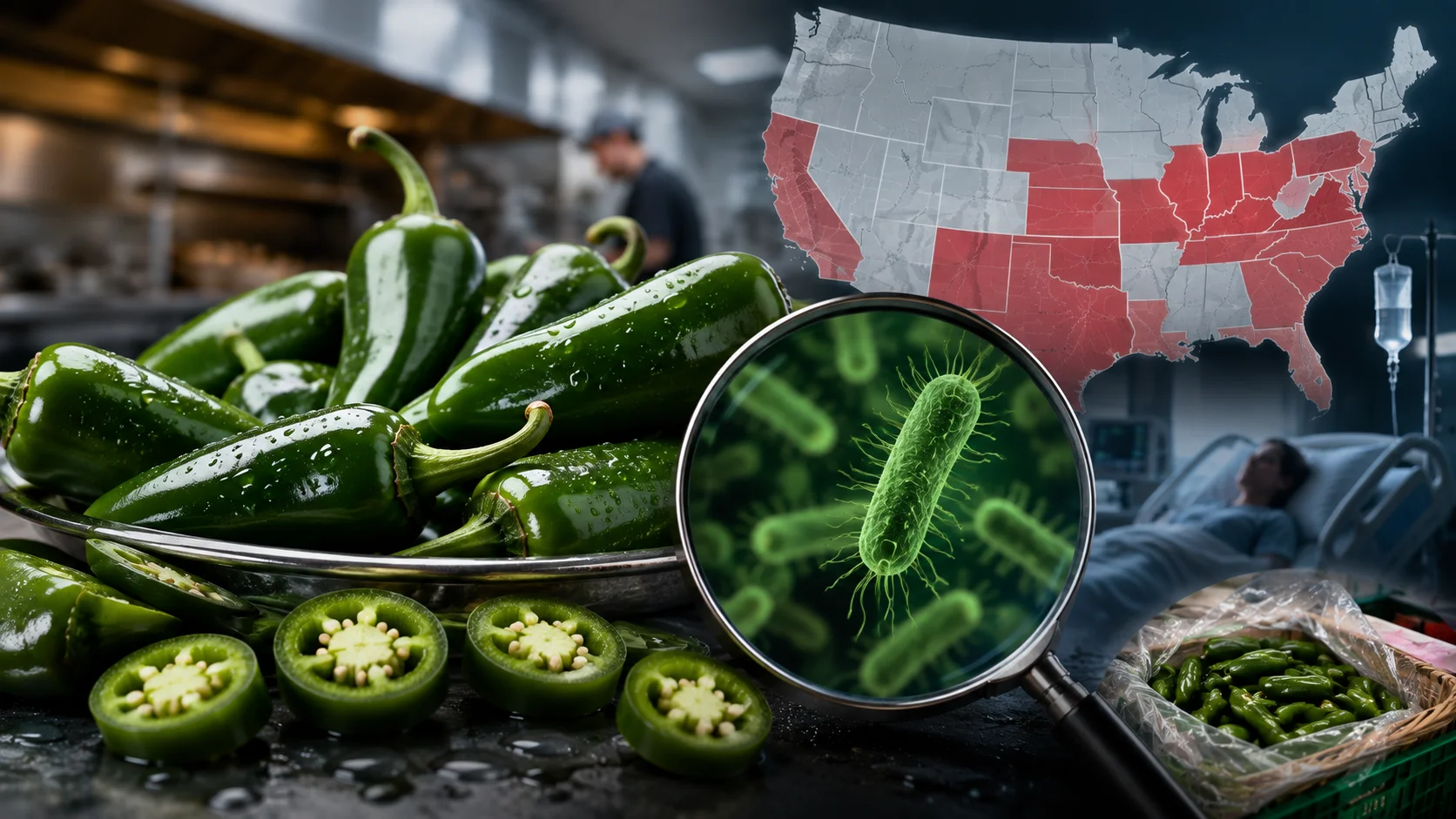
Jalapeño peppers from Sinaloa, Mexico, sent out by Coast Citrus Distributors, were linked to a Salmonella Javiana outbreak. The outbreak sickened 488 people in 34 states, and 65 were hospitalized. Illnesses began in June 2026.
Kristen Behne sued Chipotle in Minnesota. She alleges Salmonella infection, sepsis and a hospital stay after a burrito bowl eaten in June. The case is a filed lawsuit, and no MDL has been formed.
The CDC declared the outbreak over on October 2, 2026. Coast Citrus and several food companies recalled products made with the peppers, including Whole Foods, Taylor Fresh Foods and NatureBest.
Lawsuit at a glance
- Case or litigation name: Kristen Behne v. Chipotle (individual lawsuit, U.S. District Court in Minnesota)
- Defendants: Chipotle
- Court and docket number, when available: U.S. District Court in Minnesota; docket number not stated in news reports
- MDL number, judge, and case count, when an MDL exists: No MDL
- Filing date: August 4, 2026
- Main allegations: Alleged negligence in handling produce; the plaintiff alleges Chipotle served Salmonella-contaminated jalapeños that caused infection, sepsis and hospitalization
- Products or people involved: Jalapeños from Sinaloa, Mexico distributed by Coast Citrus Distributors; 488 people ill in 34 states, 65 hospitalized, zero deaths
Latest Jalapeño Pepper Lawsuit Updates
October 2, 2026: CDC Declares the Outbreak Over
On October 2, 2026, the CDC declared the outbreak over, and the FDA closed its investigation [1]. The final count was 488 illnesses in 34 states, 65 hospitalizations and zero deaths. Illnesses started between June 16, 2026 and August 26, 2026. The final totals replace the interim counts the FDA published in August.August 20, 2026: FDA Creates a Major Product Recalls Page
On August 20, 2026, the FDA Major Product Recalls page was created for the outbreak [2]. It lists recalls by companies that made or repackaged products with jalapeños recalled by Coast Citrus Distributors. Coast Citrus distributed the Sinaloa jalapeño peppers to distributors, restaurants and food service companies, including Chipotle and QDOBA, before downstream companies recalled products made with them.August 19, 2026: CDC Raises the Outbreak Count to 431
On August 19, 2026, the CDC raised the outbreak count to 431 illnesses in 32 states, with 57 hospitalizations and no deaths reported. Illness onsets ran from June 19, 2026 to August 2, 2026. Of 224 people interviewed, 203 (91%) reported eating at a Mexican-style restaurant. The FDA reported these CDC figures, and the final count replaced them later.August 12, 2026: Whole Foods Market and Dairyland Produce Recall Jalapeño Products
On August 12, 2026, Whole Foods Market recalled select salsas, guacamole, pico de gallo and prepared foods containing jalapeños sourced from Coast Citrus Distributors. Dairyland Produce LLC also recalled 5-pound jalapeño pepper packs on the same day, and the FDA Major Product Recalls page lists both recalls.August 11, 2026: Salata Dressings Recalls Jalapeno Avocado Dressing
On August 11, 2026, Salata Dressings recalled its Jalapeno Avocado Dressing because of the recalled jalapeños. The FDA’s Major Product Recalls page lists the dressing recall.August 9, 2026: Taylor Fresh Foods Recalls Products with Jalapeños
On August 9, 2026, Taylor Fresh Foods recalled multiple products containing recalled jalapeños, sold under Trader Joe’s, Freshness Guaranteed and other brands. The FDA said stores that received them included Hannaford, Kroger, Stop and Shop, Target, Trader Joe’s, Walmart and Whole Foods.August 8, 2026: NatureBest Recalls Products Containing Jalapeños
On August 8, 2026, NatureBest Precut & Produce LLC recalled NatureBest and HEB products with recalled jalapeños. They include pico de gallo, stuffed mushrooms and soup mix. It came after Coast Citrus widened its recall. The FDA lists the recall among those tied to the Salmonella Javiana outbreak.August 5, 2026: Coast Citrus Agrees to Recall Remaining Jalapeños
On August 5, 2026, Coast Citrus Distributors agreed to recall the remaining jalapeños imported from Sinaloa, Mexico and implicated in the outbreak. It had started a limited recall earlier. The FDA said it did not consider Chipotle or QDOBA a current ongoing risk because both had removed the product.August 4, 2026: Kristen Behne Sues Chipotle in Minnesota
On August 4, 2026, Kristen Behne sued Chipotle in the U.S. District Court in Minnesota, KSTP reported [3]. She alleges negligence and says she contracted Salmonella from a burrito bowl eaten on June 24, 2026. She seeks $75,000 in damages. Chipotle is the only defendant. No multidistrict litigation has been formed. These are allegations in a complaint and are not court findings.July 28, 2026: QDOBA Stops Using Jalapeños
On July 28, 2026, QDOBA stopped using jalapeños at its restaurants. The FDA later said all QDOBA restaurants were no longer serving jalapeños. The FDA names QDOBA and Chipotle Mexican Grill in its interviews with ill people.July 22, 2026: Coast Citrus Begins a Limited Recall
On July 22, 2026, Coast Citrus Distributors initiated a limited recall of jalapeño peppers packaged in bulk generic Coast Tropical packaging. The FDA announced the action. The peppers were linked to the outbreak.July 20, 2026: Chipotle Begins Switching Jalapeño Suppliers
On July 20, 2026, Chipotle began switching jalapeño suppliers for affected restaurants. The FDA later said Chipotle was no longer serving the affected product. The switch came before any recall began.What Is Salmonella?
According to the FDA, Salmonella are a group of bacteria that can cause gastrointestinal illness and fever called salmonellosis [4]. The FDA says Salmonella can be spread by food handlers who do not wash their hands, and when people eat raw or undercooked foods. Salmonella Javiana is the type tied to the 2026 jalapeño outbreak.Who May Be Affected?
People who ate at a Mexican-style restaurant, including Chipotle Mexican Grill and QDOBA, and then got sick with Salmonella may be affected. Meal dates ranged from June 14, 2026 to July 29, 2026. Others ate products made with recalled Coast Citrus jalapeños. The FDA’s final interviews covered 308 people, and 281 had eaten at a Mexican-style restaurant before their illness. The Behne complaint is one example. It describes a restaurant meal, a matching Salmonella strain and a hospital stay. Individual legal review is needed to say whether you may have a claim, because facts differ for each person.Think you may qualify?
Schmidt & Clark offers a free case review for people who became sick with Salmonella after eating jalapeños in 2026. A review is individual and does not promise eligibility or any result.
Start My Free Case Review
Reported Injuries or Damages
The Behne complaint alleges fainting, a fever of 102 degrees, chills, muscle aches, joint pain, cramping, vomiting and diarrhea. The filing says she was admitted to the hospital on June 28 with sepsis and dehydration. She was discharged two days later and has not made a full recovery, the complaint says. It also says her strain of Salmonella matched the genome traced to Chipotle’s peppers. Chipotle said its “robust ingredient traceability system” let it “proactively” remove jalapeños from the affected lot. The complaint’s claims are allegations, and the company statement is not a court finding.Recall and Regulatory Background
USDA’s FSIS also issued a public health alert for meat and poultry products containing the jalapeños. FDA says the recalled fresh jalapeños are no longer for sale and are past shelf life. Consumers can return recalled products to the place of purchase for a refund. A recall does not establish liability or prove that a product caused any one person’s illness.Evidence to Preserve
Keep these items that show where you ate, when you got sick and what it cost you:- Receipts, card statements or app orders showing the restaurant or store, the date and the items you bought.
- Product packaging or recall labels from anything you bought at a store.
- Photographs of leftover food and packaging, kept with the date you took them.
- Medical records, lab results and stool-test reports that show the diagnosis and any hospital stay.
- Any call or letter from a health department about your illness or the outbreak.
- A symptom diary with dates, plus records of missed work and your medical bills.
- Messages with the restaurant or company about what you ate or how you felt.
Filing Deadlines
State law sets the time limit for filing a Salmonella claim, and that limit depends on where you live and when you got sick and were diagnosed. If you wait too long, a court may refuse to hear a claim even when your records and facts are strong. Speak with a lawyer promptly to learn which deadline applies to you.Potential Compensation
If a claim succeeds, damages in a Salmonella case may cover medical bills, lost income, and pain and suffering from the illness. The Behne complaint asks for damages for medical bills and for physical, mental and emotional suffering. The $75,000 sought is a demand and not an award. Compensation amounts vary by case. Past results do not guarantee future outcomes. Your own medical records and diagnosis can affect potential compensation in your case.Frequently Asked Questions
Can I File a Jalapeño Pepper Lawsuit Against Chipotle or QDOBA?
Whether you can file a jalapeño pepper lawsuit against Chipotle or QDOBA depends on proof tying your illness to a meal there. A lab-confirmed diagnosis, the dates you ate and got sick, and proof of purchase all matter.What Does the Research Say About the Jalapeño Outbreak?
The research on the jalapeño outbreak comes from the FDA’s investigation. Its environmental samples at a Mexican distributor were negative. The FDA could not determine a route or source of contamination, but it named a common grower as the likely source.What Are the Symptoms of Salmonella Infection?
The symptoms of Salmonella infection include diarrhea, fever and abdominal cramps. More severe cases may include a high fever, aches, headaches, lethargy, a rash, and blood in the urine or stool. People should consult a healthcare provider if they suspect Salmonella.How Long Does Salmonella Illness Last?
Salmonella illness symptoms usually last four to seven days, the FDA says. Illness usually starts within 12 to 72 hours after eating contaminated food. Children younger than five, the elderly and people with weakened immune systems are more likely to have severe infections.Has Chipotle Been Linked to Outbreaks Before?
Chipotle has been linked to outbreaks before. KSTP reported that it paid a record-setting $25 million fine in 2020 after a string of outbreaks from 2015 through 2018. The Behne filing claims Chipotle had not learned its lesson, which is an allegation.Does a Jalapeño Recall Mean I Can Sue?
A jalapeño recall does not by itself mean you can sue. A recall shows a product was pulled. It does not show that the product caused your illness or that a company is liable. Reports of illness are not proof of cause in every case.References
- https://www.fda.gov/food/outbreaks-foodborne-illness/outbreak-investigation-salmonella-jalapeno-august-2026
- https://www.fda.gov/safety/major-product-recalls/2026-recalls-food-products-associated-fresh-jalapenos-sinaloa-mexico-and-distributed-coast-citrus
- https://kstp.com/?p=3993088
- https://www.fda.gov/food/foodborne-pathogens/salmonella-salmonellosis