

Table of contents
- Latest LKCTB Fire Pit Legal and Safety Developments
- What Is an LKCTB Fire Pit?
- What Fuel Does an LKCTB Fire Pit Use?
- Why the Fuel Specification Matters
- What General Risks Are Associated With Tabletop Fire Pits?
- How Can Flame Jetting Occur?
- How Can an Uncontrolled Pool Fire Develop?
- Why the Magnesium-Oxide Body May Matter
- Why the Advertised Two-Hour Burn Time May Matter
- Why S’mores Use May Increase Exposure
- Other Tabletop Fire Pit Recalls and Warnings
- What Injuries Can Tabletop Fire Pit Accidents Cause?
- How May an LKCTB Fire Pit Accident Occur?
- Who May Be Affected?
- Who May Be Liable?
- What Is the Current LKCTB Fire Pit Lawsuit Status?
- Do I Qualify?
- What Evidence Should I Preserve?
- Why Purchase and Product Records Matter
- Do I Have an LKCTB Fire Pit Lawsuit?
- Important Legal Actions or Recalls
- Potential Compensation
- Legal Process Overview
- Frequently Asked Questions About LKCTB Fire Pits
- References
LKCTB tabletop fire pits place an open flame and liquid alcohol fuel close to people, clothing, furniture, food, and other combustible materials. Refilling, spilled fuel, faint remaining flames, hot components, fuel-container design, and warning adequacy may become important after an accident.
The CPSC recalls and warnings discussed below involve other brands or the broader liquid-fuel fire-pit category unless specifically stated otherwise. Anyone injured should preserve the LKCTB fire pit, burner, fuel container, packaging, instructions, purchase records, photographs, and medical documentation.
Quick Facts
- LKCTB is specifically listed among tabletop fire pit brands under nationwide attorney investigation for burn-injury claims.
- Available product information describes an LKCTB fire pit measuring about 15 by 4 by 4 inches with a magnesium-oxide body.
- The cited LKCTB product uses 70% or 91% or higher isopropyl alcohol and includes a stainless-steel burner.
- Potential claims may depend on refilling, fuel spillover, flame visibility, warnings, injuries, damages, and preserved evidence.
Table Of Contents
- Latest LKCTB Fire Pit Legal and Safety Developments
- What Is an LKCTB Fire Pit?
- What Fuel Does an LKCTB Fire Pit Use?
- Why the Fuel Specification Matters
- What General Risks Are Associated With Tabletop Fire Pits?
- How Can Flame Jetting Occur?
- How Can an Uncontrolled Pool Fire Develop?
- Why the Magnesium-Oxide Body May Matter
- Why the Advertised Two-Hour Burn Time May Matter
- Why S’mores Use May Increase Exposure
- Other Tabletop Fire Pit Recalls and Warnings
- What Injuries Can Tabletop Fire Pit Accidents Cause?
- How May an LKCTB Fire Pit Accident Occur?
- Who May Be Affected?
- Who May Be Liable?
- What Is the Current LKCTB Fire Pit Lawsuit Status?
- Do I Qualify?
- What Evidence Should I Preserve?
- Why Purchase and Product Records Matter
- Do I Have an LKCTB Fire Pit Lawsuit?
- Important Legal Actions or Recalls
- Potential Compensation
- Legal Process Overview
- Frequently Asked Questions About LKCTB Fire Pits
- Do I Have an LKCTB Fire Pit Lawsuit?
- What Evidence May Support an LKCTB Fire Pit Lawsuit?
- Is LKCTB Part of a Tabletop Fire Pit Injury Investigation?
- What Fuel Does the LKCTB Fire Pit Use?
- How Long Is the LKCTB Fire Pit Advertised to Burn?
- What Is Flame Jetting?
- Have Other Tabletop Fire Pits Been Recalled?
- What Should I Do After an LKCTB Fire Pit Accident?
- References
Latest LKCTB Fire Pit Legal and Safety Developments
July 2026
- July 16, 2026 – CPSC warned consumers to immediately stop using Houswise Tabletop Fire Pits because pooled or spilled alcohol can create uncontrolled pool fires and refilling can cause flame jetting. CPSC reported more than two dozen incidents and seven injuries, including third-degree burns; the warning concerns Houswise rather than LKCTB [1]
May 2026
- May 2026 – Attorneys investigating tabletop fire pit burn injuries reported that they were actively reviewing individual claims nationwide and specifically listed LKCTB among the brands under investigation. The investigation does not establish that an LKCTB fire pit is defective or that a manufacturer, seller, or marketplace is legally liable [2]
- May 7, 2026 – CPSC issued an immediate stop-use warning for Northlight Bio Ethanol Portable Tabletop Fireplaces because pooled alcohol and refilling could cause uncontrolled fires and flame jetting. This warning concerns Northlight products and provides comparator safety context rather than an LKCTB-specific regulatory finding [3]
December 2024
- December 19, 2024 – CPSC warned consumers against certain alcohol or other liquid-burning fire pits that require fuel to be poured into an open container and ignited where it pools. CPSC reported two deaths and at least 60 injuries involving hazardous products in this category since 2019 [4]
What Is an LKCTB Fire Pit?
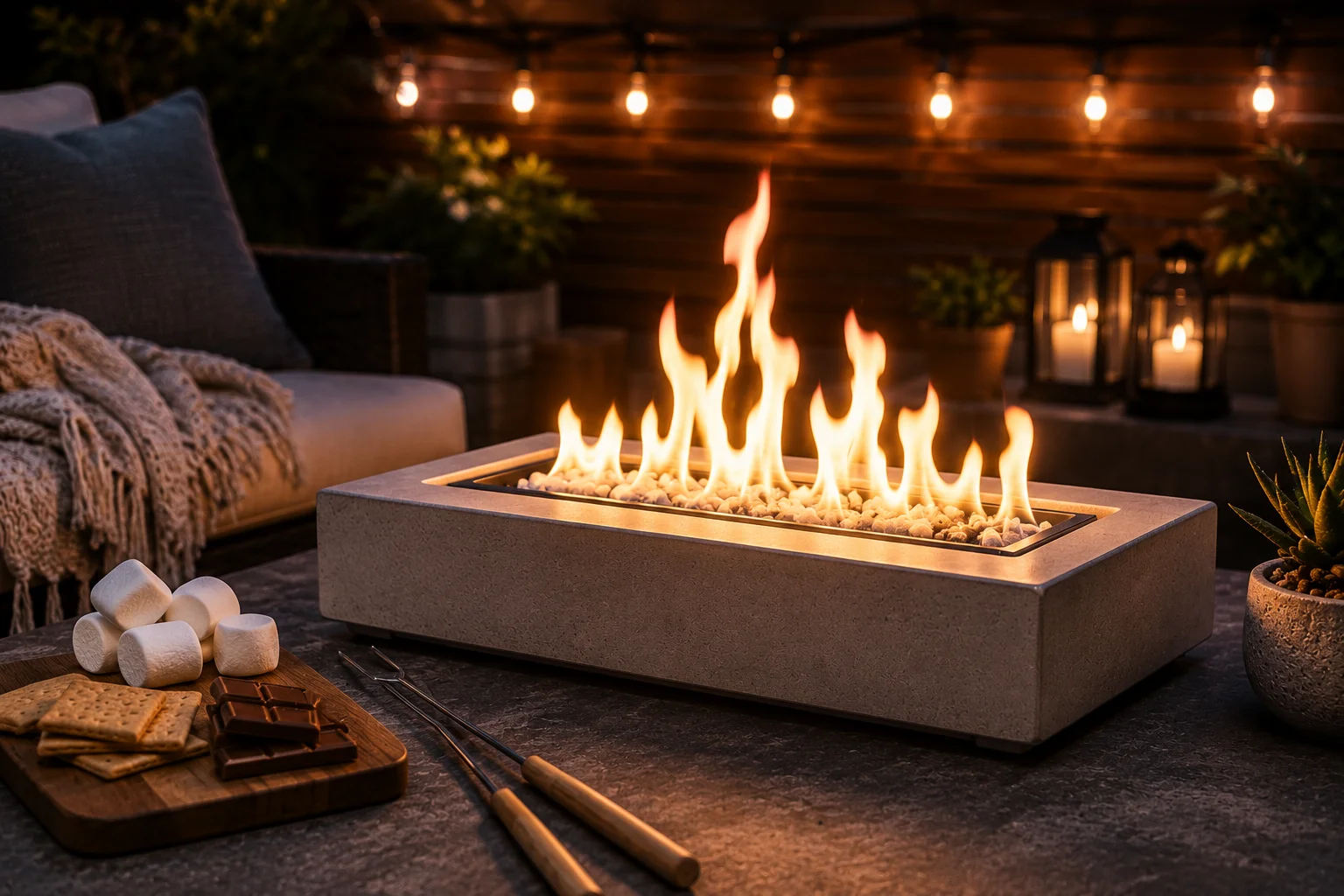
LKCTB has sold compact tabletop fireplaces intended for indoor and outdoor decorative use, including patios, balconies, coffee tables, and social gatherings.
Available product information describes an LKCTB tabletop fire pit made from high-temperature-resistant magnesium oxide and measuring approximately 15 inches long, 4 inches wide, and 4 inches high [5]
The product listing also describes a stainless-steel burner, burning cotton, fire-extinguishing components, and four extendable roasting sticks intended for s’mores or similar tabletop use.
What Fuel Does an LKCTB Fire Pit Use?
The cited LKCTB product information states that the fire pit requires 70% or 91% or higher isopropyl alcohol as fuel.
The listing advertises up to approximately two hours of flame time with sufficient fuel. The actual burn duration in an incident may depend on fill level, fuel concentration, airflow, burner condition, and other circumstances.
Because the product uses flammable liquid alcohol, the original fuel bottle, concentration, cap or nozzle design, instructions, and remaining contents may be important after an accident.
Why the Fuel Specification Matters
The LKCTB-specific fuel information creates a direct connection between this product and the broader liquid-alcohol fire-pit hazards identified by CPSC.
CPSC warns that applicable open-container fire pits burning isopropyl alcohol, ethanol, bioethanol, or similar liquid fuels can produce uncontrolled pool fires when fuel spills or burns outside the intended reservoir.
That does not prove an LKCTB fire pit is defective, but it makes the actual burner, fuel handling, refilling instructions, and incident sequence particularly important to investigate.
What General Risks Are Associated With Tabletop Fire Pits?
Tabletop fireplaces place real flame and combustible fuel close to people and surrounding materials. A product may sit within reach of sleeves, napkins, tablecloths, food, decorations, cushions, furniture, children, or guests.
Potential accident mechanisms include direct flame contact, fuel spillover, unexpectedly high flames, hot components, ignition of nearby materials, instability, and refilling before a burner has completely extinguished and cooled.
For products using poured liquid alcohol, CPSC has repeatedly emphasized flame jetting and uncontrolled pool fires as serious hazards.
Those same hazards have led to recalls involving alcohol-burning tabletop fire pits.
How Can Flame Jetting Occur?
Flame jetting can occur when fresh liquid fuel is poured while a small flame remains inside or near the burner. Alcohol flames can be faint and difficult to see under some lighting conditions.
The remaining flame may ignite vapor inside or around the fuel container and cause burning fuel or flame to travel back toward the person pouring it and nearby bystanders.
For an LKCTB incident, investigators may examine whether refilling was occurring, whether residual flame remained, which isopropyl-alcohol concentration was used, and how the fuel container was positioned.
How Can an Uncontrolled Pool Fire Develop?
A pool fire can occur when liquid alcohol spills, leaks, or overflows outside the intended burner and continues burning across another surface.
Burning alcohol may travel across a tabletop, counter, rug, floor, clothing, furniture, napkins, cushions, or other combustible materials.
A substantial magnesium-oxide body does not necessarily contain fuel once liquid escapes the stainless-steel burner area.
Why the Magnesium-Oxide Body May Matter
Available product information describes the LKCTB fire pit as being made from high-temperature-resistant magnesium oxide. That material may contribute to heat resistance and physical stability.
It does not eliminate risks associated with the liquid fuel itself, the stainless-steel burner, open flame, or nearby combustible materials.
After an accident, investigators may inspect the exterior body, burner, insulation, burning cotton, base, extinguishing components, and any soot, discoloration, cracking, or spill patterns.
Why the Advertised Two-Hour Burn Time May Matter
The cited LKCTB listing advertises up to approximately two hours of flame time with sufficient fuel.
That representation may affect a consumer’s expectation about whether the fire pit will need to be refilled during a dinner, party, patio gathering, or s’mores activity.
Burn time by itself does not establish a defect. It may nevertheless be relevant when reconstructing the amount of fuel used, how long the unit had been operating, and whether refilling occurred.
Why S’mores Use May Increase Exposure
The LKCTB package includes roasting sticks, encouraging consumers and guests to sit close to the open flame and reach toward the burner.
Children and other bystanders may therefore be positioned close to the fire even if they did not purchase, fuel, or light the product.
Photographs or videos from a gathering may help establish product placement, seating positions, proximity to the fuel bottle, and conditions immediately before an accident.
Other Tabletop Fire Pit Recalls and Warnings
Federal safety actions involving other products illustrate the hazards that have prompted recalls and stop-use warnings. These incidents should not be attributed to LKCTB.
In October 2024, CPSC recalled about 89,500 Colsen fire pits after receiving 31 reports of flame jetting or flames escaping from the concrete containers. Nineteen burn injuries were reported, including serious incidents involving third-degree burns, surgery, loss of function, and permanent disfigurement [6]
CPSC later issued the broader liquid-fuel warning and 2026 stop-use actions involving Northlight and Houswise products. Together, these actions demonstrate why liquid-fuel containment and refilling practices receive regulatory scrutiny.
CPSC later issued stop-use warnings for Northlight liquid-fuel tabletop fireplaces and Houswise liquid-fuel tabletop fireplaces involving similar open-liquid-fuel hazards.
What Injuries Can Tabletop Fire Pit Accidents Cause?
Open-flame and burning-fuel accidents can cause first-, second-, or third-degree burns depending on the intensity and duration of exposure.
Serious burns may require emergency treatment, hospitalization, wound management, surgery, skin grafting, rehabilitation, or other care documented by treating medical professionals.
Injuries reported in the Houswise, Northlight, or Colsen actions should not be described as LKCTB-specific injuries.
How May an LKCTB Fire Pit Accident Occur?
An LKCTB accident may involve spilled isopropyl alcohol, refilling while flame remains, direct contact with fire, hot burner components, instability, or ignition of nearby combustible materials.
The product’s roasting-stick use may create additional proximity to the flame, while its portable design may place it on different tables or surfaces with different stability and clearance conditions.
The actual cause should be reconstructed from the preserved product, fuel bottle, photographs, witness accounts, instructions, and physical burn patterns rather than assumed from another fire-pit incident.
Who May Be Affected?
Potentially affected people include consumers injured while filling, lighting, using, refilling, extinguishing, moving, or sitting near an LKCTB tabletop fire pit.
The injured person does not necessarily need to own or operate the product. Guests, children, relatives, roommates, and other bystanders may also be exposed if flame or burning fuel moves beyond the burner.
Property owners may suffer additional losses if fire damages furniture, flooring, rugs, decks, balconies, clothing, electronics, vehicles, or nearby structures.
Who May Be Liable?
Potentially responsible parties may include a manufacturer, importer, distributor, retailer, marketplace seller, component supplier, fuel supplier, or another entity involved in placing the product into commerce.
Potential legal theories may include defective design, manufacturing defects, inadequate warnings, negligence, breach of warranty, or other claims available under applicable law.
The attorney investigation and CPSC actions involving other brands do not automatically establish liability for LKCTB. Product identity, defect evidence, warnings, causation, injuries, damages, and governing law must be evaluated individually.
What Is the Current LKCTB Fire Pit Lawsuit Status?
LKCTB is specifically named among tabletop fire pit brands being reviewed in a nationwide attorney investigation involving burn-injury claims.
An attorney investigation is not equivalent to a court finding, certified class action, established defect, or determination of liability. Individual claims still require evidence connecting the LKCTB product and accident to the claimed injuries and damages.
The investigation nevertheless provides an LKCTB-specific legal development rather than relying entirely on regulatory actions involving other manufacturers.
Do I Qualify?
- Were you or a loved one seriously burned while using or sitting near an LKCTB tabletop fire pit?
- Did the incident involve refilling, spilled isopropyl alcohol, a faint remaining flame, hot components, or fire spreading beyond the burner?
- Did you require emergency treatment, hospitalization, surgery, skin grafting, or other significant medical care?
- Do you have the fire pit, fuel bottle, packaging, instructions, purchase records, photographs, or medical documentation?
An individualized legal review can determine whether product identification, the accident mechanism, causation, damages, available defendants, and applicable filing deadlines support a potential claim.
What Evidence Should I Preserve?
Preserve the LKCTB fire pit, stainless-steel burner, burning cotton, fuel bottle, extinguishing components, roasting sticks, packaging, instructions, labels, and damaged parts whenever they can be stored safely.
Save Amazon or other marketplace order histories, receipts, shipping records, seller information, screenshots, photographs, videos, and communications concerning the purchase.
Medical records, injury photographs, damaged clothing, fire reports, witness information, and property-damage photographs may also help establish what occurred.
Why Purchase and Product Records Matter
Marketplace product listings can change or disappear after purchase. Current records already indicate that at least one LKCTB fire-pit listing is no longer available through its original source.
Order confirmations, screenshots, packaging, model information, shipping labels, and seller records may therefore be important for establishing exactly what product was purchased.
Preserving those records can also help identify the supplier, marketplace seller, advertised fuel, accessories, instructions, and product specifications involved.
Do I Have an LKCTB Fire Pit Lawsuit?
If you or a loved one suffered serious burns involving an LKCTB tabletop fire pit, you may have legal options. Contact Schmidt & Clark for a free case review.
Important Legal Actions or Recalls
| Event | Month/Year | Type | Status | Source | Notes |
|---|---|---|---|---|---|
| Houswise fire pit warning | July 2026 | Consumer safety warning | Immediate stop-use | CPSC | Comparable liquid-fuel products |
| LKCTB claims investigation | May 2026 | Attorney investigation | Claims under review | Top Class Actions | LKCTB specifically listed |
| Northlight fireplace warning | May 2026 | Consumer safety warning | Immediate stop-use | CPSC | Comparable bioethanol products |
| Liquid-fire-pit alert | December 2024 | Consumer safety alert | Category-wide warning | CPSC | Two deaths reported |
Potential Compensation
Potential compensation may include emergency treatment, hospitalization, burn-center care, surgery, skin grafting, medication, rehabilitation, scar treatment, and future medical expenses.
Additional damages may include lost wages, reduced earning capacity, pain and suffering, permanent scarring, disfigurement, property damage, and other documented losses available under applicable law.
Compensation amounts vary by case. Past results do not guarantee future outcomes.
Legal Process Overview
Free case review: The initial review may address the LKCTB product, seller, fuel used, burner configuration, accident sequence, injuries, property damage, and available evidence.
Investigation. Attorneys may examine the fire pit, burner, fuel container, instructions, purchase records, photographs, medical evidence, property damage, and witness accounts.
Filing. A lawsuit may be filed when available evidence and governing law support one or more claims. Filing deadlines vary by jurisdiction.
Discovery/negotiation: The parties may exchange product records, seller information, warnings, testing materials, medical evidence, photographs, expert opinions, and testimony while discussing possible resolution.
Resolution: A case may conclude through settlement, dismissal, court ruling, or trial. No outcome or timeline can be guaranteed.
Frequently Asked Questions About LKCTB Fire Pits
Do I Have an LKCTB Fire Pit Lawsuit?
A potential claim may warrant review if an LKCTB tabletop fire pit was involved in a documented burn or fire accident. Eligibility depends on product identification, causation, damages, available evidence, and applicable law.
What Evidence May Support an LKCTB Fire Pit Lawsuit?
Evidence may include the fire pit, burner, fuel bottle, burning cotton, packaging, instructions, order records, photographs, medical documentation, and witness statements. The original fuel container may also establish the alcohol concentration used.
Is LKCTB Part of a Tabletop Fire Pit Injury Investigation?
Yes. LKCTB is specifically listed among brands being reviewed in a nationwide tabletop fire pit burn-injury investigation. The investigation does not establish a defect or liability in any particular case.
What Fuel Does the LKCTB Fire Pit Use?
The cited LKCTB product information calls for 70% or 91% or higher isopropyl alcohol. Consumers should preserve the instructions and actual fuel container associated with their product.
How Long Is the LKCTB Fire Pit Advertised to Burn?
The cited product listing advertises up to approximately two hours of burn time with sufficient fuel. Actual operating time may vary with fuel volume, concentration, burner condition, and environmental conditions.
What Is Flame Jetting?
Flame jetting can occur when fresh liquid fuel is poured while a flame remains inside or near the burner. Ignition may travel toward the fuel container and project flame or burning liquid toward consumers or bystanders.
Have Other Tabletop Fire Pits Been Recalled?
Yes. CPSC recalled about 89,500 Colsen fire pits after 31 reports of flame jetting or escaping flames resulted in 19 burn injuries. CPSC has also issued later stop-use warnings involving Houswise and Northlight products.
What Should I Do After an LKCTB Fire Pit Accident?
Seek appropriate medical care and avoid cleaning, testing, refilling, repairing, or discarding the product when safe preservation is possible. Photograph and preserve the fire pit, fuel bottle, purchase information, injuries, and surrounding property damage.
References
- https://www.cpsc.gov/Warnings/2026/CPSC-Warns-Consumers-to-Stop-Using-Houswise-Tabletop-Fire-Pits-Immediately-Due-to-Risk-of-Serious-Burn-Injury-or-Death-from-Flame-Jetting-and-Fire-Hazards
- https://topclassactions.com/lawsuit-settlements/lawsuit-news/tabletop-fire-pit-burn-injury-lawsuit/
- https://www.cpsc.gov/Warnings/2026/CPSC-Warns-Consumers-to-Stop-Using-Northlight-Bio-Ethanol-Portable-Tabletop-Fireplaces-Immediately-Due-to-Risk-of-Serious-Burn-Injury-or-Death-from-Flame-Jetting-and-Fire-Hazards
- https://www.cpsc.gov/Warnings/2025/Consumer-Alert-Stop-Using-Alcohol-or-Other-Liquid-Burning-Fire-Pits-That-Violate-Voluntary-Standards-and-Present-Flame-Jetting-and-Fire-Hazards-Two-Deaths-and-Dozens-of-Serious-Burn-Injuries-Reported
- https://giftpals.com/item/lkctb-table-top-firepit-ethanol-smokeless-mini-fireplace
- https://www.cpsc.gov/Recalls/2025/Colsen-Recalls-Fire-Pits-Due-to-Risk-of-Serious-Burn-Injury-from-Flame-Jetting-and-Fire-Spreading-Hazards