

Table of contents
- Latest Xeljanz Lawsuit Updates
- December 3, 2021: Pfizer Confirms New Boxed Warning for Heart Risk
- September 1, 2021: FDA Requires New Warnings for Xeljanz and Other JAK Inhibitors
- February 4, 2021: FDA Flags Preliminary Trial Results Showing Higher Risk
- July 26, 2019: FDA Approves Boxed Warning for Higher Xeljanz Dose
- What Is Xeljanz?
- Who May Be Affected?
- Reported Injuries or Damages
- Evidence to Preserve
- Filing Deadlines
- Frequently Asked Questions
- Was There a Xeljanz Class Action or MDL?
- Has Pfizer Settled Any Xeljanz Lawsuits?
- What Does the Research Say About Xeljanz and Heart or Cancer Risk?
- Is Xeljanz Still on the Market?
- What Injuries Are Alleged in Xeljanz Lawsuits?
- Is There a Confirmed Filing Date for a Xeljanz Lawsuit?
- References
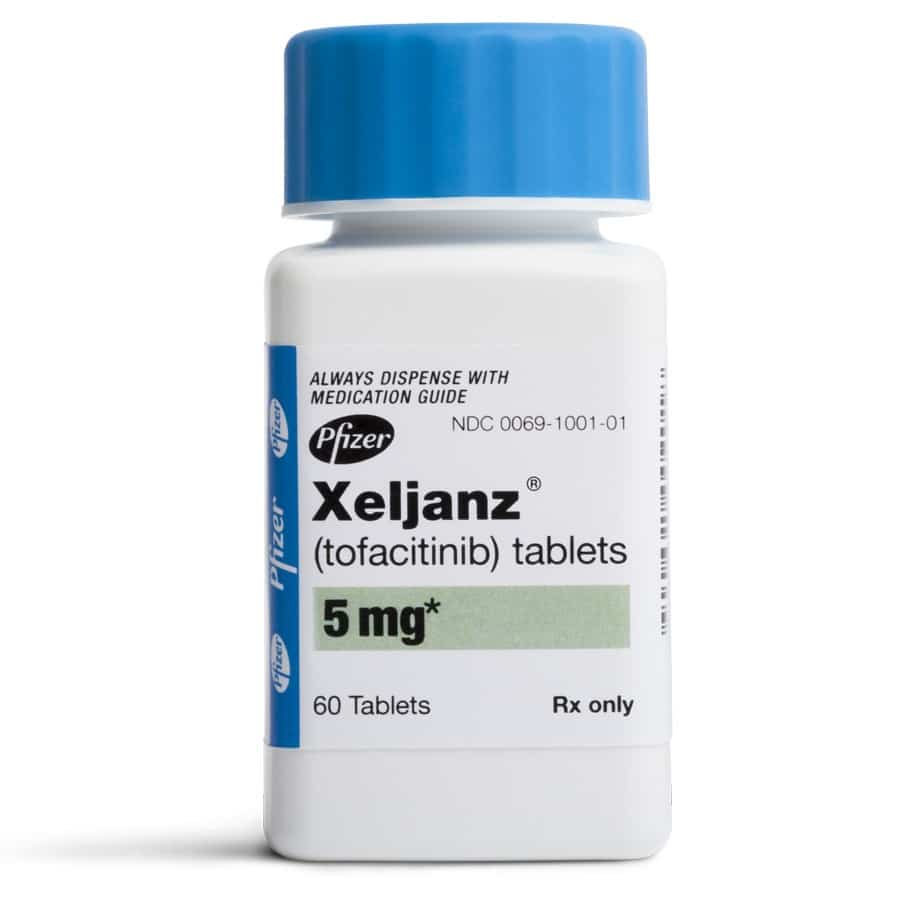
Xeljanz and Xeljanz XR (tofacitinib), made by Pfizer, treat rheumatoid arthritis, psoriatic arthritis and ulcerative colitis. Individual product-liability lawsuits accuse Pfizer of failing to warn. They allege the drug raises the risk of serious heart problems, blood clots and cancer.
The claims point to a Pfizer safety trial that first flagged higher blood-clot and death risk in 2019. The completed 2021 trial confirmed higher rates of heart attack, stroke, cancer and death than older arthritis drugs.
No multidistrict litigation or class action has formed in the United States. The Xeljanz lawsuits on file are moving forward one by one against Pfizer, not as a single combined case.
Lawsuit at a glance
- Case or litigation name: No consolidated MDL or class-action caption; individual product-liability cases only
- Defendants: Pfizer Inc.
- Court and docket number, when available: No consolidated docket identified
- MDL number, judge, and case count, when an MDL exists: No MDL
- Filing date: No filing date confirmed
- Main allegations: Lawsuits allege Pfizer failed to adequately warn patients and doctors that Xeljanz carries an increased risk of major adverse cardiovascular events, blood clots and cancer compared with TNF-blocker medicines
- Products or people involved: XELJANZ, XELJANZ XR and XELJANZ Oral Solution (tofacitinib); patients treated for rheumatoid arthritis, psoriatic arthritis, ulcerative colitis, ankylosing spondylitis or polyarticular course juvenile idiopathic arthritis, particularly those age 50 or older with a cardiovascular risk factor or a smoking history
Latest Xeljanz Lawsuit Updates
December 3, 2021: Pfizer Confirms New Boxed Warning for Heart Risk
Pfizer confirmed the U.S. prescribing information for Xeljanz, Xeljanz XR and Xeljanz Oral Solution was revised with a new boxed warning for major adverse cardiovascular events [1]. This followed the FDA‘s completed safety-trial review. The company also updated its boxed warnings for mortality, malignancies and thrombosis. It also narrowed approved use to patients whose disease had not improved, or who could not take, a TNF-blocker medicine.September 1, 2021: FDA Requires New Warnings for Xeljanz and Other JAK Inhibitors
The FDA required Xeljanz [2], Xeljanz XR, Olumiant and Rinvoq to carry updated boxed-warning language. This came after the agency completed its review of the safety trial. The agency also limited approved use of all three drugs. Approval now covers only patients who had not responded to, or could not tolerate, a TNF-blocker medicine. It called for closer monitoring of cardiovascular and cancer warning signs right away.February 4, 2021: FDA Flags Preliminary Trial Results Showing Higher Risk
The FDA alerted the public to preliminary safety-trial results [3]. The results showed a higher rate of serious heart-related problems and cancer in patients taking Xeljanz. These results compared Xeljanz with an older type of arthritis medicine called a TNF blocker. The FDA said the final results of the trial were not yet available at that point in the review.July 26, 2019: FDA Approves Boxed Warning for Higher Xeljanz Dose
The FDA approved a new boxed warning [4]. Interim trial data had linked the 10 mg twice-daily Xeljanz dose to a higher risk of blood clots and death. The agency also limited the ulcerative colitis use of Xeljanz. It restricted that use to patients who had already failed, or could not tolerate, a TNF blocker. It had first flagged the same blood-clot signal in February 2019.What Is Xeljanz?
According to the FDA-approved prescribing information, Xeljanz, Xeljanz XR and Xeljanz Oral Solution (tofacitinib) are Janus kinase inhibitors [5]. This class of drugs works by decreasing the activity of the immune system. The FDA approved Xeljanz to treat several autoimmune and inflammatory conditions, detailed under Who May Be Affected below. This page covers lawsuits alleging Pfizer failed to warn about its heart, clot and cancer risks.Who May Be Affected?
People prescribed Xeljanz, Xeljanz XR or Xeljanz Oral Solution may be affected. This includes patients treated for rheumatoid arthritis, psoriatic arthritis, ulcerative colitis, ankylosing spondylitis or polyarticular course juvenile idiopathic arthritis. The FDA’s completed ORAL Surveillance trial found a higher rate of heart attack and stroke. This applied to patients 50 or older with a cardiovascular risk factor. The trial also found higher rates of blood clots and cancer in that same group. It also found more lung cancer among smokers, compared with TNF-blocker medicines. The federal list of pending multidistrict litigation maintained by the JPML carries no Xeljanz entry [6]. The cases on file are proceeding individually against Pfizer rather than through one consolidated MDL or class action. Whether a specific claim may qualify depends on an individual legal review. That review covers the person’s prescription and medical records.Think you may qualify?
Schmidt & Clark offers a free, no-obligation review of Xeljanz cases for people who took the medicine and were later diagnosed with a heart attack, stroke, blood clot or cancer. A review does not guarantee that a case qualifies or predict any result.
Start My Free Case Review
Reported Injuries or Damages
Plaintiffs and the FDA’s own trial data describe major adverse cardiovascular events among patients treated with Xeljanz. These events include heart attack, stroke and cardiovascular death. They also describe blood clots such as pulmonary embolism and deep vein thrombosis, plus cancers including lymphoma and lung cancer. The data come from the FDA’s ORAL Surveillance trial (A3921133), a required safety study. It compared two doses of Xeljanz with a TNF-blocker medicine in rheumatoid-arthritis patients, described in the FDA communication cited above. The trial found a hazard ratio of 1.33 (95% CI 0.91-1.94) for major adverse cardiovascular events. This finding came from the same FDA safety-trial review named above. It found a hazard ratio of 1.48 (95% CI 1.04-2.09) for cancers other than non-melanoma skin cancer, in the same review. The upper bound of each confidence interval topped the trial’s prespecified non-inferiority margin of 1.8. The trial also found a higher rate of all-cause mortality.Evidence to Preserve
Preserving records early can strengthen a Xeljanz claim and make it easier for a lawyer to evaluate. Useful evidence includes:- Pharmacy and prescription records showing Xeljanz, Xeljanz XR or Xeljanz Oral Solution was dispensed, the dosage and the dates of use
- Medical records documenting the arthritis or bowel-disease diagnosis being treated
- Records of any later heart attack, stroke, blood clot or cancer diagnosis
- Hospital and treatment records related to that diagnosis, including the dates of care
- Correspondence with the prescribing doctor about Xeljanz and its risks
- Insurance or billing records connected to the injury
Filing Deadlines
Deadlines for filing a Xeljanz claim come from state law, not from Schmidt & Clark or from Pfizer. The specific deadline depends on where the person lives and when the injury, or its link to Xeljanz, became known. Missing that window can end a claim even when the underlying facts are strong. Anyone considering a Xeljanz claim should talk to a lawyer promptly to find out how much time remains.Frequently Asked Questions
Was There a Xeljanz Class Action or MDL?
No, Xeljanz has no consolidated class action or MDL, per the JPML’s pending-MDL list dated March 2, 2026. Individual product-liability lawsuits against Pfizer have been reported, though no case has been independently confirmed to a specific court or docket.Has Pfizer Settled Any Xeljanz Lawsuits?
No, no settlement of a Xeljanz lawsuit has been publicly reported. The company revised the drug’s U.S. prescribing information to add cardiovascular, cancer and blood-clot warnings, but no court has found Pfizer liable in a Xeljanz case.What Does the Research Say About Xeljanz and Heart or Cancer Risk?
The research on Xeljanz shows a higher heart and cancer risk. The FDA’s required trial followed more than 4,300 rheumatoid-arthritis patients. It found hazard ratios of 1.33 for major heart-related events and 1.48 for certain cancers. Both figures were compared with older TNF-blocker medicines.Is Xeljanz Still on the Market?
Yes, Xeljanz is still on the market and available by prescription in the United States. The FDA has not recalled or withdrawn the drug. It required Pfizer to add stronger boxed warnings and narrow approved use instead of pulling it from sale.What Injuries Are Alleged in Xeljanz Lawsuits?
Xeljanz lawsuits allege that Pfizer’s failure to warn caused each plaintiff’s specific injury. The FDA’s population-level trial data do not by themselves prove that claim for any individual case. The suits point to the same cardiovascular, clot and cancer risks the trial identified.Is There a Confirmed Filing Date for a Xeljanz Lawsuit?
No confirmed filing date exists for a Xeljanz lawsuit. Legal-industry sources report individual product-liability cases filed against Pfizer. This page could not independently verify when any specific claim was filed.References
- https://www.pfizer.com/news/press-release/press-release-detail/fda-issues-update-xeljanzr-prescribing-information-united
- https://www.fda.gov/drugs/drug-safety-and-availability/fda-requires-warnings-about-increased-risk-serious-heart-related-events-cancer-blood-clots-and-death
- https://www.fda.gov/safety/medical-product-safety-information/xeljanz-xeljanz-xr-tofacitinib-drug-safety-communication-initial-safety-trial-results-find-increased
- https://www.fda.gov/safety/medwatch-safety-alerts-human-medical-products/xeljanz-xeljanz-xr-tofacitinib-drug-safety-communication-due-increased-risk-blood-clots-and-death
- https://www.accessdata.fda.gov/drugsatfda_docs/label/2026/208246s027lbl.pdf
- https://www.jpml.uscourts.gov/sites/jpml/files/Pending_MDL_Dockets_By_Actions_Pending-March-2-2026.pdf