

Table of contents
- Latest Louisville Attic Stairway Ladder Lawsuit Updates
- September 22, 2026: Class Action Filed in New York
- August 6, 2026: Health Canada Posts a Joint Recall
- August 6, 2026: CPSC Announces the Recall
- Who May Be Affected?
- Reported Injuries or Damages
- Recall and Regulatory Background
- Evidence to Preserve
- Filing Deadlines
- Frequently Asked Questions
- Is There a Louisville Attic Stairway Ladder Class Action Lawsuit?
- Is There a Louisville Attic Ladder Settlement?
- Which Louisville Attic Ladder Models Were Recalled?
- What Rating Did the Complaint Say the Ladders Carried?
- Who Is the Judge on the Louisville Attic Ladder Class Action?
- Were Any Injuries Reported in Canada?
- References
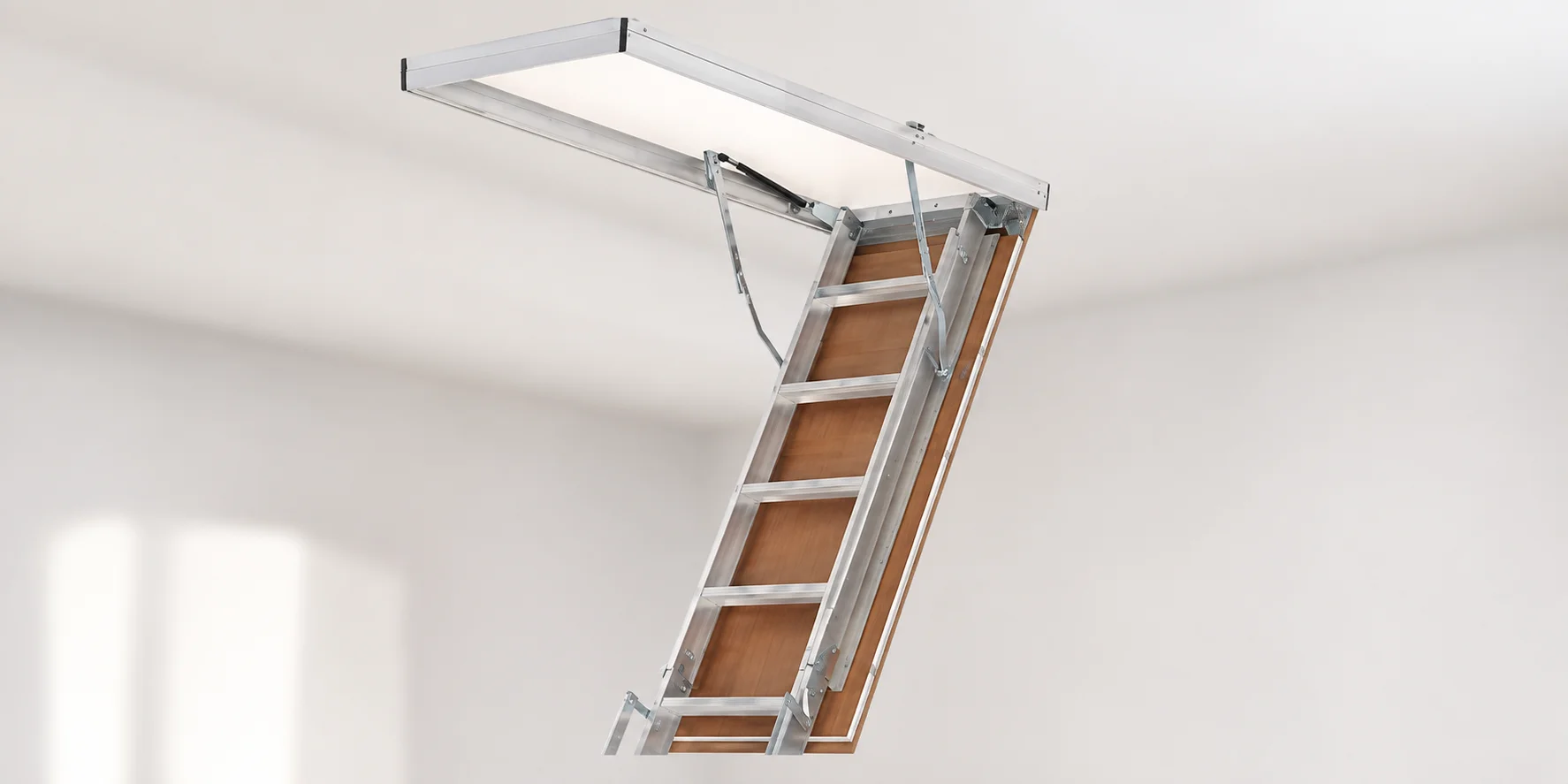
Louisville, Featherlite, Lite and Century attic stairway ladders with gas struts were recalled on August 6, 2026. Their spreader bolts can break during use, which poses a risk of serious injury or death from a fall.
The recall covers about 1.77 million units in the United States. A proposed class action, Pedigo v. Louisville Ladder, Inc., was filed on September 22, 2026 in a New York federal court.
No class has been certified. No MDL has been formed and no settlement exists. Owners should stop using the ladder.
Lawsuit at a glance
- Case or litigation name: Pedigo v. Louisville Ladder, Inc. (proposed class action)
- Defendants: Louisville Ladder, Inc.
- Court and docket number, when available: U.S. District Court, Eastern District of New York, No. 2:26-cv-05873 (docket)
- MDL number, judge, and case count, when an MDL exists: No MDL
- Filing date: September 22, 2026
- Main allegations: Alleged failure to disclose defective 1/4-inch chrome-colored spreader bolts that can break in ordinary use; alleged that the recall repair kit shifts repair work to consumers and offers no refund; claims under New York General Business Law and on behalf of a proposed nationwide class
- Products or people involved: Louisville, Featherlite, Lite and Century attic stairway ladders with gas struts sold from November 2012 through July 2026 for about $170 to $600; proposed class: all persons in the United States who purchased the affected ladders
Latest Louisville Attic Stairway Ladder Lawsuit Updates
September 22, 2026: Class Action Filed in New York
Leon Pedigo filed a proposed class action against Louisville Ladder, Inc. in the Eastern District of New York [1]. The case, Pedigo v. Louisville Ladder, Inc., is No. 2:26-cv-05873. The complaint alleges the company failed to disclose defective spreader bolts. No class has been certified, and no MDL has been formed for these ladders.August 6, 2026: Health Canada Posts a Joint Recall
Health Canada posted a joint recall with the U.S. CPSC and Louisville Ladder Corp. [2]. It covers Louisville and Featherlite attic stairways with gas struts. The notice carries recall number RA-82445. It says 13,054 units were sold in Canada. Affected units were manufactured on or before June 22, 2026.August 6, 2026: CPSC Announces the Recall
The CPSC announced that Louisville Ladder was recalling about 1.77 million attic stairway ladders because the bolts can break in use [3]. Consumers were told to stop using them and register for a free repair kit. The ladders were sold from November 2012 through July 2026 for about $170 to $600. They are aluminum- and wood-frame ladders with handrails.Who May Be Affected?
You may be affected if you own a Louisville, Featherlite, Lite or Century attic stairway ladder with gas struts and 1/4-inch chrome-colored spreader bolts. Match your ladder against these details:- The brand name and model number are printed on the inside of the attic door.
- Models include AA2210, AA2510, AEE2210, AEE3010 and AL2240MG-C.
- Widths are 22.5, 25.5 and 30 inches, and lengths are 54 and 60 inches.
- The ladders fit ceiling heights from 7 feet, 8 inches to 12 feet.
- They were sold at Home Depot, Lowe’s, Do It Best, Orgill, other retailers and on Amazon.
Think you may qualify?
Schmidt & Clark offers a free case review for people hurt by a recalled Louisville, Featherlite, Lite or Century attic stairway ladder. A review does not promise eligibility, a recovery or any other result.
Start My Free Case Review
Reported Injuries or Damages
The company reported receiving 11 reports of incidents in the United States where bolts broke. One incident injured a consumer’s neck, head and back. Reports alone do not prove the ladder caused every incident. The complaint alleges that when the bolts break, the ladder can fail. It alleges a severe fall hazard that could cause serious injury or death. The named plaintiff alleges economic loss and no physical injury. Mayo Clinic first aid guidance says that if you suspect a back or neck injury, you should not move the person. It says permanent paralysis and other serious complications can result [4]. Its head trauma guidance says that concussion symptoms, such as nausea or headaches, should be evaluated by a medical professional [5].Recall and Regulatory Background
The recall remedy is a free repair kit. It holds two replacement 1/4-inch spreader bolts, washers, lock nuts and installation instructions. You can register at Atticstairwayrecall.expertinquiry.com, through the “Urgent Recall Notice” on the Louisville Ladder website, or by calling 1-888-679-5132. Phone hours are 8:00 A.M. to 5:00 P.M. ET, Monday through Friday. You can also email LouisvilleLadders8144@sedgwick.com with questions about the kit. A recall does not by itself establish liability.Evidence to Preserve
Keep anything that shows what ladder you own and what happened to it. Useful items include:- Photographs of the ladder and its model label.
- The broken or replaced bolts and any other parts that came off the ladder.
- Purchase receipts or order confirmations showing where and when you bought the ladder.
- Your repair-kit registration and any correspondence about the kit or the recall.
- Photographs of the scene of any fall, taken as soon as it is safe to do so.
- Medical records and bills for any injury linked to a fall from the ladder.
- Communications with Louisville Ladder or the retailer about the ladder or the recall.
Filing Deadlines
Filing deadlines for injury or loss claims come from state law and depend on where you live and when the injury or loss happened. A ladder fall years ago may face a different limit than a recent one. A missed deadline can end a claim for a ladder owner even when the facts are strong, so talk with a lawyer promptly about your own dates.Frequently Asked Questions
Is There a Louisville Attic Stairway Ladder Class Action Lawsuit?
A proposed class action over Louisville attic stairway ladders has been filed in federal court. The plaintiff, from Ronkonkoma, New York, alleges he bought a ladder at a Home Depot in Commack in early 2026 for about $400. He also seeks a New York Subclass.Is There a Louisville Attic Ladder Settlement?
There is no Louisville attic ladder settlement, and no class has been certified. The recall notices offer only the free repair kit. The complaint alleges the recall fails to offer a refund.Which Louisville Attic Ladder Models Were Recalled?
The recalled Louisville attic ladder models on the Health Canada list number 16, including AA2210F, AA2510F, AEE2510, AL2540LG-R5 and AL3040MG-R10FT. Check the model number inside your attic door against the full Health Canada notice for the rest.What Rating Did the Complaint Say the Ladders Carried?
The complaint says the ladders were marketed with an ANSI “Type IAA” or “Special Duty” rating. That rating is described as a 375-pound load. The complaint treats the rating as part of how the ladders were sold.Who Is the Judge on the Louisville Attic Ladder Class Action?
The judge on the Louisville attic ladder class action is Steven I. Locke, assigned to the case in the Eastern District of New York. The case is Pedigo v. Louisville Ladder, Inc.Were Any Injuries Reported in Canada?
No injuries were reported in Canada in connection with the recalled ladders. As of July 24, 2026, the company had received one incident report and no injury reports there, per Health Canada.References
- https://www.courtlistener.com/docket/74833350/pedigo-v-louisville-ladder-inc/?page=1
- https://recalls-rappels.canada.ca/en/alert-recall/louisville-and-featherlite-brand-attic-stairways-recalled-due-injury-hazard
- https://www.foxbusiness.com/lifestyle/more-than-1-7m-ladders-recalled-nationwide-potentially-deadly-fall-hazard
- https://www.mayoclinic.org/first-aid/first-aid-spinal-injury/basics/art-20056677
- https://www.mayoclinic.org/first-aid/first-aid-head-trauma/basics/art-20056626