
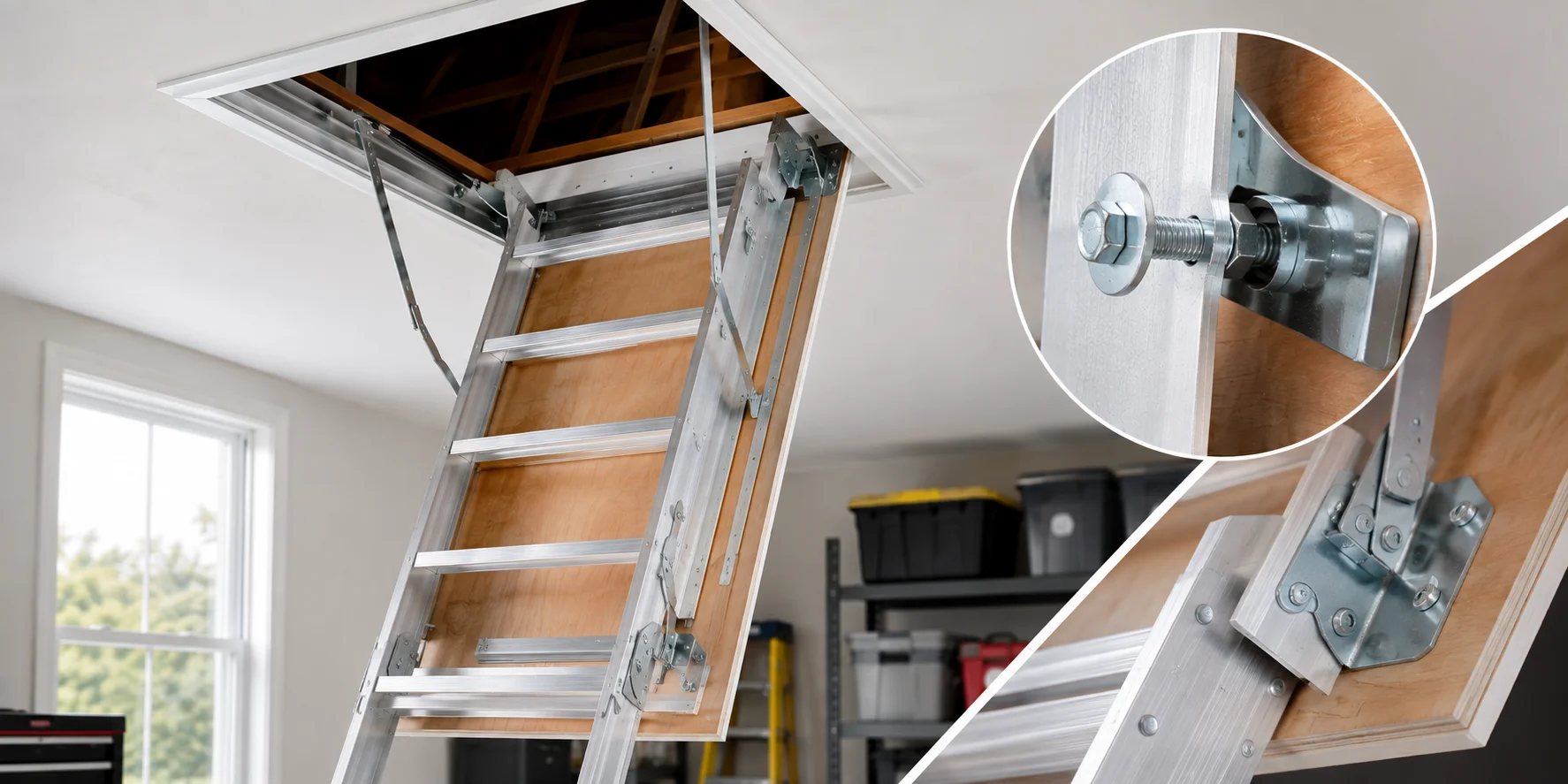

Unlike a portable ladder that may still have its receipt and packaging, an attic stairway can remain installed in a home for years and may pass from one homeowner to another. That makes product identification especially important for Lite & Century owners who did not personally purchase or install the ladder.
Consumers should stop using affected ladders and register for Louisville Ladder’s free repair kit. Anyone injured in a fall should preserve the installed ladder, broken hardware, photographs, medical records, and home-improvement documentation before repairs alter the evidence.
Quick Facts
- Lite & Century attic stairway ladders with gas struts are included in the August 2026 recall.
- The recalled ladders can experience spreader-bolt failure while a person is climbing them.
- Louisville Ladder received 11 U.S. bolt-failure reports, including one reported injury.
- The remedy is a free kit containing replacement spreader bolts, washers, lock nuts, and instructions.
Table Of Contents
- Latest Lite & Century Attic Stairway Ladder Recall Developments
- What Are Lite & Century Attic Stairway Ladders?
- Why This Recall May Be Easy to Miss in Older Homes
- What Part of the Ladder Can Fail?
- How Can a Bolt Failure Lead to a Serious Fall?
- What Injuries Were Reported?
- How Can Homeowners Identify an Affected Ladder?
- Where Were the Recalled Ladders Sold?
- What Should Consumers Do Now?
- Why Evidence Preservation Matters After a Fall
- Who May Be Affected?
- Who May Be Liable?
- Do I Qualify?
- Do I Have a Lite & Century Attic Stairway Ladder Lawsuit?
- Important Legal Actions or Recalls
- Potential Compensation
- Legal Process Overview
- Frequently Asked Questions About the Lite & Century Attic Ladder Recall
- Do I Have a Lite & Century Attic Stairway Ladder Lawsuit?
- What Evidence May Support a Lite & Century Attic Stairway Ladder Lawsuit?
- Why Were Lite & Century Attic Ladders Recalled?
- How Do I Know Whether an Older Installed Ladder Is Affected?
- How Many Incidents Were Reported?
- Was the Reported Injury Specifically a Lite & Century Ladder?
- What Does the Free Repair Kit Include?
- What If the Ladder Was Installed Before I Bought My House?
- References
Latest Lite & Century Attic Stairway Ladder Recall Developments
August 2026
- August 6, 2026 – CPSC announced a recall covering approximately 1.77 million Louisville, Featherlite, Lite & Century attic stairway ladders equipped with gas struts. The agency warned that bolts can break while the ladder is being used and create a risk of serious injury or death from falling [1]
- August 6, 2026 – CPSC reported 11 incidents involving broken bolts across the recalled product population. One incident resulted in reported injuries to the neck, head, and back [1]
- August 6, 2026 – Louisville Ladder directed affected consumers to its attic-stairway recall program and displayed an urgent recall notice on its company website. Eligible consumers can register for replacement spreader bolts and associated hardware [2]
What Are Lite & Century Attic Stairway Ladders?
Lite & Century attic stairways are folding ladders installed within a framed ceiling opening. They are designed to remain stored overhead until the attic door is opened and the ladder is unfolded for access.
The recalled product group includes aluminum- and wood-frame attic stairways with gas struts. CPSC states that the ladders were produced in several frame widths and lengths to fit different ceiling openings and ceiling heights.
Widths include approximately 22.5, 25.5, and 30 inches, while listed frame lengths include 54 and 60 inches. The recalled population accommodates ceiling heights ranging from about 7 feet 8 inches to 12 feet.
The brand name and model number are located on the inside of the attic door. That identification point is especially important because the ladder may have been installed years before the current homeowner moved into the property.
Why This Recall May Be Easy to Miss in Older Homes
The recalled attic stairways were sold over a long period, from November 2012 through July 2026. A ladder installed during a renovation, new-home construction project, or prior ownership may still be in place even when the present occupant has no purchase record.
Attic ladders are also different from consumer products that are regularly handled or replaced. Once installed, the label, hinges, spreader arms, and mounting components may remain out of sight until someone needs attic access.
A homebuyer may therefore inherit a recalled ladder without knowing its brand or installation date. Contractor invoices, inspection photographs, seller disclosures, renovation records, or photos taken during a home purchase may help establish the product’s history.
Owners should not climb a recalled ladder merely to inspect it. If identification cannot be completed safely from floor level or existing records, the recall administrator can provide guidance on how to proceed.
What Part of the Ladder Can Fail?
The recall concerns bolts associated with the attic stairway’s spreader assembly. The spreader hardware helps stabilize the folding ladder when it is opened for climbing.
If a bolt breaks while the ladder is supporting a person, part of the assembly can lose support or shift unexpectedly. That movement can cause the user to lose balance before there is time to regain a secure grip or footing.
The free repair kit contains two replacement ¼-inch spreader bolts, washers, lock nuts, and installation instructions. CPSC directs consumers to stop using affected ladders until the repair has been completed.
In the companion Canadian recall involving Louisville and Featherlite attic stairways, Health Canada states that certain ¼-inch chrome-colored spreader bolts may not meet Louisville Ladder’s design specifications. That Canadian notice does not separately identify Lite & Century models, so the specification statement should not be treated as a brand-specific finding for those products [3]
How Can a Bolt Failure Lead to a Serious Fall?
An attic ladder user may be several feet above the floor when a spreader component fails. The person may be climbing upward, descending from the attic, carrying an object, or transitioning through the ceiling opening.
A sudden shift can cause a backward fall onto the floor below or a sideways impact against walls, framing, furniture, shelving, or other objects. A person descending from the attic may also fall partially through the ceiling opening before reaching the ladder.
The consequences can be more severe when the ladder is installed above concrete, tile, stairs, garage equipment, or other hard surfaces. Fall height, landing position, and nearby objects can all affect the resulting injuries.
A recalled ladder does not automatically establish the cause of every fall. Installation, prior damage, overloading, modifications, broken hardware, and the condition of the surrounding structure may all require investigation.
What Injuries Were Reported?
Louisville Ladder reported 11 broken-bolt incidents involving the recalled U.S. attic stairways. One report involved injuries to the neck, head, and back.
CPSC does not identify which of the four recalled brand names was involved in that injury. The incident therefore should not be described as a Lite & Century-specific injury without additional evidence.
Potential injuries from an attic-ladder fall can include fractures, head trauma, back injuries, neck injuries, sprains, lacerations, joint injuries, and other orthopedic trauma. Some falls may require emergency transportation, imaging, surgery, rehabilitation, or extended time away from work.
How Can Homeowners Identify an Affected Ladder?
CPSC states that the brand name and model number appear on the inside of the attic door. The recall applies to Louisville attic stairway ladders, Featherlite, and Lite & Century attic stairway ladders with gas struts only.
Consumers should not assume that every attic stairway made or sold by Louisville Ladder is recalled. Product eligibility should be confirmed using the model information and the official recall registration process.
If a ladder was installed before the current owner purchased the home, other records may help identify it. Useful documents can include contractor invoices, building permits, renovation photographs, inspection reports, warranty records, or records from a previous owner.
Photographs showing the attic door, frame, support arms, gas struts, spreader hardware, and any visible labels can also help document the installation without unnecessary use of the ladder.
Where Were the Recalled Ladders Sold?
The recalled attic stairways were sold at The Home Depot, Lowe’s, Do It Best, Orgill, and other retailers nationwide. They were also sold online through Amazon.com.
U.S. sales occurred from November 2012 through July 2026. Prices ranged from approximately $170 to $600.
Because the sales period spans nearly 14 years, some affected ladders may now be installed in homes that have changed ownership more than once. A lack of an original receipt does not necessarily mean the product cannot be identified through its label and model information.
What Should Consumers Do Now?
Consumers should stop using recalled Lite & Century attic ladders immediately. They should register through the official recall program and have the ladder’s model number available.
If the unit is included, Louisville Ladder will provide a free repair kit containing two replacement spreader bolts, washers, lock nuts, and installation instructions. The company’s website currently directs attic-ladder owners to the urgent recall notice.
Consumers who experienced no injury should follow the recall instructions before resuming use. Continuing to use the ladder while waiting for the repair kit can expose the user to the same fall hazard identified by CPSC.
Why Evidence Preservation Matters After a Fall
A repair may change the condition of the ladder that existed at the time of an incident. For that reason, a person injured before the recall repair should document the ladder and failed components before hardware is replaced when it is safe to do so.
Photographs should show the complete ladder, attic opening, spreader assembly, bolts, hinges, gas struts, mounting points, surrounding floor, and any objects struck during the fall.
Broken bolts, washers, nuts, brackets, or other removed components should be preserved when possible. Repair-kit packaging and the replacement hardware can also establish what was changed after the incident.
Home inspection reports, contractor invoices, photographs from the time of installation, repair records, and communications with Louisville Ladder may help establish the product’s history and condition.
Who May Be Affected?
Homeowners are not the only people who may use an installed attic stairway. Tenants, contractors, electricians, HVAC technicians, home inspectors, relatives, guests, and maintenance workers may also climb the ladder.
A person injured in a fall does not need to have purchased the ladder. The relevant questions include which product was installed, what failed, how the ladder was being used, and whether that failure caused the injury.
Recall eligibility and legal-claim eligibility are different. A homeowner may obtain the free repair without an injury, while an injury claim generally requires documented harm and evidence connecting the loss to the ladder.
Who May Be Liable?
Potentially responsible parties may include Louisville Ladder, a component supplier, distributor, retailer, contractor, installer, or another entity connected to the ladder. Which parties are relevant depends on the product, installation history, and cause of the incident.
Potential legal theories may include defective design, manufacturing defect, inadequate warnings, negligence, breach of warranty, or other claims available under state law.
An installer may become relevant if defendants contend that improper installation contributed to the fall. Conversely, physical evidence showing a broken recalled component may help distinguish a product failure from an installation problem.
Do I Qualify?
- Did a Lite & Century attic stairway ladder shift, fold, or lose support while you were using it?
- Did a spreader bolt or related component break before or during the fall?
- Did the incident cause head, neck, back, fracture, or other documented injuries?
- Can you preserve the ladder, failed hardware, photographs, model information, or medical records?
An individualized legal review can determine whether product identification, component evidence, installation history, medical documentation, damages, and applicable filing deadlines support a claim.
Do I Have a Lite & Century Attic Stairway Ladder Lawsuit?
If you or a loved one suffered an injury involving a recalled Lite & Century attic stairway ladder, you may have legal options. Contact Schmidt & Clark for a free case review.
Important Legal Actions or Recalls
| Event | Month/Year | Type | Status | Source | Notes |
|---|---|---|---|---|---|
| Lite & Century ladders recalled | August 2026 | Consumer product recall | Free repair available | CPSC | Gas-strut models included |
| Bolt failures disclosed | August 2026 | Consumer incident reports | Eleven U.S. reports | CPSC | One injury reported |
| Urgent recall notice posted | August 2026 | Manufacturer remedy notice | Registration available | Louisville Ladder | Repair portal linked online |
Potential Compensation
Potential compensation may include emergency treatment, hospital care, diagnostic imaging, surgery, orthopedic treatment, physical therapy, rehabilitation, prescriptions, and future medical expenses.
Additional losses may include pain and suffering, lost wages, reduced earning capacity, permanent impairment, mobility limitations, home-care needs, and other documented damages.
Compensation amounts vary by case. Past results do not guarantee future outcomes.
Legal Process Overview
Free case review: The initial review may focus on the installed ladder, product identification, fall sequence, failed hardware, injuries, and available records.
Investigation. Attorneys may examine the ladder, spreader components, photographs, installation documents, repair history, medical records, and witness accounts.
Filing. A lawsuit may be filed when the available evidence and governing law support one or more claims. Filing deadlines vary by jurisdiction.
Discovery/negotiation: The parties may exchange records, inspect components, obtain testimony, retain experts, and discuss a possible settlement.
Resolution: A case may conclude through settlement, dismissal, court ruling, or trial. No result or timeline can be guaranteed.
Frequently Asked Questions About the Lite & Century Attic Ladder Recall
Do I Have a Lite & Century Attic Stairway Ladder Lawsuit?
A claim may warrant review if an affected ladder failed and caused a documented fall injury. Eligibility depends on the product, failure mechanism, causation, damages, and applicable law.
What Evidence May Support a Lite & Century Attic Stairway Ladder Lawsuit?
Important evidence may include the installed ladder, broken hardware, model information, photographs, repair records, medical files, and documents showing when or how the ladder was installed.
Why Were Lite & Century Attic Ladders Recalled?
Bolts associated with the spreader assembly can break while the stairway is being used. A failure can destabilize the ladder and expose the person climbing it to a serious fall.
How Do I Know Whether an Older Installed Ladder Is Affected?
Check the brand and model information located on the inside of the attic door without climbing a ladder that may be recalled. Existing photographs, contractor records, or inspection documents may also help identify the product.
How Many Incidents Were Reported?
Louisville Ladder received 11 U.S. reports of bolts breaking among the recalled attic stairways. One report involved neck, head, and back injuries.
Was the Reported Injury Specifically a Lite & Century Ladder?
CPSC does not identify which recalled brand was involved in the injury report. The incident figures cover the recalled Louisville, Featherlite, Lite & Century product population collectively.
What Does the Free Repair Kit Include?
The kit contains two replacement ¼-inch spreader bolts, washers, lock nuts, and installation instructions. Consumers should stop using the ladder until the recall repair is completed.
What If the Ladder Was Installed Before I Bought My House?
You may still be able to identify it from the label, home-inspection photographs, contractor records, renovation documents, or previous-owner information. Original proof of purchase is not the only potentially useful evidence.
References
- https://www.cpsc.gov/Recalls/2026/Louisville-Ladder-Recalls-Over-One-Million-Attic-Stairway-Ladders-Due-to-Risk-of-Serious-Injury-or-Death-from-Fall-Hazard
- https://www.louisvilleladder.com/
- https://recalls-rappels.canada.ca/en/alert-recall/louisville-and-featherlite-brand-attic-stairways-recalled-due-injury-hazard
Published by