
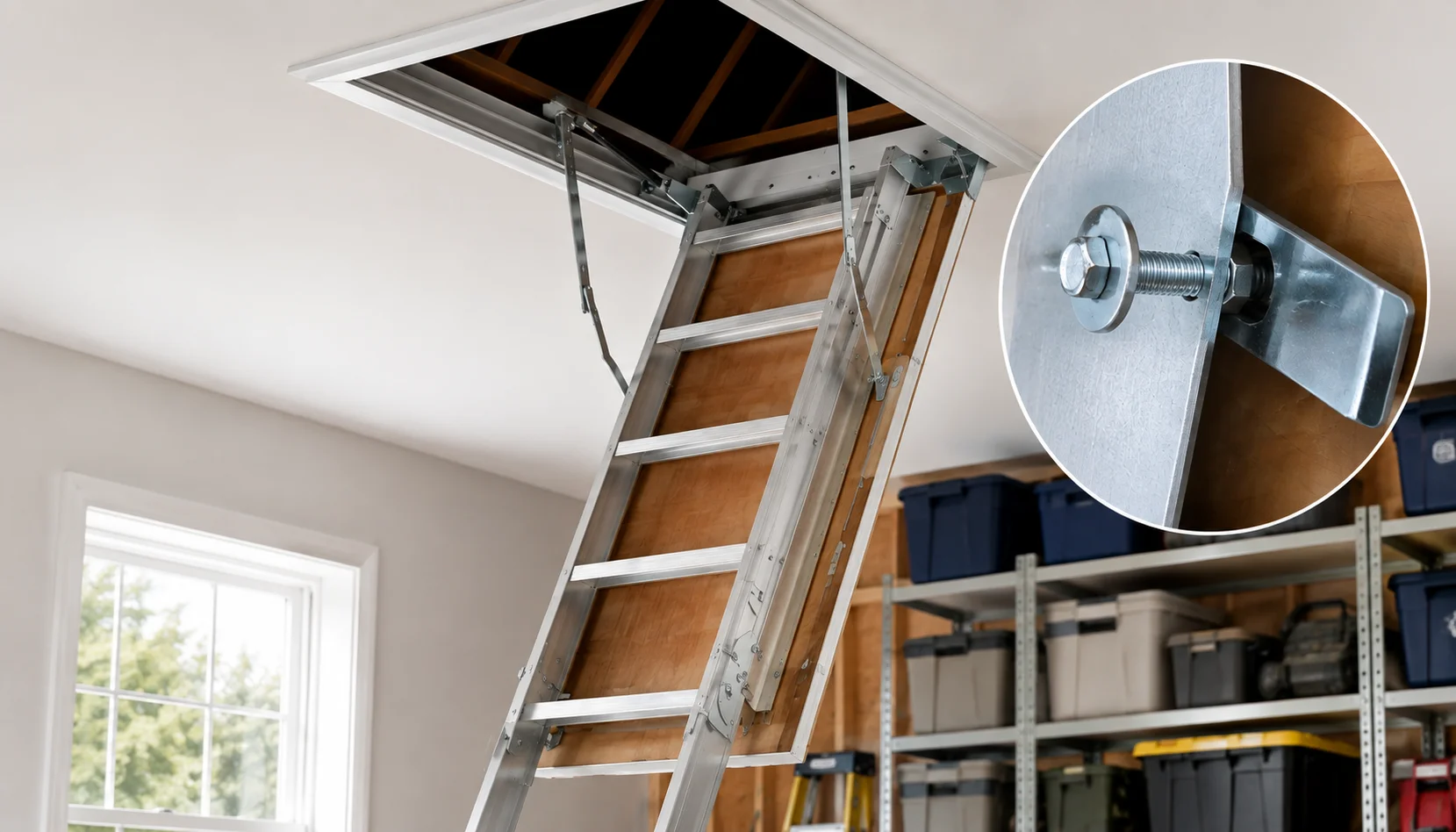

Featherlite Attic Stairway Ladder Lawsuit Update: Injuries, Recall Status, and Legal Options

Featherlite attic stairway ladders are included in a major Louisville Ladder recall because spreader-assembly bolts can break while the ladder is being used, creating a risk of serious injury or death from a fall. Louisville Ladder received 11 U.S. reports of bolts breaking across the recalled products, including one reported injury involving the neck, head, and back.
Award Logos
Collen Clark Published by Collen Clark

The August 6, 2026 recall covers Louisville, Featherlite, Lite & Century attic stairway ladders equipped with gas struts. Approximately 1.77 million affected ladders were sold in the United States, and consumers should immediately stop using them and register for a free repair kit.

People injured in a fall involving a recalled Featherlite ladder may request an individual legal review. Photographs, model information, broken hardware, installation records, medical files, and witness statements may help determine what caused the ladder to fail.

Quick Facts

  • Featherlite attic stairway ladders with gas struts are included in the August 2026 recall.
  • Approximately 1.77 million affected attic ladders were sold in the United States.
  • Louisville Ladder received 11 U.S. bolt-failure reports, including one reported injury.
  • Consumers should stop using affected ladders and obtain a free spreader-bolt repair kit.

Latest Featherlite Attic Stairway Ladder Recall and Lawsuit Developments

August 2026

  • August 6, 2026 – CPSC announced a recall of approximately 1.77 million Louisville, Featherlite, Lite & Century attic stairway ladders with gas struts because bolts can break during use and create a risk of serious injury or death from falling. Louisville Ladder had received 11 U.S. reports of broken bolts, including one injury involving the neck, head, and back [1]
  • August 6, 2026 – CPSC instructed consumers to immediately stop using affected attic ladders and register for a free repair kit containing two replacement ¼-inch spreader bolts, washers, lock nuts, and installation instructions. The ladder model number is located on the inside of the attic door [1]
  • August 6, 2026 – Health Canada issued the corresponding joint recall for Louisville and Featherlite attic stairways. The Canadian notice states that ¼-inch chrome-colored spreader bolts on affected stairways manufactured on or before June 22, 2026 may not meet Louisville Ladder’s design specifications [2]

What Is a Featherlite Attic Stairway Ladder?

Featherlite attic stairway ladders are folding ladders installed inside ceiling openings to provide access to an attic or overhead storage area. The recalled products use gas struts to help control the movement of the ladder and attic door.

The broader recall includes attic stairways with aluminum or wood frames, handrails, and folding sections. Frame widths include 22.5, 25.5, and 30 inches, with lengths of 54 or 60 inches and configurations for ceiling heights ranging from approximately 7 feet 8 inches to 12 feet.

The brand and model number are located on the inside surface of the attic door. Consumers should use that information when determining whether an installed Featherlite ladder is included in the repair program.

Health Canada specifically identifies Featherlite model AA2210R5FL among the affected products in the Canadian joint recall. Product availability and model distribution may differ between the United States and Canada, so U.S. consumers should confirm eligibility through the official recall program.

Why Were Featherlite Attic Ladders Recalled?

The recalled attic stairways contain bolts in the spreader assembly that can break while the ladder is being used. The spreader assembly helps maintain the ladder’s position and structural support when it is extended.

Health Canada states that the affected ¼-inch chrome-colored spreader bolts may not meet Louisville Ladder’s design specifications. A component that does not perform as intended can allow the ladder structure to shift unexpectedly while a person is climbing.

This hazard is particularly serious because attic stairways are elevated above the floor. A person may be several feet above the landing surface when the component fails, increasing the potential severity of a fall.

The recall does not state that every affected ladder will fail. Consumers are nevertheless instructed to stop using recalled ladders until the replacement hardware has been installed.

What Incidents and Injuries Were Reported?

Louisville Ladder received 11 U.S. reports of bolts breaking among the products covered by the recall. One reported incident resulted in injuries to the neck, head, and back.

CPSC does not identify the brand involved in each individual incident, so the reported injury should not be attributed specifically to a Featherlite ladder without additional evidence. The incident figures apply to the recalled product group as a whole.

Health Canada reported one Canadian incident and no Canadian injuries as of July 24, 2026. The Canadian notice also confirms the 11 U.S. incidents and one U.S. injury.

A fall from an attic stairway may result in head injuries, back or neck injuries, fractures, sprains, lacerations, or other trauma. The severity of an individual injury depends on the fall height, landing surface, body position, and surrounding structures.

How Can a Spreader-Bolt Failure Cause a Fall?

The spreader mechanism helps stabilize a folding attic ladder after it has been lowered into the climbing position. If a bolt in that assembly breaks, the ladder may shift, fold, or lose support without warning.

A person climbing upward may fall backward or sideways onto the floor below. Someone descending from the attic could fall through the ceiling opening or strike walls, framing, stairs, stored objects, or nearby furniture.

An investigation may examine the spreader bolts, linkage arms, ladder rails, hinges, gas struts, attic door, mounting hardware, and installation. Broken components can be especially important when determining whether the recalled condition contributed to the fall.

A fall involving a recalled ladder does not automatically establish legal liability. Product identity, hardware condition, installation history, causation, injuries, and potential defenses must be evaluated in the individual case.

Which Featherlite Attic Ladders May Be Affected?

The U.S. recall applies to Featherlite attic stairway ladders with gas struts that fall within the affected product population. Consumers should check the brand and model information on the inside of the attic door.

Health Canada identifies Featherlite model AA2210R5FL, UPC 772751221057, among the affected Canadian products. Its notice states that the relevant attic stairways use ¼-inch chrome-colored spreader bolts and were manufactured on or before June 22, 2026.

The overall U.S. recall also includes Louisville attic stairway ladders and Lite & Century attic stairway ladders. Consumers should not assume that every Featherlite product or every attic ladder manufactured by Louisville Ladder is affected.

If the identification label is difficult to read, photographs of the attic door, ladder frame, gas struts, spreader mechanism, and remaining markings may help when contacting the recall administrator.

Where Were the Recalled Attic Ladders Sold?

CPSC states that affected attic stairway ladders were sold at The Home Depot, Lowe’s, Do It Best, Orgill, and other retailers nationwide. They were also sold online through Amazon.com.

The U.S. sales period extended from November 2012 through July 2026, and prices ranged from approximately $170 to $600. The recall covers about 1.77 million units in the United States.

A person living in a recently purchased home may not know when or where an attic ladder was installed. Home-sale records, renovation invoices, contractor documents, prior-owner information, and photographs may help establish the ladder’s history.

What Should Consumers Do With a Recalled Featherlite Ladder?

Consumers should immediately stop using an affected Featherlite attic stairway ladder. They should not climb the ladder while waiting for replacement hardware.

Louisville Ladder is providing a free repair kit containing two replacement ¼-inch spreader bolts, washers, lock nuts, and installation instructions. Consumers need the ladder model number when registering for the remedy.

Louisville Ladder’s website prominently displays an urgent attic-stairway recall notice directing consumers to the official recall portal [3]

Anyone who experienced a fall before completing the repair should consider documenting the ladder before replacing damaged parts. Preserve photographs of the label, spreader assembly, broken hardware, attic opening, and surrounding accident scene.

Who May Be Affected?

Homeowners may be affected if a recalled Featherlite stairway is installed in a residence, garage, workshop, rental property, or other building. The person injured does not have to be the original purchaser.

Tenants, relatives, contractors, maintenance workers, home inspectors, guests, and other people may use an installed attic ladder. A potential claim depends on the circumstances of the fall and the evidence linking the ladder to the injury.

Recall eligibility is different from legal-claim eligibility. Consumers can obtain the repair without suffering an injury, while an individual injury claim generally requires evidence of harm or another legally compensable loss.

Who May Be Liable?

Potentially responsible parties may include the manufacturer, component supplier, distributor, retailer, installer, contractor, or another entity connected to the ladder. Each party’s role must be evaluated separately.

Potential legal theories may include defective design, manufacturing defect, inadequate warnings, negligence, breach of warranty, or other state-law claims. The recall itself does not automatically establish liability in an individual lawsuit.

Installation may also become relevant after an attic-ladder fall. Potential defendants may dispute whether the incident resulted from the recalled bolt, incorrect installation, maintenance, prior damage, overloading, or another condition.

Do I Qualify?

  • Did a Featherlite attic stairway ladder fail while you were climbing or descending?
  • Did a spreader bolt break or cause the ladder to shift, fold, or lose support?
  • Did the fall cause head, neck, back, orthopedic, or other documented injuries?
  • Do you have the ladder, broken hardware, photographs, medical records, or model information?

An individualized legal review can determine whether the recalled product, failure mechanism, injuries, damages, potential defendants, and applicable filing deadline support a claim.

What Evidence Should I Preserve?

Photograph the ladder before repair, including the brand label, model number, spreader mechanism, bolts, gas struts, hinges, ladder sections, attic opening, and surrounding floor.

Preserve any broken spreader bolt, washer, nut, linkage component, or other failed hardware. Do not discard replaced components if they may relate to an injury incident.

Keep purchase records, contractor invoices, inspection reports, repair-kit communications, installation records, medical files, injury photographs, insurance documents, and witness contact information.

If the ladder was already repaired after an incident, retain the old hardware when available and document who performed the repair, when it occurred, and which components were replaced.

Do I Have a Featherlite Attic Stairway Ladder Lawsuit?

If you or a loved one suffered an injury involving a recalled Featherlite attic stairway ladder, you may have legal options. Contact Schmidt & Clark for a free case review.

Start My Free Case Review

Event Month/Year Type Status Source Notes
U.S. attic stairway recall announced August 2026 Consumer product recall Free repair offered CPSC Featherlite included in recall
Canadian Featherlite recall announced August 2026 Consumer product recall Free repair offered Health Canada Model AA2210R5FL identified
Bolt failures disclosed August 2026 Consumer incident reports Eleven U.S. reports CPSC One injury reported
Spreader-bolt issue identified August 2026 Product safety issue Repair program underway Health Canada Bolts may miss specifications

Potential Compensation

Potential compensation may include ambulance transportation, emergency treatment, hospitalization, diagnostic testing, surgery, orthopedic treatment, rehabilitation, physical therapy, prescriptions, and future medical expenses.

Additional losses may include pain and suffering, lost wages, reduced earning capacity, permanent impairment, mobility limitations, home-care expenses, and other documented damages.

Compensation amounts vary by case. Past results do not guarantee future outcomes.

Free case review: The initial review may address the ladder, model number, accident sequence, broken hardware, injuries, treatment, and available evidence.

Investigation. Attorneys may review the ladder, failed components, photographs, installation records, recall information, medical files, and witness statements.

Filing. A lawsuit may be filed when the evidence and governing law support one or more claims. Filing deadlines vary by jurisdiction.

Discovery/negotiation: The parties may exchange records, inspect the ladder, obtain testimony, consult experts, and discuss a possible settlement.

Resolution: A claim may conclude through settlement, dismissal, court ruling, or trial. No outcome or timeline can be guaranteed.

Frequently Asked Questions About the Featherlite Attic Ladder Recall

Do I Have a Featherlite Attic Stairway Ladder Lawsuit?

A claim may warrant review if an affected Featherlite attic ladder failed and caused a documented fall injury. Eligibility depends on product identification, failure evidence, causation, damages, and applicable law.

What Evidence May Support a Featherlite Attic Stairway Ladder Lawsuit?

Useful evidence may include the ladder, broken spreader bolt, model label, photographs, installation documents, repair records, medical files, and witness statements.

Why Were Featherlite Attic Ladders Recalled?

Bolts in the spreader assembly can break while the ladder is being used. A structural failure can destabilize the stairway and expose a person to a serious fall.

How Many Incidents Were Reported?

Louisville Ladder received 11 reports of broken bolts involving the recalled U.S. product population. One reported incident involved injuries to the neck, head, and back.

Was the Reported Injury Specifically Linked to Featherlite?

CPSC does not identify which recalled brand was involved in the injury report. The incident total covers Louisville, Featherlite, Lite & Century attic stairways collectively.

What Repair Is Available?

Affected consumers may receive a free kit containing two replacement ¼-inch spreader bolts, washers, lock nuts, and installation instructions. Consumers should stop using the ladder until it has been repaired.

Where Is the Model Number Located?

CPSC states that the brand name and model number are located on the inside of the attic door. Consumers should have the model number available when registering.

Should I Keep a Broken Bolt After a Fall?

When it can be preserved safely, failed hardware may be important evidence in determining why the ladder lost support. Photograph and retain the component rather than discarding it during repair.

References

  1. https://www.cpsc.gov/Recalls/2026/Louisville-Ladder-Recalls-Over-One-Million-Attic-Stairway-Ladders-Due-to-Risk-of-Serious-Injury-or-Death-from-Fall-Hazard
  2. https://recalls-rappels.canada.ca/en/alert-recall/louisville-and-featherlite-brand-attic-stairways-recalled-due-injury-hazard
  3. https://www.louisvilleladder.com/

Get a Free Case Review

You may be entitled to financial compensation.
  • This field is for validation purposes and should be left unchanged.
Secure Submission