

















Table of contents
- Latest Contaminated Ultrasound Gel Lawsuit Updates
- December 2, 2022: CDC Publishes Outbreak Report
- November 23, 2021: FDA Expands Class I Recall Notice
- September 10, 2021: FDA Identifies the Recall as Class I
- August 31, 2021: Health Canada Posts Type I Recall
- August 31, 2021: FDA Reports 66 Infections
- August 18, 2021: FDA Tells Providers to Stop Using the Gels
- August 4, 2021: Eco-Med Begins Voluntary Recall
- July 21, 2021: Virginia Reports Infections to CDC
- What Is Contaminated Ultrasound Gel?
- Who May Be Affected?
- Reported Injuries or Damages
- Recall and Regulatory Background
- Evidence to Preserve
- Filing Deadlines
- Frequently Asked Questions
- Is Contaminated Ultrasound Gel Safe to Use?
- What Are the CDC Guidelines for Using Ultrasound Gel?
- Has a Company Faced Criminal Charges over Ultrasound Gel?
- Which Lots of Eco-Gel 200 Were in the First Recall?
- Which States Reported Ultrasound Gel Infections?
- Who Got Infections from Contaminated Ultrasound Gel?
Ultrasound gel made by Eco-Med Pharmaceutical was contaminated with Burkholderia bacteria and linked to infections in 2021. The CDC counted 119 infections in 10 states. Most were bloodstream infections, which the FDA said may lead to sepsis or death.
The FDA gave the recall its most serious Class I rating and told providers to stop using Eco-Med products. Eco-Med has shut down all operations.
The gel was sold under many names, including MediChoice. No lawsuit, class action or MDL has been filed over the outbreak.
Latest Contaminated Ultrasound Gel Lawsuit Updates
December 2, 2022: CDC Publishes Outbreak Report
The CDC published an outbreak report in its Morbidity and Mortality Weekly Report. It counted 119 Burkholderia stabilis infections in 10 states, tied to contaminated nonsterile ultrasound gel [1].
The CDC collected isolates from patients between May 15 and September 14, 2021. The report also reviewed the public health response that followed the 2021 recall of Eco-Med gels.
November 23, 2021: FDA Expands Class I Recall Notice
The FDA expanded its Class I recall notice to cover recalls by Eco-Med distributors [2]. It covers all ultrasound gels and lotions made by Eco-Med. The products were made and sold from 2018 until the recall.
September 10, 2021: FDA Identifies the Recall as Class I
The FDA identified the Eco-Med recall as Class I, the most serious type, according to Medscape’s report of its updated statement [3]. A Class I recall means use of the product may cause serious injuries or death.
August 31, 2021: Health Canada Posts Type I Recall
Health Canada posted a Type I recall of Eco-Gel ultrasound gels and EcoLotion, with a starting date of August 4, 2021. It is recall RA-76349 [4].
The recall lists Ecogel 200, EcoLotion, EcoGel 100 and EcoGel 300, all lots. Health Canada gave the reason as bacterial contamination of Burkholderia stabilis.
August 31, 2021: FDA Reports 66 Infections
The FDA reported that at least 66 infections were associated with the affected products, per the CDC. Sixty were bloodstream infections. At the August 4 recall, the gels had been tied to at least 15 infections.
August 18, 2021: FDA Tells Providers to Stop Using the Gels
The FDA told health care providers to stop using and discard every Eco-Med gel and lotion. It said the cause and extent of the contamination were not known.
August 4, 2021: Eco-Med Begins Voluntary Recall
Eco-Med Pharmaceutical began a voluntary recall of Eco-Gel 200 ultrasound gel lots. The gel was also sold as MediChoice. The firm acted after finding Burkholderia contamination, in a company announcement posted by the FDA [5].
July 21, 2021: Virginia Reports Infections to CDC
The Virginia Department of Health told the CDC that eight patients at one hospital had invasive Burkholderia stabilis infections. Unopened bottles of MediChoice ultrasound gel at the hospital tested positive for the bacterium.
The hospital reported the results to the CDC on July 23, 2021. These reports came about two weeks before the August 4, 2021 recall.
What Is Contaminated Ultrasound Gel?
According to the CDC, Burkholderia cepacia complex (BCC) is a group of opportunistic germs. It can infect healthy people who are exposed to tainted medical products [6].
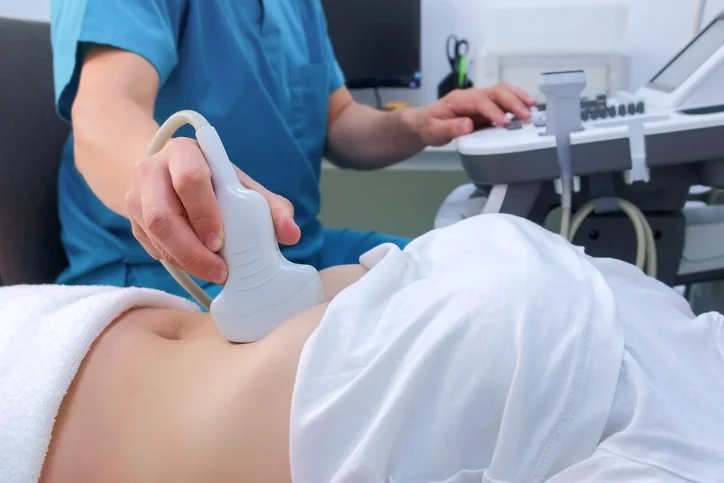
Nonsterile, multiuse ultrasound gel is intended only for external, noninvasive ultrasound. The 2021 outbreak involved such gel. It was contaminated and used before percutaneous procedures like placing an IV.
Who May Be Affected?
Patients who had an ultrasound-guided procedure in 2021 may be affected. An example is placement of a peripheral intravenous catheter at a facility that used Eco-Med gel.
The CDC found that 103 of 109 patients with available information (94%) had an ultrasound-associated percutaneous procedure. An Eco-Gel 200 product was known to be at all facilities reporting cases.
Minnesota (23), Philadelphia (35) and Pennsylvania outside Philadelphia (19) reported the most cases. These are the CDC’s counts for each place in its table.
Only an individual legal review can say whether a patient has a claim. Records of the procedure and the infection are where that review starts.
Reported Injuries or Damages
No court complaint describes injuries from the Eco-Med gel. The CDC reported that most infections, 106 or 89%, were bloodstream infections.
The CDC reported 14 deaths among 102 patients with vital status information. They happened during the hospital stay when the infection was found. Cause of death was available for 10 patients and was attributed to the infection in two.
The same CDC report says the contaminated gel “likely contributed to patient infections.” It was used before percutaneous procedures. An Eco-Gel 200 product was documented in 31 (26%) of all infections.
FDA testing found bacterial contamination in eight of 13 tested lots, seven with BCC. The FDA said the company did not finish its investigation or find the root cause.
The FDA also cited inappropriate testing of finished product, inadequate testing of raw materials and a lack of environmental controls.
Recall and Regulatory Background
The FDA determined that every gel and lotion Eco-Med made was at risk of Burkholderia cepacia complex contamination. The company has since shut down all operations.
The products were sold under many names. These include MediChoice, Eco-Gel 200, Liquasonic, Ultra-Myossage and Chattanooga Conductor, sold by distributors such as Owens & Minor and DJO Global.
The FDA told providers not to buy the products. It asked them to report problems through its adverse event reporting program.
Evidence to Preserve
Keep any records that show where you received care and how the infection was found:
- Medical records and culture results for any Burkholderia or bloodstream infection
- Records of the ultrasound-guided procedure, including the date, facility and type
- Hospital bills and discharge papers from the stay
- The gel brand or lot number, if you know it
- Photographs of any remaining product or packaging
- A log of symptoms, treatment and missed work
- Communications with the facility or your insurer
Filing Deadlines
Filing deadlines for injury claims come from state law. They vary with where you live and when the infection or procedure happened.
Some states start the clock when the illness is diagnosed. Once the time runs out, a claim may end, even if the facts are strong. A lawyer can tell you which deadline applies to your situation, so ask early.
Frequently Asked Questions
Is Contaminated Ultrasound Gel Safe to Use?
Contaminated ultrasound gel is not safe to use. The CDC report advises single-use, sterile gel before percutaneous procedures such as IV insertion. It says nonsterile gel should not be used to see the site before those procedures.
What Are the CDC Guidelines for Using Ultrasound Gel?
The CDC’s guidelines for using ultrasound gel say to use single-use sterile gel on nonintact skin. They say never to refill multiuse containers and to seal them when not in use. Keep the dispensing tip away from people and instruments.
Has a Company Faced Criminal Charges over Ultrasound Gel?
A company has faced criminal charges over ultrasound gel, but not Eco-Med. Pharmaceutical Innovations pleaded guilty in 2016 to two misdemeanor counts of introducing adulterated medical devices into interstate commerce over gel sold in 2011 and 2012. It paid a $50,000 fine and $50,000 forfeiture.
Which Lots of Eco-Gel 200 Were in the First Recall?
The first Eco-Gel 200 recall covered eight lots of MediChoice M500812: B029, B030, B031, B032, B040, B041, B048 and B055. They were first distributed between March 26 and May 26, 2021.
Which States Reported Ultrasound Gel Infections?
Infections tied to the gel were reported in California, Illinois, Minnesota, New Jersey, New Mexico, New York, Ohio, Pennsylvania, Virginia and Washington. The CDC counted Philadelphia as its own jurisdiction in the report’s table.
Who Got Infections from Contaminated Ultrasound Gel?
Patients who got infections from contaminated ultrasound gel had a median age of 61 years, ranging from 4 days to 92 years. Of 87 patients with clinical data, 59 (68%) had signs and symptoms of infection such as fever and tachycardia.