

Table of contents
- Latest Roundup Chronic Lymphocytic Leukemia Lawsuit Updates
- October 1, 2026: Pending MDL Count Falls to 1,104
- September 14, 2026: Fairness Hearing Held on Class Settlement
- July 27, 2026: Supreme Court Issues Judgment in Durnell
- June 25, 2026: Supreme Court Decides Durnell 7-2
- June 17, 2026: Federal Judge Remands Class Settlement Case
- April 27, 2026: Supreme Court Hears Durnell Argument
- March 4, 2026: Court Grants Preliminary Approval of Class Settlement
- February 17, 2026: Monsanto Announces Proposed Class Settlement
- January 16, 2026: Supreme Court Agrees to Hear Durnell
- October 3, 2016: JPML Centralizes Roundup Cases in MDL No. 2741
- March 20, 2015: IARC Classifies Glyphosate as Probably Carcinogenic
- What Is Chronic Lymphocytic Leukemia?
- Who May Be Affected?
- Reported Injuries or Damages
- Evidence to Preserve
- Filing Deadlines
- Potential Compensation
- Frequently Asked Questions
- Is Chronic Lymphocytic Leukemia Included in the Roundup Lawsuit?
- What Does the Research Say About Glyphosate and Chronic Lymphocytic Leukemia?
- What Are the Symptoms of Chronic Lymphocytic Leukemia?
- How Much Could a Roundup Class Settlement Pay?
- What Happened to Roundup Lawsuits After the Supreme Court Ruling?
- Can You Still File a Roundup Lawsuit for CLL?
- References
Plaintiffs allege that Roundup, the glyphosate weed killer made by Monsanto, caused non-Hodgkin lymphoma, including chronic lymphocytic leukemia (CLL) and small lymphocytic lymphoma (SLL). Monsanto, a Bayer subsidiary, denies the claim.
A proposed nationwide class settlement, King v. Monsanto in St. Louis, names CLL and SLL as covered types. The court heard it for final approval on September 14, 2026 and has not yet ruled.
MDL No. 2741 lists 1,104 pending actions on October 1, 2026. The Supreme Court ruled on June 25, 2026 that federal law blocks some label-based warning claims.
Lawsuit at a glance
- Case or litigation name: In re: Roundup Products Liability Litigation (MDL No. 2741); King v. Monsanto class settlement
- Defendants: Monsanto Company (a Bayer AG subsidiary)
- Court and docket number, when available: U.S. District Court for the Northern District of California, MDL No. 2741; Circuit Court of the City of St. Louis, Missouri, No. 2622-CC00325
- MDL number, judge, and case count, when an MDL exists: MDL No. 2741, Northern District of California, Judge Vince Chhabria; 1,104 actions pending on the October 1, 2026 JPML report
- Filing date: October 3, 2016 (JPML order centralizing Roundup actions as MDL No. 2741)
- Main allegations: Plaintiffs allege Roundup and its active ingredient glyphosate cause non-Hodgkin lymphoma, including CLL/SLL; Monsanto denies the claim
- Products or people involved: People exposed to Roundup or other glyphosate products in the U.S. before February 17, 2026
Latest Roundup Chronic Lymphocytic Leukemia Lawsuit Updates
October 1, 2026: Pending MDL Count Falls to 1,104
The Judicial Panel on Multidistrict Litigation (JPML) pending-MDL report listed 1,104 actions pending in MDL No. 2741 on October 1, 2026 [1]. That is down from 3,925 on September 1, 2026 and 3,932 on August 3, 2026. MDL No. 2741 is the federal Roundup litigation before Judge Vince Chhabria in the Northern District of California. The report gives no reason for the change.September 14, 2026: Fairness Hearing Held on Class Settlement
Judge Timothy Boyer of the 22nd Judicial Circuit Court in St. Louis held the fairness hearing on the Roundup class settlement in King v. Monsanto [2]. The court will decide whether to approve the settlement and the fee amount. The settlement website’s FAQ says registration and claims are unavailable until final approval, and it is not known how long a decision will take.July 27, 2026: Supreme Court Issues Judgment in Durnell
The Supreme Court issued its judgment and mandate in Monsanto Co. v. Durnell, No. 24-1068, on July 27, 2026 [3]. That sent the case back to the Missouri courts after the June 25, 2026 decision. The case concerns John Durnell, who sued Monsanto in Missouri state court in 2019. He alleged that about 20 years of Roundup use caused his non-Hodgkin’s lymphoma.June 25, 2026: Supreme Court Decides Durnell 7-2
On June 25, 2026, the Supreme Court decided Monsanto Co. v. Durnell 7-2. It held that FIFRA expressly preempts a state-law failure-to-warn claim requiring a cancer warning on Roundup’s label that the EPA has not required [4]. The Court reversed the Missouri judgment, which followed a jury award of $1.25 million in compensatory damages to Durnell. The opinion did not decide whether Roundup causes cancer.June 17, 2026: Federal Judge Remands Class Settlement Case
Judge Henry Autrey of the U.S. District Court for the Eastern District of Missouri remanded King v. Monsanto, the class settlement case, to Missouri state court [5]. Monsanto said in a statement published by Bayer, its parent company, that the order returned jurisdiction over the settlement to the Missouri circuit court.April 27, 2026: Supreme Court Hears Durnell Argument
The Supreme Court heard argument in Monsanto Co. v. Durnell on April 27, 2026. The Solicitor General argued as amicus curiae for the United States.March 4, 2026: Court Grants Preliminary Approval of Class Settlement
The St. Louis court granted preliminary approval of the Roundup class settlement on March 4, 2026, according to the official settlement website [6]. The same site lists June 4, 2026 as the deadline to opt out or object in King v. Monsanto, No. 2622-CC00325, in the Circuit Court of the City of St. Louis.February 17, 2026: Monsanto Announces Proposed Class Settlement
Monsanto announced a proposed nationwide class settlement of current and future Roundup claims alleging non-Hodgkin lymphoma, and moved for preliminary approval in St. Louis [7]. The settlement is funded at up to $7.25 billion, including $1 billion in initial payments and declining annual payments for up to 21 years.January 16, 2026: Supreme Court Agrees to Hear Durnell
The Supreme Court granted Monsanto’s petition in Monsanto Co. v. Durnell on January 16, 2026. Review was limited to whether FIFRA preempts a label-based failure-to-warn claim where EPA has not required the warning.October 3, 2016: JPML Centralizes Roundup Cases in MDL No. 2741
The JPML centralized the Roundup actions in N.D. Cal. as MDL No. 2741, In re: Roundup Products Liability Litigation [8]. The JPML describes the MDL as actions over allegations that Monsanto’s Roundup herbicide, particularly its active ingredient glyphosate, causes non-Hodgkin’s lymphoma. No CLL-specific track is named.March 20, 2015: IARC Classifies Glyphosate as Probably Carcinogenic
The International Agency for Research on Cancer (IARC) classified glyphosate as “probably carcinogenic to humans” (Group 2A) [9]. It cited limited evidence in humans for non-Hodgkin lymphoma and sufficient evidence in experimental animals. A working group of 17 experts from 11 countries met at IARC on March 3 to 10, 2015. The findings appeared in The Lancet Oncology on March 20, 2015.What Is Chronic Lymphocytic Leukemia?
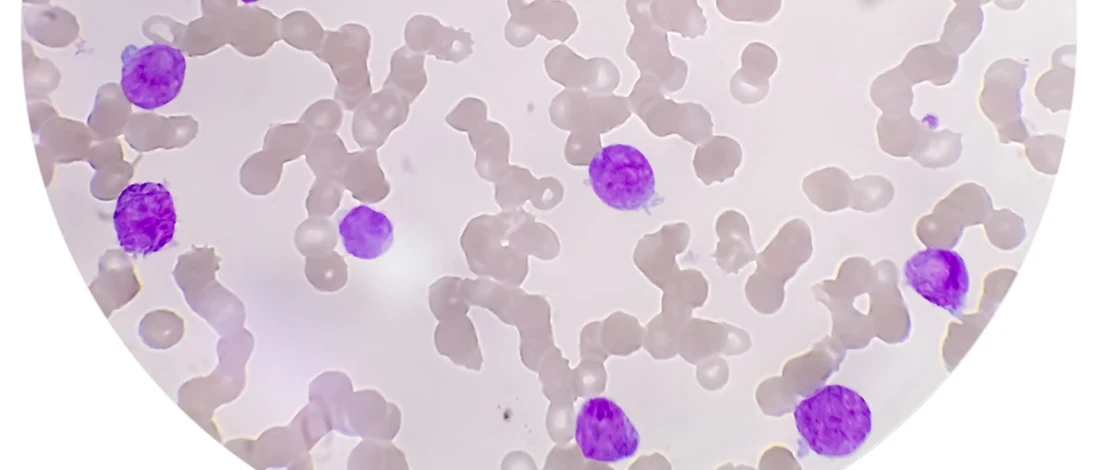
According to the National Cancer Institute, chronic lymphocytic leukemia (CLL) is a type of cancer in which the bone marrow makes too many lymphocytes. Lymphocytes are a type of white blood cell [10]. The Roundup settlement’s list of non-Hodgkin lymphoma subtypes spells the condition “Chronic Lymphocytic Leukaemia/Small Lymphocytic Lymphoma,” which treats CLL and SLL as one covered type.Who May Be Affected?
People diagnosed with chronic lymphocytic leukemia or small lymphocytic lymphoma fall within the settlement class. They must have been exposed to Roundup or another glyphosate product in the United States before February 17, 2026. They must also have been U.S. citizens or living in the U.S. on March 4, 2026. The class notice is addressed to farmers, landscapers, groundskeepers, gardeners and others exposed to weed killers. People not yet diagnosed are in Subclass 2 and can claim only if diagnosed later. Hodgkin lymphoma, multiple myeloma and leukemias without “lymphoma,” “lymphocytic” or “prolymphocytic” in their WHO names are not covered. People with a claim pending in MDL No. 2741 on February 17, 2026 are outside the class unless they ask to be included and dismiss that claim. People who opted out by June 4, 2026 receive no settlement money and keep the right to file their own lawsuit. Only an individual legal review can say whether a particular person qualifies. For the wider litigation, see the Roundup lawsuit overview.Think you may qualify?
Schmidt & Clark offers a free case review for people diagnosed with chronic lymphocytic leukemia after Roundup exposure, looking at what happened and what options may be available. A review does not promise eligibility or any result.
Start My Free Case Review
Reported Injuries or Damages
Plaintiffs allege Roundup exposure caused non-Hodgkin lymphoma, including CLL and SLL. The studies and agency findings below are mixed on that question. The Agricultural Health Study update (Andreotti et al., 2018) followed 54,251 pesticide applicators. It reported no association apparent with non-Hodgkin lymphoma or its subtypes [11]. A 2019 meta-analysis (Zhang et al.) reported a meta-relative risk of 1.41 for non-Hodgkin lymphoma in the highest glyphosate exposure groups [12]. The AGRICOH pooled analysis (Leon et al., 2019) associated CLL/SLL with the insecticide deltamethrin, not glyphosate [13]. Glyphosate was associated with diffuse large B-cell lymphoma, covered on the Roundup diffuse large B-cell lymphoma lawsuit page. The American Cancer Society says long-term exposure to certain pesticides may be linked to CLL, but more research is needed [14]. EPA concluded in 2017 that glyphosate is not likely to be carcinogenic to humans [15]. The CLL Society, a patient nonprofit, says the cause of most CLL and SLL remains unknown, though glyphosate exposure may have contributed in some cases [16].Evidence to Preserve
Keep the following records together, because they may show your diagnosis, your exposure and the dates that matter for your case:- Diagnosis and pathology records showing your CLL or SLL diagnosis and the date it was made.
- Treatment history and medical bills from your doctors, clinics and hospitals, with the dates of each visit.
- Records of Roundup or other glyphosate product use, such as purchase receipts and photos of containers and labels.
- Job, employer or landscaping records showing herbicide work and the years of exposure.
- Your own notes on where and how often you applied the product, written down as soon as you can.
- Settlement notices and any registration emails you received about the Roundup class settlement.
Filing Deadlines
Deadlines to file an individual claim come from state law. They depend on where you live and when the exposure, illness and diagnosis happened. Some states start the clock at diagnosis. Letting a filing deadline pass can end a CLL or SLL claim altogether, whatever the evidence shows. Anyone weighing a Roundup claim should speak with a lawyer promptly. Settlement class members diagnosed as of March 4, 2026 register within 180 days after final approval and claim within 180 days after appeals are resolved. Later diagnoses claim within six years of diagnosis and before the 16th Annual Payment Date.Potential Compensation
If a claim succeeds, damages may cover medical expenses, lost income, and pain and suffering. The settlement website advertises that eligible people “Could Receive $6,000 to $165,000+” across nine tiers. In Johnson v. Monsanto, a jury found for Dewayne Johnson on failure-to-warn and design-defect theories, and on July 20, 2020 the California Court of Appeal reduced the judgment to $10,253,209.32 each in compensatory and punitive damages [17]. Compensation amounts vary by case. Past results do not guarantee future outcomes. Potential compensation under the settlement depends on exposure type, age at diagnosis and NHL type.Frequently Asked Questions
Is Chronic Lymphocytic Leukemia Included in the Roundup Lawsuit?
Chronic lymphocytic leukemia is included in the Roundup class settlement as a named covered type, listed alongside diffuse large B-cell lymphoma, follicular lymphoma and hairy cell leukemia. The federal MDL is described only as non-Hodgkin lymphoma litigation.What Does the Research Say About Glyphosate and Chronic Lymphocytic Leukemia?
Research on glyphosate and chronic lymphocytic leukemia includes the AGRICOH pooled study of 316,270 farmers, 497 of them with CLL/SLL. IARC’s “limited evidence” label for glyphosate means chance, bias or confounding could not be ruled out.What Are the Symptoms of Chronic Lymphocytic Leukemia?
The symptoms of chronic lymphocytic leukemia, according to NCI, include painless swollen lymph nodes in the neck, underarm, stomach or groin. They also include weakness, fever, infection, easy bruising or bleeding, and tiny dark-red spots under the skin.How Much Could a Roundup Class Settlement Pay?
A Roundup class settlement award is set by one of nine tiers, the official settlement website says. It adds that an actual award may range from 80% to 120% of the tier average depending on the claim score.What Happened to Roundup Lawsuits After the Supreme Court Ruling?
After the Supreme Court ruling, a Roundup lawsuit cannot rest on a state failure-to-warn claim requiring a cancer warning on the label that EPA has not required. Justice Kavanaugh wrote the opinion. Justice Jackson dissented, joined by Justice Gorsuch.Can You Still File a Roundup Lawsuit for CLL?
A person who opted out of the settlement can still file a Roundup lawsuit for CLL, but cannot object to the settlement. Claims resting on a missing cancer warning on the label now face the Durnell ruling.References
- https://www.jpml.uscourts.gov/sites/jpml/files/Pending_MDL_Dockets_By_Actions_Pending-October-1-2026.pdf
- https://www.weedkillerclass.com/Home/FAQs
- https://www.supremecourt.gov/docket/docketfiles/html/public/24-1068.html
- https://www.supremecourt.gov/opinions/25pdf/24-1068_n7ip.pdf
- https://www.bayer.com/media/en-us/federal-judge-remands-monsanto-class-settlement-case–back-to-missouri-state-court/
- https://www.weedkillerclass.com/
- https://www.bayer.com/media/download/845805d7-83cd-4432-be57-26bba5a14bdf/2026-0034e.pdf
- https://www.courtlistener.com/opinion/7322377/in-re-roundup-products-liability-litigation/
- https://www.iarc.who.int/media-centre-iarc-news-glyphosate/
- https://www.cancer.gov/types/leukemia/patient/cll-treatment-pdq
- https://pubmed.ncbi.nlm.nih.gov/29136183/
- https://pubmed.ncbi.nlm.nih.gov/31342895/
- https://pmc.ncbi.nlm.nih.gov/articles/PMC6857760
- https://www.cancer.org/cancer/types/chronic-lymphocytic-leukemia/causes-risks-prevention/risk-factors
- https://www.epa.gov/ingredients-used-pesticide-products/glyphosate
- https://cllsociety.org/?p=32464
- https://www.courts.ca.gov/opinions/archive/A155940.PDF