


















Table of contents
- Latest Rotarex Atherectomy Lawsuit Updates
- March 20, 2025: FDA Identifies the Recall as Class I
- February 10, 2025: BD Warns of Helix Fractures
- February 6, 2025: FDA Posts an Early Alert
- February 5, 2025: BD Sends a Correction Letter
- What Is the Rotarex Atherectomy System?
- Who May Be Affected?
- Reported Injuries or Damages
- Recall and Regulatory Background
- Evidence to Preserve
- Filing Deadlines
- Frequently Asked Questions
- Which Rotarex Catheter Sizes Does the Recall Cover?
- How Do I Report a Rotarex Problem to BD?
- What Does the Research Say About Rotarex Helix Fractures?
- Where Can I Find the Updated Rotarex Instructions for Use?
- Which Factors Does BD Link to Rotarex Helix Fractures?
The Rotarex Atherectomy System, made by Bard Peripheral Vascular, a subsidiary of Becton, Dickinson and Company (BD), has a helix that can fracture. The FDA says a break could cause vessel injury, severe bleeding or death.
On March 20, 2025, the FDA identified BD’s instructions-for-use correction as a Class I recall, the most serious type. No lawsuit or MDL has been filed over the device.
People treated with a Rotarex catheter set sold in the US, catalog numbers 80236 to 80239, may be affected. Anyone hurt after a procedure should keep the catheter details and the hospital records.
Latest Rotarex Atherectomy Lawsuit Updates
March 20, 2025: FDA Identifies the Recall as Class I
The FDA posted an update naming the correction by BD for the Rotarex Atherectomy System a Class I recall [1]. Class I is the agency’s most serious recall type.
The notice lists US catalog numbers 80236 to 80239. It also carries the revised instructions for use and BD’s contact details.
February 10, 2025: BD Warns of Helix Fractures
MassDevice reported that BD warned of risks tied to Rotarex helix fracture or breakage [2]. BD reported serious injuries and deaths linked to the problem. These reports come from BD and have not been tested in court.
February 6, 2025: FDA Posts an Early Alert
The FDA posted an early alert on the Rotarex Atherectomy System, according to Fierce Biotech [3]. The agency had not yet issued a formal recall classification at that time.
February 5, 2025: BD Sends a Correction Letter
BD sent all affected customers a Medical Device Correction letter, according to the FDA update. It also updated the electronic instructions for use. The FDA later put this correction in Class I.
What Is the Rotarex Atherectomy System?
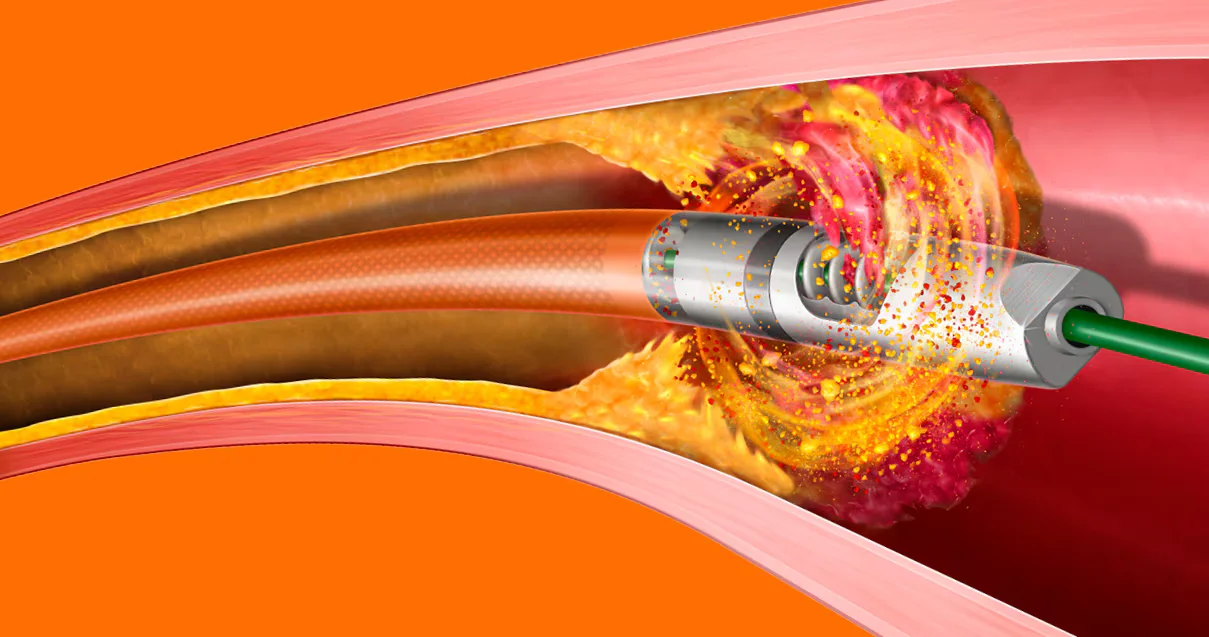
According to the FDA, the Rotarex Atherectomy System is intended for use as an atherectomy device. It breaks up and removes thrombus from native peripheral arteries or arteries with stents, stent grafts or bypasses.
Healthcare Brew describes it as a device for peripheral artery disease that uses a spinning helix to clear out plaque in arm and leg arteries [4].
Who May Be Affected?
People treated with a Rotarex Atherectomy System catheter to clear blocked peripheral arteries may be affected. The recall covers catheter sets sold in the US with catalog numbers 80236, 80237, 80238 and 80239.
The FDA says the helix may fracture or break in certain anatomy and lesion types. A break may mean a broken catheter or fragment must be retrieved.
A fracture alone does not show who is responsible, and only a legal review can say if you have a claim. People hurt during a different atherectomy procedure can read about the HawkOne atherectomy lawsuit.
Reported Injuries or Damages
The FDA update says BD has reported 30 serious injuries and 4 deaths tied to helix fracture or breakage. It names vessel injury, severe bleeding and death as possible results.
BD also reported 115 cases that needed more treatment after a fracture or break. These are company reports posted by the FDA, not court findings.
If you are asking about limb loss after a procedure, read about the atherectomy amputation lawsuit, which covers that separate topic in more detail.
Recall and Regulatory Background
The recall updates the instructions for use and does not involve removing the devices. Users are told to review the updated instructions. A recall does not show that the device caused any one injury.
Healthcare Brew reported on April 16, 2025 that the device is still for sale with updated use instructions. A BD spokesperson said there is no need to remove it from the market.
Evidence to Preserve
Keep these items if you or a family member had a Rotarex procedure and was hurt:
- The catheter set catalog number, lot number and packaging, if you still have them
- Hospital and procedure records with the dates of care
- Operative reports and imaging reports from the procedure
- Records of any fracture, retrieval or follow-up procedure
- Medical bills and receipts for care after the procedure
- Photographs of any injury, scarring or device parts
- Messages with the hospital, your doctor or BD
- A written log of symptoms, with dates
Filing Deadlines
Filing deadlines come from state law. Each state sets its own time limit, which may also depend on when you learned the cause of an injury.
Missing a deadline can end a claim even when the facts are strong, so the timing of your care and diagnosis matters.
A prompt review by a lawyer helps you learn which deadline may apply to your situation and how much time remains.
Frequently Asked Questions
Which Rotarex Catheter Sizes Does the Recall Cover?
The Rotarex recall covers four US catheter sizes: 80236 is 6 F by 110 cm, 80237 is 6 F by 135 cm, 80238 is 8 F by 85 cm and 80239 is 8 F by 110 cm.
How Do I Report a Rotarex Problem to BD?
You can report a Rotarex problem to BD by emailing productcomplaints@bd.com or calling 1-844-823-5433. This is the BD North American Regional Complaint Center, so say you are calling about product complaints.
What Does the Research Say About Rotarex Helix Fractures?
On Rotarex helix fractures, the FDA update says the helix may be at risk of fracture or breakage under certain stress, wear, high temperatures, friction or localized pressure. The agency lists this as the reason for its alert.
Where Can I Find the Updated Rotarex Instructions for Use?
The updated Rotarex instructions for use are the electronic version labeled ZE10895 revision C1 09/24. Users should also review BD online training and post BD’s Urgent Medical Device Correction notice with any stored product.
Which Factors Does BD Link to Rotarex Helix Fractures?
BD links Rotarex helix fractures to patient anatomy, including vessel size, angulation, tortuosity and calcification. It also names procedural factors: contralateral access, sheath kinking, lack of continuous blood flow and catheter advancement. BD is continuing to investigate.