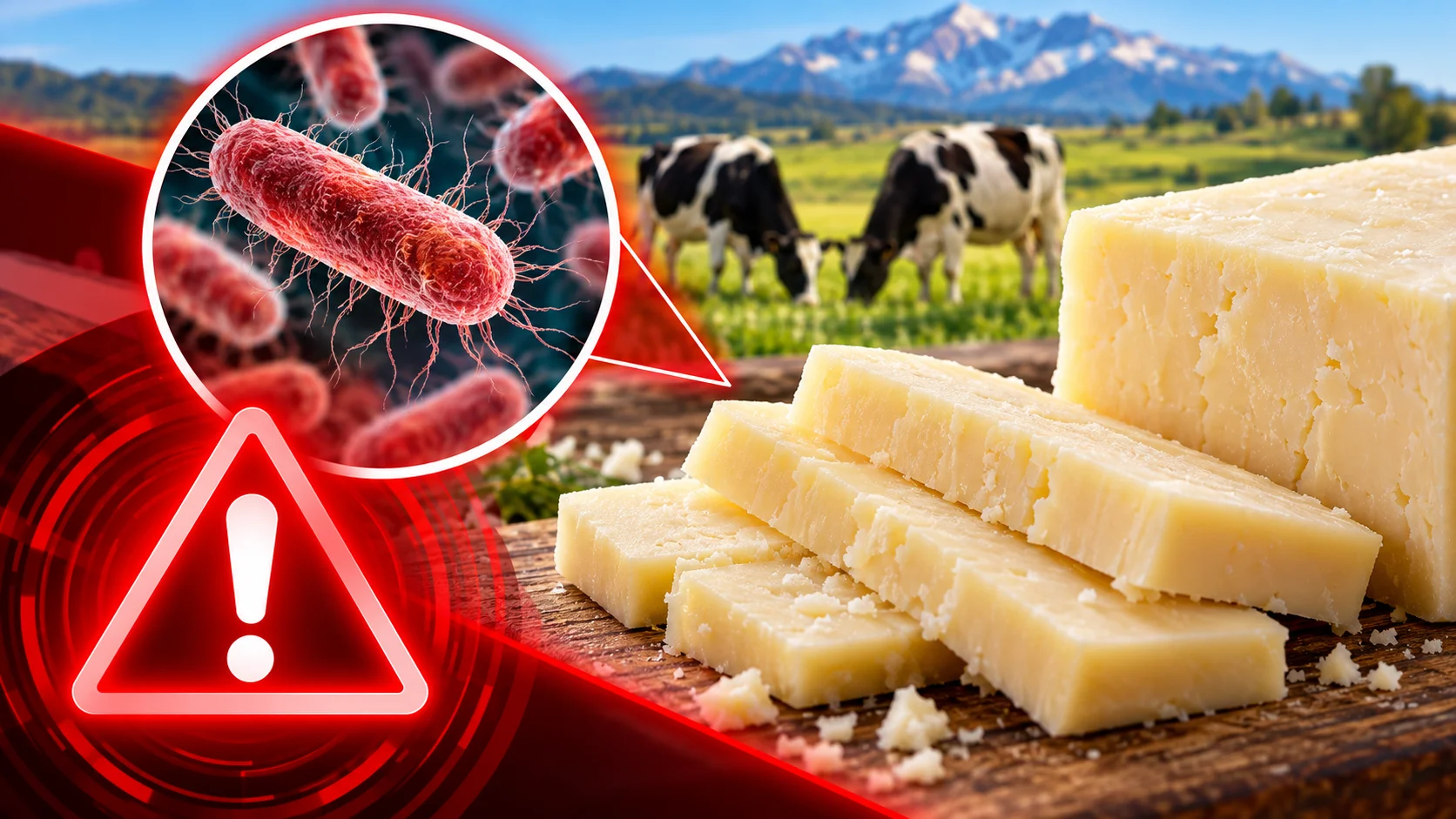
As of September 25, 2026, FDA reported 13 illnesses in nine states, including eight hospitalizations and three cases of hemolytic uremic syndrome, a serious complication that can cause kidney failure. No deaths had been reported, and the investigation remained ongoing because regulators had not identified a specific lot, production date, or source of contamination.
Quick Facts
- Product: Sierra Nevada Graziers grass-fed raw milk cheeses
- Hazard: Shiga toxin-producing E. coli O26:H11
- Cases: 13 illnesses, 8 hospitalizations, 3 HUS cases, and no deaths as of September 25, 2026
- Status: Nationwide recall and active FDA/CDC outbreak investigation
Latest Graziers Raw Milk Cheese Recall and Outbreak Developments
September 2026
September 29, 2026 – FDA published Sierra Nevada Cheese Company’s recall announcement covering all Graziers Raw Milk Cheese currently in the market. The recall includes Monterey Jack, Jalapeño Jack, Medium Cheddar, and Sharp Cheddar products because of possible contamination with E. coli O26:H11.
[1]
September 25, 2026 – FDA reported 13 illnesses in California, Colorado, Georgia, Kentucky, Michigan, Nevada, Oregon, Tennessee, and Utah. Eight patients had been hospitalized, three developed hemolytic uremic syndrome, and no deaths had been reported.
[2]
September 25, 2026 – CDC reported that more than half of the sick people were children age five or younger. Of nine patients interviewed about their food exposures, all nine reported eating Sierra Nevada Graziers raw milk cheese before becoming ill.
[3]
September 24, 2026 – FDA contacted Sierra Nevada Cheese Company regarding the outbreak and recommended a recall. The company agreed that day to recall all Graziers Raw Milk Cheese and stopped production and shipment while cooperating with the ongoing investigation.
[2]
What Is the Graziers Raw Milk Cheese Recall?
The recall involves Sierra Nevada Cheese Company’s Graziers grass-fed raw milk cheeses. The affected varieties include Medium Cheddar, Sharp Cheddar, Jalapeño Jack, and Monterey Jack.
Because investigators had not narrowed the contamination to a particular production date, lot, or date code, Sierra Nevada Cheese Company recalled all Graziers Raw Milk Cheese products listed in the announcement that were still in distribution.
The products were distributed nationwide through retailers, distributors, direct customers, food-service operations, and wholesalers.
Which Graziers Raw Milk Cheese Products Are Recalled?
The recall includes multiple retail and bulk products:
- Graziers Raw Milk Monterey Jack – 8-ounce square – UPC 6-87652-16400-9
- Graziers Raw Milk Jalapeño Jack – 8-ounce square – UPC 6-87652-16403-0
- Graziers Raw Milk Medium Cheddar – 8-ounce square – UPC 6-87652-16506-8
- Graziers Raw Milk Sharp Cheddar – 8-ounce square – UPC 6-87652-16507-5
- Graziers Raw Milk Medium Cheddar – 16-ounce brick – UPC 6-87652-16501-3
- Graziers Raw Milk Monterey Jack – 5-pound loaf – Item 6425
- Graziers Raw Milk Jalapeño Jack – 5-pound loaf – Item 6426
- Graziers Raw Milk Medium Cheddar – 5-pound loaf – Item 6510
- Graziers Raw Milk Sharp Cheddar – 5-pound loaf – Item 6511
- Graziers Raw Milk Cheddar – 40-pound block – Items 6515 and 6516
FDA states that affected products were sold nationwide and online. Some bulk cheeses were supplied to food-service businesses or wholesalers and may have been repackaged before sale.
Why Was Graziers Raw Milk Cheese Recalled?
The recall followed an investigation into illnesses caused by E. coli O26:H11, a Shiga toxin-producing E. coli strain. Epidemiologic evidence linked illnesses to consumption of Graziers raw milk cheese.
FDA reported that all nine patients interviewed during the early investigation said they had consumed Sierra Nevada Graziers raw milk cheese. Investigators continued working to determine the specific source of contamination.
How Many Illnesses Have Been Reported?
As of September 25, 2026, 13 people had been identified in the outbreak. Eight had been hospitalized, and three developed hemolytic uremic syndrome.
No deaths had been reported. Illnesses occurred in California, Colorado, Georgia, Kentucky, Michigan, Nevada, Oregon, Tennessee, and Utah.
The most recent reported illness onset was August 26, 2026. CDC cautions that the actual number of illnesses may be higher because some people recover without medical care or testing.
Are Children Being Affected?
Children represent a significant portion of this outbreak. CDC reported that more than half of the identified patients were age five or younger.
The ages of patients ranged from one to 58 years, with a median age of five. Young children are also among the groups at greater risk of severe complications from Shiga toxin-producing E. coli infections.
What Is E. coli O26:H11?
E. coli O26:H11 is a Shiga toxin-producing Escherichia coli, or STEC. These bacteria can cause severe gastrointestinal illness and, in some cases, life-threatening complications.
Infections may produce severe stomach cramps, diarrhea that can become bloody, vomiting, nausea, and fever. Symptoms can begin within several days after contaminated food is eaten and may sometimes take up to nine days to appear.
What Is Hemolytic Uremic Syndrome?
Hemolytic uremic syndrome, or HUS, is a serious complication that can develop after a Shiga toxin-producing E. coli infection. It can damage red blood cells and platelets and cause acute kidney failure.
Signs can include decreased urination, extreme fatigue, unexplained bruising, blood in the urine, and reduced alertness. HUS requires urgent medical care and frequently requires hospitalization.
Why Is Raw Milk Cheese a Food-Safety Concern?
Raw milk has not undergone pasteurization, the heat treatment used to destroy disease-causing microorganisms. Raw dairy products can therefore carry pathogens if contamination occurs during milk production or processing.
CDC advises choosing pasteurized milk and dairy products, particularly for young children and others at increased risk of serious foodborne illness.
Raw milk cheese can be legally produced under certain federal requirements, but aging does not guarantee that every pathogenic organism will be eliminated. A separate
RAW Farm Cheddar Cheese page covers another raw-milk cheese product with an E. coli outbreak history, but the Graziers recall covers different products and current investigation facts.
Where Was the Recalled Cheese Sold?
FDA states that recalled Graziers cheeses were distributed nationwide through distributors, retailers, direct customers, and online sales.
Bulk five-pound loaves and larger blocks were also available to food-service businesses and wholesalers. Consumers may therefore encounter recalled cheese that was cut, repackaged, or served without its original Sierra Nevada packaging.
What Should Consumers Do With Recalled Graziers Cheese?
Consumers should not eat or serve any recalled Sierra Nevada Graziers raw milk cheese. The product should be returned to the place of purchase for a refund or discarded.
Because the cheeses have a long shelf life, FDA and CDC specifically advise checking refrigerators and freezers. Cheese stored without its original packaging should be discarded if its recall status cannot be determined.
Surfaces, utensils, containers, refrigerator shelves, and other items that contacted recalled cheese should be thoroughly cleaned and sanitized.
When Should Someone Seek Medical Care?
People who ate recalled cheese should contact a healthcare provider if they develop symptoms of E. coli infection, particularly bloody diarrhea, persistent diarrhea, repeated vomiting, high fever, or signs of dehydration.
Urgent medical care is especially important if symptoms suggest HUS, such as markedly decreased urination, blood in the urine, unusual bruising, extreme fatigue, or decreased alertness.
What Does the Outbreak Evidence Show?
Public health investigators interviewed nine of the 13 identified patients about what they ate before becoming ill. All nine reported consuming Graziers raw milk cheese.
CDC also reported that whole genome sequencing showed bacteria from sick people’s samples were closely related genetically. This evidence supports the conclusion that the illnesses likely originated from a common source.
The investigation remained ongoing as of the latest federal update, and regulators had not identified the specific point or mechanism of contamination.
Who May Be Affected?
Consumers who purchased or ate Graziers Medium Cheddar, Sharp Cheddar, Jalapeño Jack, or Monterey Jack raw milk cheese may have been exposed to an affected product.
People who became ill after eating the cheese should preserve packaging, photographs, purchase records, restaurant receipts, medical documentation, and laboratory testing when available.
What Evidence May Matter in a Graziers Raw Milk Cheese Claim?
- The original cheese package or a photograph of the label
- UPC or item-number information
- Retail, online, or restaurant purchase records
- The date the cheese was eaten
- Medical records documenting gastrointestinal illness
- Laboratory test results identifying E. coli
- Hospital records or documentation of HUS
Foodborne-illness claims generally depend on evidence connecting an individual’s exposure to a medically documented illness. Product identification, timing, outbreak data, and laboratory evidence may all be relevant.
Who May Be Liable for an E. coli Cheese Illness?
Potential liability depends on the facts and applicable law. Manufacturers, processors, distributors, retailers, food-service businesses, and other entities in the supply chain may potentially be evaluated when contaminated food allegedly causes illness.
Possible legal theories may include negligence, defective food products, breach of warranty, or other state-law claims. A recall or outbreak association does not automatically establish civil liability in an individual case.
Current Graziers Raw Milk Cheese Lawsuit and Recall Status
The nationwide recall is connected to an active FDA and CDC investigation involving E. coli O26:H11 illnesses. FDA states that the investigation remains ongoing.
The federal materials cited here do not announce a nationwide class action, multidistrict litigation proceeding, or coordinated personal-injury settlement involving Sierra Nevada Graziers raw milk cheese.
Individual legal review may still be appropriate when a consumer develops laboratory-confirmed E. coli infection, HUS, or another serious illness after eating an affected product.
Do I Qualify for a Graziers Raw Milk Cheese Claim?
- Did you eat recalled Sierra Nevada Graziers raw milk cheese?
- Did you develop severe diarrhea, bloody diarrhea, vomiting, or other E. coli symptoms afterward?
- Were you diagnosed with E. coli infection, hospitalized, or diagnosed with HUS?
- Can you document the cheese purchase, exposure, laboratory testing, or medical treatment?
Answering yes to one or more questions does not automatically establish a lawsuit. An attorney can review the product, exposure history, medical evidence, outbreak data, and applicable filing deadlines to determine whether further investigation may be appropriate.
Legal Process for a Graziers Raw Milk Cheese Claim
- Free case review. An attorney reviews the cheese exposure, illness, treatment, and available documentation.
- Investigation. Evidence may include packaging, purchase records, laboratory results, medical records, outbreak data, and FDA or CDC documents.
- Filing. If the evidence and applicable law support a claim, a foodborne-illness lawsuit may be filed against one or more potentially responsible parties.
- Discovery/negotiation. The parties may exchange records, obtain testimony, consult medical or food-safety experts, and discuss possible resolution.
- Resolution. A case may conclude through settlement, dismissal, court ruling, or trial depending on its facts and procedural history.
Compensation in an E. coli Foodborne Illness Case
Depending on the circumstances, a claim may seek damages for hospitalization, medical expenses, lost income, pain and suffering, kidney complications, future treatment, and other losses permitted under applicable law.
Compensation amounts vary by case. Past results do not guarantee future outcomes.
Important Graziers Raw Milk Cheese Recall Developments
| Event |
Month/Year |
Type |
Status |
Source |
Notes |
| FDA Recall Publication |
September 2026 |
Nationwide Recall |
Ongoing |
[1] |
All listed cheeses recalled |
| FDA Outbreak Update |
September 2026 |
Outbreak Investigation |
Ongoing |
[2] |
Thirteen illnesses identified |
| CDC Investigation Update |
September 2026 |
Epidemiologic Investigation |
Ongoing |
[3] |
All interviewed ate cheese |
Frequently Asked Questions
What is the Graziers Raw Milk Cheese Lawsuit?
The Graziers Raw Milk Cheese Lawsuit topic concerns potential claims from people who developed E. coli illness after eating recalled Sierra Nevada Graziers raw milk cheese. FDA and CDC are investigating an outbreak linked to the recalled products.
Which Graziers cheeses were recalled?
The recall covers Graziers raw milk Medium Cheddar, Sharp Cheddar, Jalapeño Jack, and Monterey Jack. Retail and bulk products are included.
How many people have become sick?
FDA reported 13 illnesses as of September 25, 2026. Eight people had been hospitalized, three developed HUS, and no deaths had been reported.
Which states have reported illnesses?
Cases have been reported in California, Colorado, Georgia, Kentucky, Michigan, Nevada, Oregon, Tennessee, and Utah. Distribution of the recalled cheese was nationwide.
Why were all Graziers raw milk cheeses recalled?
Investigators had not identified a specific lot, date code, production date, or exact contamination source. Sierra Nevada Cheese Company therefore recalled all listed Graziers Raw Milk Cheese currently in distribution.
What are the symptoms of E. coli infection?
Symptoms can include severe stomach cramps, diarrhea that may become bloody, vomiting, nausea, and fever. Some people can develop HUS, a serious condition that may cause kidney failure.
What should I do if I have recalled Graziers cheese?
Do not eat or serve it. Return it to the place of purchase for a refund or discard it, and clean surfaces or containers that may have contacted the cheese.
Can I file a Graziers Raw Milk Cheese Lawsuit?
A consumer who developed medically documented E. coli infection or HUS after eating recalled Graziers cheese may warrant individual legal review. A recall or outbreak association does not itself establish liability, and any claim depends on exposure, causation, damages, and applicable law.
Do I Have a Graziers Raw Milk Cheese Lawsuit?
If you or a loved one developed a serious E. coli infection after eating recalled Graziers Raw Milk Cheese, you may have legal options. Contact Schmidt & Clark for a free case review.
Start My Free Case Review
References
[1] https://www.fda.gov/safety/recalls-market-withdrawals-safety-alerts/sierra-nevada-cheese-company-recalls-graziers-raw-milk-cheese-because-possible-health-risk
[2] https://www.fda.gov/food/outbreaks-foodborne-illness/outbreak-investigation-e-coli-o26h11-raw-milk-cheese-september-2026
[3] https://www.cdc.gov/ecoli/outbreaks/raw-milk-cheese-09-26/investigation.html
[4] https://www.cdc.gov/ecoli/signs-symptoms/hus.html