

Table of contents
- Latest Pork Guanciale Recall Updates
- September 6, 2026: FSIS Announces Class I Guanciale Recall
- What Is Listeria Monocytogenes?
- Which Pork Guanciale Are Affected?
- Why Was Pork Guanciale Recalled?
- Reported Incidents, Injuries, or Illnesses
- What Should Consumers Do?
- Legal Options
- Filing Deadlines
- Frequently Asked Questions
- What Are the Symptoms of Listeriosis?
- Is There a Pork Guanciale Recall Lawsuit?
- What Is a Class I Food Recall?
- Was the Recalled Pork Guanciale Distributed Outside the United States?
- What Should I Do If I Ate the Recalled Guanciale but Feel Fine?
- How Long After Eating Contaminated Guanciale Could Symptoms Appear?
- References
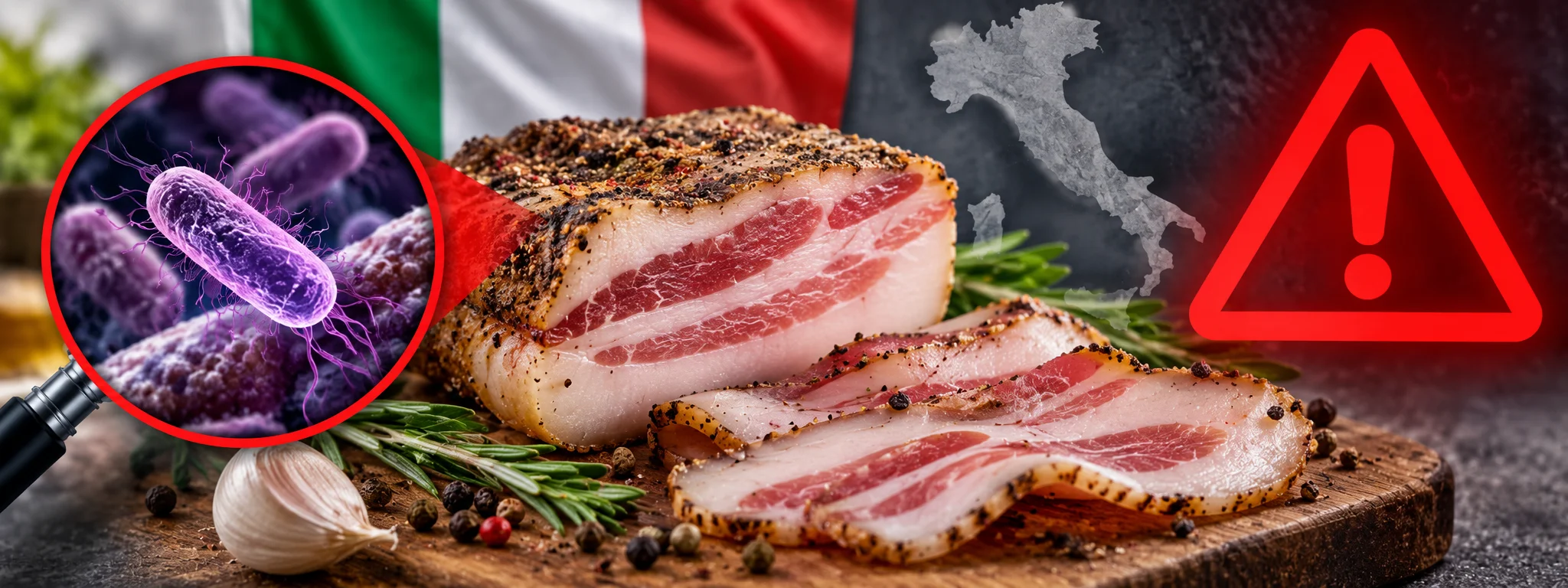
Prime Line Distributors, Inc. and Ferrarini USA, Inc. recalled ready-to-eat dry-cured pork jowl, sold as guanciale, after a routine import inspection found possible Listeria monocytogenes contamination. The Food Safety and Inspection Service announced the voluntary recall on September 6, 2026.
The recall covers about 1,513 pounds of guanciale sold to food-service and retail buyers in Florida and seven other states. FSIS rated the recall Class I, its highest-risk category, based on the possible Listeria monocytogenes contamination.
Consumers who have the recalled guanciale should throw it away or return it for a refund. The recall remains open, listed as “Active” by FSIS as of its most recent update.
Recall at a glance
- Action type: Voluntary recall (Class I)
- Announcement and initiation dates: Announced and initiated September 6, 2026
- Company and responsible agency: Prime Line Distributors, Inc. and Ferrarini USA, Inc.; USDA Food Safety and Inspection Service
- Recall or campaign number: 019-020-2026
- Affected models, lots, UPCs, serial numbers, or VINs: Lot 263311US; Est. “IT 1937 L CE”; best-if-used-by 05.16.27
- Number of affected units: About 1,513 pounds
- Sold at and sale period: Prime Line: food service/retail in Florida. Ferrarini: distributors/food service in CA, FL, ID, IL, MI, NJ, NY, TX. Imported July 2026; price not stated
- Hazard: Possible contamination with Listeria monocytogenes
- Reported incidents, injuries, illnesses, and deaths: No confirmed reports of illness as of the notice
- Remedy: Throw the guanciale away or return it to the place of purchase; do not sell or serve it
Latest Pork Guanciale Recall Updates
September 6, 2026: FSIS Announces Class I Guanciale Recall
FSIS announced recall number 019-020-2026 after a routine import-reinspection sample tested positive for Listeria monocytogenes [1]. Prime Line Distributors, Inc. and Ferrarini were recalling about 1,513 pounds of ready-to-eat pork guanciale. FSIS classified the action Class I, its highest-risk category, with no confirmed illnesses reported at the time. The affected guanciale had already reached retailers in eight states by the announcement.What Is Listeria Monocytogenes?
Listeria monocytogenes is a type of bacteria. It can contaminate food, according to the CDC [2]. People who eat contaminated food can become infected. The resulting illness, listeriosis, is rare but can be serious. The CDC says Listeria is most likely to harm pregnant people, newborns, older adults, and people with weakened immune systems. This recall involves a possible Listeria monocytogenes finding on imported guanciale found during routine import testing.Which Pork Guanciale Are Affected?
Prime Line and Ferrarini recalled several guanciale package variants that share one lot number, establishment number, and best-if-used-by date, but carry different labels:- Prime Line Distributors, Inc. Guanciale Pork Jowl Product of Italy – cardboard cases of two vacuum-packed pieces, marked “LOT: 263311US” and “BEST IF USE BY DATE: 05.16.27”
- Guanciale Pork Jowl Product of Italy, individually vacuum-packed, marked “LOT: 263311US” and “BEST IF USE BY: 05.16.27,” with an additional “DOK GUANCIALE” label
- Ferrarini Guanciale Dry-Cured Pork Jowl, cardboard cases of two vacuum-packed pieces, marked “LOT: 263311US” and “BEST IF USE BY DATE: 05.16.27”
- Ferrarini Guanciale Dry-Cured Pork Jowl, individually vacuum-packed, marked “LOT: 263311US” and “BEST IF USE BY DATE: 05.16.27”
- All variants bear establishment number “IT 1937 L CE” inside the Italian mark of inspection or printed on the case label
Why Was Pork Guanciale Recalled?
Pork guanciale was recalled because a routine FSIS import-reinspection sample of the imported product tested positive for Listeria monocytogenes. FSIS conducts this testing on imported meat and poultry shipments at the point of entry into the United States. A positive result for this pathogen triggers a Class I recall, FSIS’s highest-risk classification. Listeria monocytogenes can cause listeriosis, a serious and sometimes life-threatening infection in vulnerable people. The recalled guanciale was produced in Italy on May 21, 2026, at Est. “IT 1937 L CE.” It was imported into the U.S. in July 2026, before reaching food-service and retail distributors in eight states.Reported Incidents, Injuries, or Illnesses
No confirmed illnesses had been reported as of the FSIS notice on September 6, 2026. FSIS said anyone who feels sick after eating the recalled product should call a doctor and describe the exposure. Illness reports can lag behind a Class I recall like this one. Listeriosis symptoms take time to appear, and laboratory confirmation adds delay before a case is linked to guanciale recalled by Prime Line or Ferrarini. FSIS and CDC continue to track reports connected to this recall through routine surveillance. The reported incident count could change as new information becomes available. Any update will appear in Latest Pork Guanciale Recall Updates above.Were you or a family member hurt by this product?
Schmidt & Clark offers a free, no-obligation case review for people who developed a laboratory-confirmed listeria infection after eating recalled Prime Line or Ferrarini guanciale. A free review does not promise that you qualify for compensation or that a case exists.
Start My Free Case Review
What Should Consumers Do?
Anyone who has the recalled Prime Line or Ferrarini guanciale at home or at a business should take the following steps:- Do not eat, sell, or serve any guanciale that matches the recalled lot number, establishment number, or best-if-used-by date.
- Throw the recalled guanciale away or return it to the place of purchase for a refund or exchange.
- Wash and sanitize any surfaces, utensils, or storage containers that touched the recalled guanciale to avoid cross-contamination.
- Contact Prime Line Distributors at 954-925-4500 or Ferrarini USA at 818-256-1622 with questions about the affected products. You can also call the USDA Meat and Poultry Hotline at 888-674-6854.
- Watch for fever and flu-like symptoms after eating the recalled guanciale, and seek medical care if symptoms develop. This matters most if you are pregnant, 65 or older, or immunocompromised, per CDC guidance [3].
Legal Options
No lawsuit, class action, or multidistrict litigation has been filed over this recall. No settlement has been reported either. A recall does not automatically establish liability or eligibility for compensation. Consumers who develop a laboratory-confirmed listeria infection linked to this specific product may have grounds for an individual product-liability claim. A lawyer can evaluate that claim based on medical records and proof of exposure.Filing Deadlines
Deadlines for a product-liability claim over a foodborne illness come from state law, not from the recall itself, since FSIS recall notices do not set legal deadlines. That deadline depends on where the person lives and when the illness and its diagnosis happened. Some states start the clock at diagnosis rather than at the date of exposure. Missing a deadline can end a claim even when the underlying facts are strong, so anyone considering a claim about this recall should check with a lawyer promptly.Frequently Asked Questions
What Are the Symptoms of Listeriosis?
Listeriosis symptoms usually include fever and flu-like aches that can progress to headache, stiff neck, confusion, or loss of balance in people who are not pregnant. Pregnant people usually have mild symptoms, but the infection can cause miscarriage, stillbirth, or premature delivery.Is There a Pork Guanciale Recall Lawsuit?
No lawsuit, class action, or MDL has been filed over the pork guanciale recall. The JPML’s pending-MDL list does not include this product. See Legal Options above for who may have an individual product-liability claim.What Is a Class I Food Recall?
A Class I food recall is USDA’s highest-risk category. FSIS says it applies when a product could reasonably cause serious health consequences or death. This recall was Class I because of the Listeria monocytogenes finding.Was the Recalled Pork Guanciale Distributed Outside the United States?
The recalled pork guanciale was not distributed outside the United States. FSIS lists shipments only to eight U.S. states, and no matching Canadian or European action has been reported.What Should I Do If I Ate the Recalled Guanciale but Feel Fine?
If you ate the recalled guanciale but feel fine, the CDC says most people without symptoms do not need testing or treatment. Follow the symptom-watch step in What Should Consumers Do above, and call a healthcare provider with questions.How Long After Eating Contaminated Guanciale Could Symptoms Appear?
Symptoms of invasive listeriosis usually appear within two weeks of eating contaminated food. Intestinal symptoms, such as diarrhea and vomiting, typically start within 24 hours and last one to three days. Either timeline calls for the medical follow-up described in What Should Consumers Do above.References
- https://www.fsis.usda.gov/recalls-alerts/prime-line-distributors-inc–and-ferrarini-usa-inc–recall-imported-ready-eat-pork
- https://www.cdc.gov/listeria/about/index.html
- https://www.cdc.gov/listeria/signs-symptoms/index.html