

Table of contents
- Latest Martina Mangoes Recall Updates
- August 28, 2026: Panorama Produce Recalls Martina Mangoes
- What Is Salmonella?
- Which Martina Mangoes Are Affected?
- Why Were Martina Mangoes Recalled?
- Reported Incidents, Injuries, or Illnesses
- What Should Consumers Do?
- Legal Options
- Filing Deadlines
- Frequently Asked Questions
- What Are the Symptoms of Salmonella Poisoning?
- Who Is Panorama Produce?
- Is a Martina Mango Recall Lawsuit Possible If I Got Sick?
- What Should I Do If I Ate a Recalled Martina Mango and Feel Fine?
- Can I File a Martina Mango Recall Lawsuit Without Getting Sick?
- How Serious Can a Salmonella Infection Become?
- References
Panorama Produce Sales Inc. issued a voluntary recall of 302 boxes of Martina-brand size 9 mangoes on August 28, 2026. Regulators found Salmonella during testing on the farm that grew the fruit.
The recalled mangoes reached select Walmart stores in four Northeastern states between August 10 and August 21, 2026. They were packaged in a Martina-branded case marked with PLU 4584 and UPC 07503061948050.
The Food and Drug Administration posted the recall on August 29, 2026, and it remains open. Consumers should dispose of the recalled mangoes, return them to the place of purchase, or contact Panorama Produce with questions.
Recall at a glance
- Action type: Voluntary recall
- Announcement and initiation dates: Announced August 28, 2026 (posted August 29); distributed August 10-21, 2026
- Company and responsible agency: Panorama Produce Sales Inc. and the U.S. Food and Drug Administration
- Recall or campaign number: Not assigned in the notice
- Affected models, lots, UPCs, serial numbers, or VINs: Martina-branded case, size 9 mangoes, light-blue sticker reading “Agrofepac, Produce of Mexico,” PLU 4584, UPC 07503061948050
- Number of affected units: 302 boxes
- Sold at and sale period: Select Walmart stores in Connecticut, New York, New Jersey, and Pennsylvania, August 10-21, 2026 (price not stated)
- Hazard: Possible Salmonella contamination
- Reported incidents, injuries, illnesses, and deaths: No illnesses have been reported to date in connection with the recalled product
- Remedy: Dispose of the recalled mangoes or return them to the place of purchase; contact Panorama Produce at information@panoramaproduce.com
Latest Martina Mangoes Recall Updates
August 28, 2026: Panorama Produce Recalls Martina Mangoes
Panorama Produce announced a voluntary recall on August 28, 2026, covering 302 boxes of Martina-brand mangoes sold in four Northeastern states. Food and Drug Administration testing prompted the recall [1]. The FDA posted the notice August 29, 2026, and the recall remains open. The reason for this shared-source recall is explained fully below, and the incident count appears in Reported Incidents, Injuries, or Illnesses.What Is Salmonella?
Salmonella are a group of bacteria. They cause salmonellosis, a gastrointestinal illness, according to the FDA [2]. The bacteria spread through contaminated food, unwashed hands, and contact with certain animals. This recall responds to possible Salmonella contamination rather than a confirmed illness in Martina-brand mangoes. The FDA recommends contacting a healthcare provider if symptoms develop after eating a recalled mango, since salmonellosis can occasionally become serious.Which Martina Mangoes Are Affected?
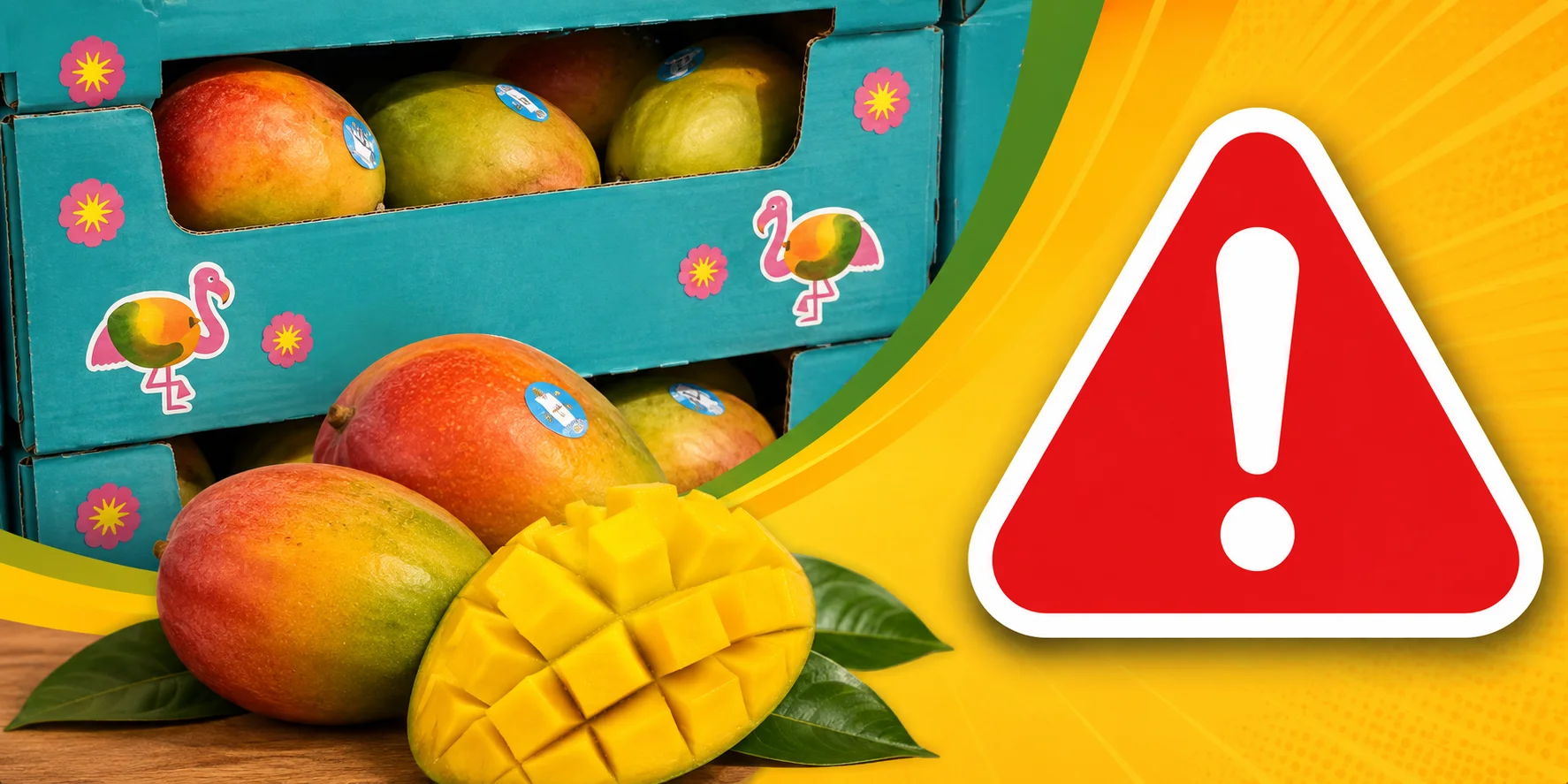
The recalled Martina mangoes can be identified by the following details:- Mangoes are packed in a Martina-branded case containing size 9 fruit, distributed by Panorama Produce Sales Inc. of Mamaroneck, New York.
- Each individual mango carries a light-blue sticker printed with “Agrofepac, Produce of Mexico.” The sticker also shows PLU number 4584 and UPC number 07503061948050.
- The recalled mangoes were sold in select Walmart stores in Connecticut, New York, New Jersey, and Pennsylvania. They were sold between August 10 and August 21, 2026.
Why Were Martina Mangoes Recalled?
Martina Mangoes were recalled because FDA testing turned up Salmonella in mangoes from the same growing operation as the recalled fruit. The sampled mangoes were never sold to consumers. They came from the same growing source as the mangoes already in Martina-branded cases. Regulators tested only a sample from the farm rather than every mango Panorama Produce had already shipped. Because that sample came back positive, officials treated it as grounds to recall the entire shipment as a precaution. Panorama Produce is conducting the recall voluntarily, in coordination with regulators. No illness has been reported so far tied to the recalled fruit.Reported Incidents, Injuries, or Illnesses
No illnesses have been reported to date in connection with the recalled Martina mangoes, according to the Food and Drug Administration’s recall notice. The recall was prompted by testing results, not by confirmed illness reports. The sampled mangoes that triggered the recall were found through routine testing on the farm, not through consumer illness complaints. Anyone who develops symptoms after eating one should check the consumer steps below for when to see a doctor. This page reflects the reported-incidents figure as stated in the FDA’s recall notice, posted August 29, 2026, for the Martina mango recall. Consumers can check that notice directly for any later updates to the count.Were you or a family member hurt by this product?
Schmidt & Clark offers a free, no-obligation case review of possible Salmonella food-poisoning claims linked to the Martina mango recall. A review does not promise eligibility, causation, or any specific result.
Start My Free Case Review
What Should Consumers Do?
Consumers who bought the recalled Martina mangoes should take the following steps:- Stop eating any mangoes that match the recalled PLU 4584 or UPC 07503061948050.
- Dispose of the recalled mangoes or return them to the place of purchase for a refund.
- Pay attention to Salmonella warning signs such as diarrhea, fever, nausea, vomiting, and cramps. A high fever, bloody stool, or diarrhea lasting more than two days calls for a doctor’s visit [3].
- Contact a healthcare provider if you or a family member develops symptoms after eating a recalled mango.
- Reach Panorama Produce at information@panoramaproduce.com, Monday through Saturday from 9 a.m. to 7 p.m. Eastern time, or report a reaction to the Food and Drug Administration at 1-888-INFO-FDA (1-888-463-6332).
Legal Options
A voluntary recall does not automatically establish that Panorama Produce is legally responsible for an illness. No lawsuit or class action has been filed over the Martina mango recall. Anyone who developed a Salmonella infection after eating a recalled Martina mango can have Schmidt & Clark review a possible food-poisoning claim. The firm offers a free case evaluation, but that evaluation does not guarantee a particular outcome or confirm eligibility for a claim. Readers can also see our food poisoning lawsuit page for general background on Salmonella-related claims, including how these cases are typically evaluated and pursued.Filing Deadlines
Deadlines for filing a food-poisoning claim come from state law, not from Panorama Produce’s recall notice. They can be easy to overlook. The clock can start differently depending on your state and on when the Salmonella illness and its diagnosis actually occurred. Some states measure from the diagnosis date instead of the day you ate the mango. A missed filing window can end a Salmonella claim no matter how strong the medical evidence is. Anyone who got sick from a recalled Martina mango should talk to a lawyer soon.Frequently Asked Questions
What Are the Symptoms of Salmonella Poisoning?
Salmonella poisoning symptoms usually clear up within four to seven days without treatment. Babies, seniors, and anyone with a weakened immune system face a higher risk of severe illness. Call a doctor for diarrhea or vomiting lasting more than two days, bloody stool, or a fever above 102F.Who Is Panorama Produce?
Panorama Produce Sales Inc. is the mango importer that recalled the Martina-brand mangoes. The company is based in Mamaroneck, New York. It has specialized in importing mangoes for more than 20 years and ranks among the five largest mango importers in the United States.Is a Martina Mango Recall Lawsuit Possible If I Got Sick?
A Martina mango recall lawsuit may be possible when a Salmonella diagnosis follows a recalled mango. A claim typically needs medical records and purchase information connecting the illness to this specific recall before it can move forward.What Should I Do If I Ate a Recalled Martina Mango and Feel Fine?
If you ate a recalled Martina mango and feel fine, you likely do not need medical care right away. Salmonella symptoms can take anywhere from six hours to six days to appear, so it is worth watching for illness during that window.Can I File a Martina Mango Recall Lawsuit Without Getting Sick?
You generally cannot file a Martina mango recall lawsuit without getting sick. A claim needs a diagnosed Salmonella infection tied to the recall. If symptoms appear later, keep the packaging, receipt, and any medical records, since a later evaluation would review that documentation.How Serious Can a Salmonella Infection Become?
A Salmonella infection can become serious in rare cases. It can spread into the blood, the membranes around the brain and spinal cord, a bone, or a joint. Some people later develop reactive arthritis. The CDC estimates that about 450 people die from salmonellosis in the United States each year.References
- https://www.fda.gov/safety/recalls-market-withdrawals-safety-alerts/panorama-produce-recalls-mangoes-due-possible-salmonella-contamination
- https://www.fda.gov/food/foodborne-pathogens/salmonella-salmonellosis
- https://www.cdc.gov/salmonella/signs-symptoms/index.html