

Table of contents
- Latest Brookshire’s Eggs Recall Updates
- September 3, 2026: Outbreak Closed with Final Case Count
- July 24, 2026: First Joint Outbreak Update
- July 22, 2026: Recall Announced
- What Is Salmonella Enteritidis?
- Which Brookshire’s Eggs Are Affected?
- Why Were the Brookshire’s Eggs Recalled?
- Reported Incidents, Injuries, or Illnesses
- What Should Consumers Do?
- Legal Options
- Filing Deadlines
- Frequently Asked Questions
- Can You File a Salmonella Lawsuit over the Brookshire’s Eggs Recall?
- What Compensation Could You Recover in a Salmonella Food Poisoning Claim?
- What Evidence Do You Need If You Got Sick from Recalled Eggs?
- What Are the Symptoms of Salmonella Infection?
- How Many People Were Sickened in the Brookshire’s Eggs Recall?
- How Long Did the Brookshire’s Eggs Salmonella Investigation Last?
- References
Midwest Poultry Services, L.P. voluntarily recalled 1,589,577 dozen white and brown cage-free shell eggs on July 22, 2026. Testing at its two Texas farms had found a possible Salmonella Enteritidis risk.
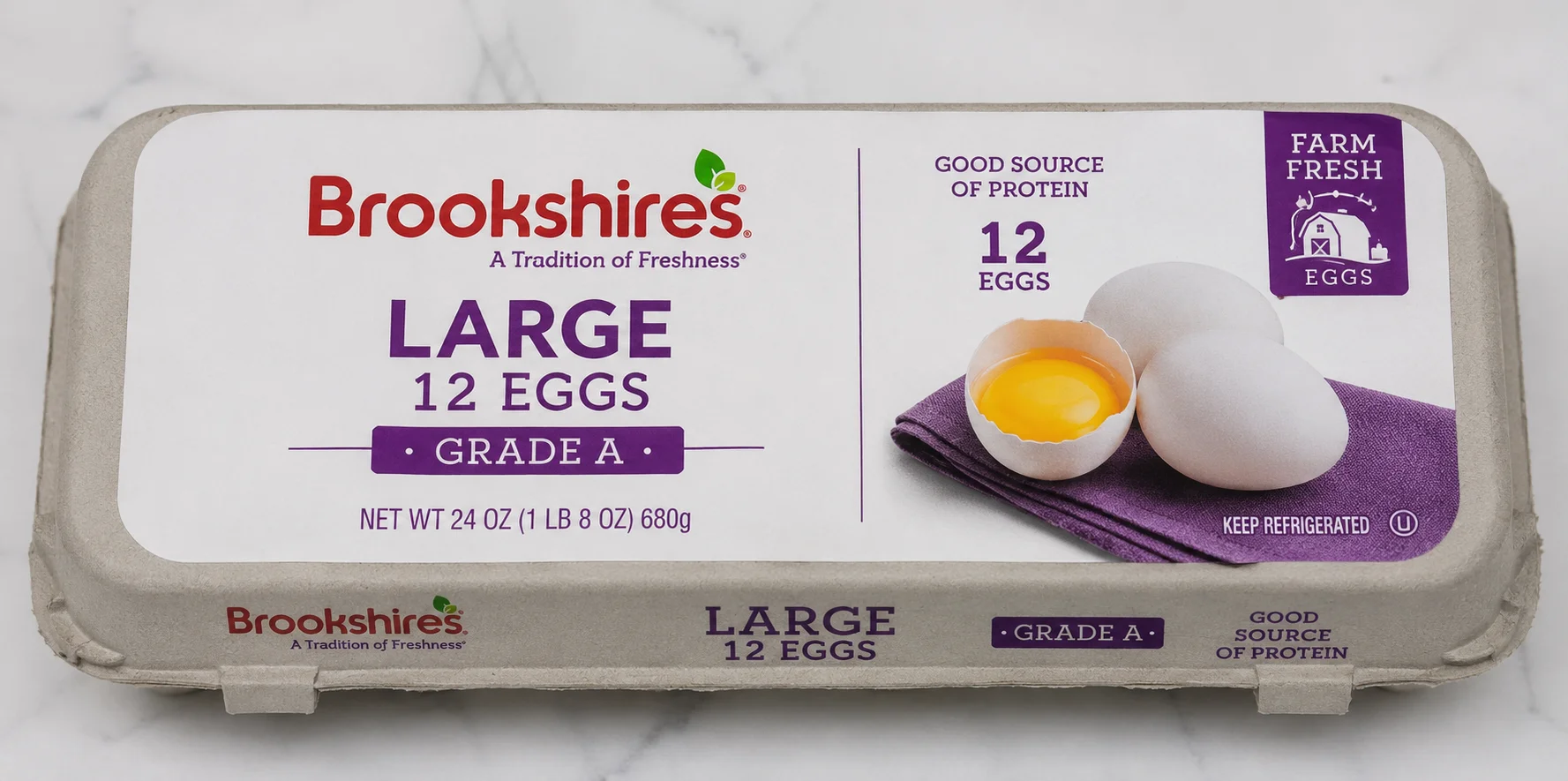
Specific Brookshire’s egg cartons, identified by a plant code and date range printed on the carton, are included. They were sold in stores across Texas, Oklahoma, Arkansas, Louisiana, New Mexico and Mississippi through mid-August 2026.
Salmonella Enteritidis can cause fever, diarrhea and abdominal cramps. FDA and CDC linked the recalled eggs to this outbreak. Throw away or return any carton for a refund. The recall is now closed.
Recall at a glance
- Action type: Voluntary recall
- Announcement and initiation dates: Announced July 22, 2026, on shelves through Aug 17, 2026
- Company and responsible agency: Midwest Poultry Services, L.P. and FDA
- Recall or campaign number: Not stated in the notice
- Affected models, lots, UPCs, serial numbers, or VINs: Plant code P-1950/0840962, Julian Date 157-184 on Brookshire’s Large, XL and Jumbo cartons (6 to 60 ct)
- Number of affected units: About 1,589,577 dozen eggs (all brands combined)
- Sold at and sale period: Kroger and Brookshire Grocery stores across six states (TX, OK, AR, LA, NM, MS), price not stated
- Hazard: Potential Salmonella Enteritidis contamination
- Reported incidents, injuries, illnesses, and deaths: 134 illnesses, 34 hospitalizations, 0 deaths in 18 states as of September 3, 2026
- Remedy: Avoid eating the eggs, return for a full refund, and clean surfaces the eggs touched
Latest Brookshire’s Eggs Recall Updates
September 3, 2026: Outbreak Closed with Final Case Count
The FDA and CDC closed their joint investigation on September 3, 2026, per FDA’s outbreak investigation page [1]. Three samples from the Texas facility matched the outbreak strain by whole genome sequencing, confirming the final case count. That genetic match is why officials pointed to the recalled eggs as the likely source of the outbreak. FDA’s investigation is now closed, and the recalled eggs are past their sell-by and best-by dates.July 24, 2026: First Joint Outbreak Update
FDA and CDC’s first joint outbreak update appeared on the same FDA outbreak investigation page. It reported 98 illnesses in 17 states and 26 hospitalizations, with no deaths. Traceback and laboratory work pointed to Midwest Poultry Services eggs as a common source of the outbreak. Officials said the farms alone did not account for every illness, and FDA’s investigation remained open, looking for additional sources.July 22, 2026: Recall Announced
Midwest Poultry Services, L.P. recalled nearly 1.6 million dozen shell eggs from its two Texas farms on this date, according to FDA’s recall notice for the farms. In-house monitoring had flagged a possible Salmonella problem before agency investigation began. The affected cartons included Brookshire’s-brand eggs, identified by the plant code and Julian Date range listed above. They had been produced between June 6 and July 3, 2026.What Is Salmonella Enteritidis?
Salmonella are bacteria that can cause an illness called salmonellosis, according to the CDC [2]. People become infected mainly by eating contaminated food. Salmonella live in the intestines of people and animals and can spread from there. This outbreak involved Salmonella Enteritidis, the strain the FDA and CDC linked to the recalled eggs. Young children, older adults and people with weakened immune systems face the highest risk of serious infection, the FDA recall notice warns.Which Brookshire’s Eggs Are Affected?
The recall covers Brookshire’s-brand shell egg cartons. Each one carries plant code P-1950 or 0840962. The Julian Date runs between 157 and 184, printed in date-coding ink on the side of the carton:- Brookshire’s Large Eggs, 6-count
- Brookshire’s Large Eggs, 12-count
- Brookshire’s Large Eggs, 18-count
- Brookshire’s Large Eggs, 36-count
- Brookshire’s Large Eggs, 60-count
- Brookshire’s Extra Large Eggs, 18-count
- Brookshire’s Jumbo Eggs, 12-count
Why Were the Brookshire’s Eggs Recalled?
Midwest Poultry Services, L.P. recalled the Brookshire’s eggs because of its own environmental monitoring program. The program, run across both Texas egg farms, turned up a possible Salmonella Enteritidis contamination risk. Root cause analysis followed. The company identified the risk on its own, before FDA or CDC opened a public investigation into the eggs. FDA and CDC later linked the recalled eggs to a multistate outbreak. Lab testing on FDA’s inspection samples then confirmed a genetic match to the strain making people sick.Reported Incidents, Injuries, or Illnesses
As of FDA’s September 3, 2026 update, 134 people were confirmed infected with the outbreak strain of Salmonella. Cases spanned 18 states. Illness onset dates ranged from November 21, 2025 to August 12, 2026. There were 34 hospitalizations and no deaths reported. That count rose from the 98 illnesses reported in FDA’s July 24, 2026 update, as more cases were confirmed. Samples collected during FDA’s on-site inspection in Texas were tested separately. Their genetic fingerprint lined up with the strain causing the outbreak, pointing to the recalled eggs as a likely source. A reported illness does not by itself prove that a particular case came from these eggs. Agencies weigh epidemiological, laboratory and traceback evidence together before reaching that conclusion.Were you or a family member hurt by this product?
Schmidt & Clark offers a free, no-obligation case review for people who became sick after eating recalled Brookshire’s eggs linked to the Salmonella Enteritidis outbreak. A review looks at your situation but does not promise eligibility, compensation, or any specific result.
Start My Free Case Review
What Should Consumers Do?
Anyone who bought or still has recalled Brookshire’s eggs should take the following steps:- Stop eating any recalled Brookshire’s eggs identified by the plant code and Julian Date listed above.
- Throw the eggs away or return them to the store where you bought them for a full refund.
- Wash hands, utensils and any surfaces the eggs touched with hot, soapy water.
- Watch for Salmonella symptoms such as diarrhea, fever and stomach cramps. These usually start 12 to 72 hours after eating contaminated food and last 4 to 7 days.
- Follow the CDC’s symptom guidance [3]. Call a doctor if diarrhea or vomiting lasts more than two days. Also call if stool or urine looks bloody, or if your fever tops 102°F.
- Call Midwest Poultry Services at 574.405.9531 or email recallassistance@mpseggs.com with questions. You can also report an illness to the FDA through its Industry and Consumer Assistance channel.
Legal Options
No lawsuit, class action or multidistrict litigation has been filed over this recall. FDA and CDC have linked the recalled eggs to the confirmed outbreak. A recall does not automatically establish liability or eligibility for compensation. Outcomes depend on the specific facts of each case. Schmidt & Clark offers a free review for people who became sick after eating the recalled eggs. The review does not promise eligibility or a particular result.Filing Deadlines
Deadlines for a legal claim come from state law, not from this recall. They vary by where you live and by when the illness and any diagnosis happened. Some states start the clock at diagnosis rather than the illness date. If you miss the window, a claim can be barred no matter how solid the eggs-recall evidence is. Anyone considering a claim should talk with a lawyer promptly.Frequently Asked Questions
Can You File a Salmonella Lawsuit over the Brookshire’s Eggs Recall?
You can file a salmonella lawsuit over the Brookshire’s eggs recall on an individual basis. No class action or multidistrict case has been filed yet. A lawyer can review your medical records and purchase records. They can also check the FDA’s traceback findings to see whether a claim is supported.What Compensation Could You Recover in a Salmonella Food Poisoning Claim?
Compensation you could recover in a salmonella food poisoning claim from this recall could include medical bills, lost income and pain and suffering. These are weighed case by case since no class action has been filed. No amount is guaranteed, and only an individual review can assess your circumstances.What Evidence Do You Need If You Got Sick from Recalled Eggs?
Evidence you need if you got sick from recalled eggs can include your store receipt. Photos of the carton’s UPC help too, for example 092825095552 on a Brookshire’s Large 12-count carton. Medical records showing a diagnosed Salmonella infection that matches the outbreak timeline also help.What Are the Symptoms of Salmonella Infection?
Symptoms of a Salmonella infection typically involve watery diarrhea, fever and belly cramping. They usually begin 12 to 72 hours after eating tainted food and ease up within a week for most people. A small number later develop reactive arthritis, a joint condition that can last for months or years.How Many People Were Sickened in the Brookshire’s Eggs Recall?
The Brookshire’s eggs recall sickened 134 confirmed people. About 85% of the ill people investigators could reach said they had eaten eggs before getting sick. That detail helped support the traceback findings.How Long Did the Brookshire’s Eggs Salmonella Investigation Last?
The Brookshire’s eggs Salmonella investigation lasted about five months in total. It ran from April 2026, when CDC first identified the outbreak. FDA closed the case on September 3, 2026, after months of lab and traceback work.References
- https://www.fda.gov/food/outbreaks-foodborne-illness/outbreak-investigation-salmonella-eggs-july-2026
- https://www.cdc.gov/salmonella/about/index.html
- https://www.cdc.gov/salmonella/signs-symptoms/index.html