

Table of contents
- Latest AMO Complete MoisturePlus Recall Updates
- October 10, 2024: CDC’s Clinical Overview Covers AK Diagnosis and Treatment
- October 24, 2013: Court of Appeal Affirms the Lazar Settlement
- January 10, 2012: FDA Closes the Recall
- November 28, 2011: California Class Settles Marketing Claims Against AMO
- May 26, 2007: CDC Publishes Its Outbreak Dispatch
- May 25, 2007: Advanced Medical Optics Recalls Complete MoisturePlus Worldwide
- What Is Acanthamoeba Keratitis?
- Which AMO Complete MoisturePlus Products Are Affected?
- Why Was AMO Complete MoisturePlus Recalled?
- Reported Incidents, Injuries, or Illnesses
- What Should Consumers Do?
- Other Recalls, Warnings, or International Actions
- Legal Options
- Frequently Asked Questions
- How Old Were the Patients in CDC’s Acanthamoeba Keratitis Study?
- What Are the Symptoms of AK?
- Who Is at Risk of Acanthamoeba Keratitis?
- How Do You Prevent Acanthamoeba Keratitis?
- Did the Acanthamoeba Keratitis Recall Affect Other Countries?
- How Is Acanthamoeba Keratitis Treated?
- References
Users of a recalled contact lens solution faced a rare eye infection. Advanced Medical Optics (AMO) recalled AMO Complete MoisturePlus Multi-Purpose Solution worldwide on May 25, 2007. The FDA classed it as a Class 1 recall, its most serious kind.
The recall covered every package and lot. CDC tied the solution to Acanthamoeba keratitis (AK), a painful eye infection. Later research suggested its disinfecting strength was too weak. The FDA lists the recall as terminated since January 10, 2012.
If you still have the product at home, stop using it now. See an eye doctor for any eye pain or vision changes.
Recall at a glance
- Action type: Voluntary manufacturer recall; FDA Class 1 (most serious)
- Announcement and initiation dates: Initiated May 25, 2007; posted July 19, 2007
- Company and responsible agency: Advanced Medical Optics, Inc., under FDA oversight
- Recall or campaign number: Z-1092-2007
- Affected models, lots, UPCs, serial numbers, or VINs: 14 product numbers; 773 US lots
- Number of affected units: About 27,807,198 units in the US; 57,252,581 worldwide
- Sold at and sale period: Worldwide via 485 US retail accounts and abroad; sale period/price not stated
- Hazard: Eye infections from Acanthamoeba, a water-borne organism; CDC estimated the risk at least seven times greater for solution users versus non-users
- Reported incidents, injuries, illnesses, and deaths: 158 confirmed cases (221 reported), 37 states and Puerto Rico
- Remedy: Stop use, discard bottles/case/lenses, switch solutions, see a doctor if symptoms appear
Latest AMO Complete MoisturePlus Recall Updates
October 10, 2024: CDC’s Clinical Overview Covers AK Diagnosis and Treatment
On October 10, 2024, the CDC updated its Clinical Overview of Acanthamoeba Keratitis [1]. Eye doctors use it to diagnose and treat AK. It ties to the FDA‘s 2007 recall record for Complete MoisturePlus [2]. It says early detection is key for treatment. Diagnosis usually rests on symptoms, a corneal scraping, or confocal microscopy. Treatment often lasts six to twelve months or longer. The update does not reopen the recall or announce new cases.October 24, 2013: Court of Appeal Affirms the Lazar Settlement
On October 24, 2013, California’s Fourth District Court of Appeal affirmed the Lazar settlement. The case, Lazar v. Advanced Medical Optics [3], carried Orange County Superior Court No. 07CC01296, or JCCP 4521. The court rejected an objector’s challenge. It targeted the cy pres fund and the fee cut. The settlement set a $650,000 refund floor. Any shortfall went to Guide Dogs of America and Children’s Vision First. The trial court cut AMO’s $1,847,529 fee request to $750,000.January 10, 2012: FDA Closes the Recall
On this date, the same FDA record shows the recall file for AMO Complete MoisturePlus was closed. That ended the agency’s tracking of the May 2007 action. It came nearly five years after AMO first pulled the product from sale. The recall number, Z-1092-2007, still appears in the FDA’s public database. The product itself is no longer sold under that name.November 28, 2011: California Class Settles Marketing Claims Against AMO
On November 28, 2011, a Law360 report said class counsel had announced a settlement for California consumers [4]. It resolved the Lazar case over AMO’s marketing of Complete MoisturePlus. AMO is now known as Abbott Medical Optics. The settlement covered California buyers of the recalled solution. It then went to the trial court for approval. See Legal Options below for what the suit alleged and the refund terms.May 26, 2007: CDC Publishes Its Outbreak Dispatch
CDC published its MMWR Dispatch the day after the recall began [5]. It gave preliminary results of a multistate investigation CDC had opened that March. The findings indicated an association with AK among soft contact lens wearers who used Complete MoisturePlus. CDC and the FDA began alerting the public and doctors. The dispatch noted that the manufacturer had already begun a voluntary recall.May 25, 2007: Advanced Medical Optics Recalls Complete MoisturePlus Worldwide
Advanced Medical Optics began a voluntary worldwide recall of Complete MoisturePlus on May 25, 2007. The FDA’s recall record lists that date as the day the firm started the action. It is cited in the January 10, 2012 entry above. The record classes it as Class 1, the agency’s most serious type. It applied to every lot sold under the brand. About 27,807,198 units were in commerce in the U.S., and 57,252,581 worldwide.What Is Acanthamoeba Keratitis?
Acanthamoeba keratitis is an eye infection that can cause permanent vision loss, according to CDC [6]. Most U.S. patients who get it wear contact lenses. A single-celled organism called Acanthamoeba, found in water and soil, causes it. The infection attacks the cornea and usually affects one eye, though it can occur in both. The 2007 recall on this page followed a CDC probe that tied Complete MoisturePlus to a rise in these infections.Which AMO Complete MoisturePlus Products Are Affected?
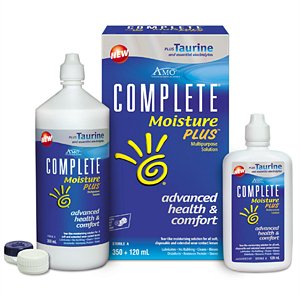
The FDA’s recall record lists all 14 US product numbers. They are sold under the Complete MoisturePlus brand. The record spans each bottle size and kit combination sold at the time:- 90104 – 12 oz bottle
- 90105 – 2 x 12 oz bottle
- 90106 – Lens Comfort Pack
- 90168 – 2 oz Starter Kit + Lens Case
- 90169TR – 2 x 16 oz, tray
- 90170 – 4 oz + Lens Case
- 93184 – Active Pack, 2 oz + B-N-C 5ml + Lens Case
- 93185 – 12 oz, Beautiful Eyes promo
- 93186 – 2 x 12 oz, Beautiful Eyes promo
- 93187 – 2 x 16 oz, Beautiful Eyes promo
- 93220 – Rejuvenate Kit
- 93221 – 12 oz + Blink sample
- 93280 – 2 oz Starter Kit + Lens Case
- 93341 – 4 oz bottle
Why Was AMO Complete MoisturePlus Recalled?
AMO recalled Complete MoisturePlus because CDC linked it to Acanthamoeba keratitis (AK). The infection comes from Acanthamoeba, a water-borne organism. The FDA’s recall record also cites a CDC estimate. The risk was at least seven times greater for solution users than for non-users. CDC’s 2007 outbreak FAQ said Complete MoisturePlus more likely let AK occur. It did not directly cause the infection [7]. CDC’s case-control study concluded in 2009, led by Verani and colleagues. It found a much higher odds ratio, 16.9, for Complete MoisturePlus use [8]. The FDA traced the recall to the product’s disinfecting design. Lab tests on unopened bottles found no germs. That pointed away from a factory flaw. The study’s authors suggested the solution wasn’t strong enough against Acanthamoeba. Using it exactly as directed still did not make it safe.Reported Incidents, Injuries, or Illnesses
The same CDC case-control study identified 221 people reported with possible Acanthamoeba keratitis (AK). Of those, 158 met the confirmed case definition. Cases came from 37 states and Puerto Rico. Users faced much higher odds of infection than non-users. Among the 105 confirmed patients CDC interviewed, 64% were women. The median age was 29. About a quarter of those whose outcome was reported had already had a corneal transplant. A few more had one planned. These figures describe what health authorities reported during the study. They are not proof that the product caused each infection. Some patients likely had other risk factors too.Were you or a family member hurt by this product?
Schmidt & Clark offers a free, no-obligation review of eye-injury claims tied to recalled contact lens solutions such as AMO Complete MoisturePlus. A review does not promise eligibility, a settlement, or any specific outcome, and every case is different.
Start My Free Case Review
What Should Consumers Do?
If you still have AMO Complete MoisturePlus at home, CDC and the FDA advised these safety steps:- Stop using the product right away.
- Throw out each bottle, whether it has been opened or not.
- Discard the lens case and the current soft lenses. This follows CDC’s May 2007 MMWR guidance.
- Switch to a new solution. Follow your eye doctor’s cleaning steps.
- See an eye doctor promptly if you notice eye pain, redness, or vision changes. Early diagnosis offers the best chance of a cure.
- Report an eye injury linked to any contact lens solution to FDA MedWatch online, or call FDA’s general line at 1-888-INFO-FDA (1-888-463-6332) [9]. AMO’s 2007 recall notice gave its own contact as Sandra F. Selvaggi at 714-247-8656.
Other Recalls, Warnings, or International Actions
As of June 27, 2008, AMO’s quarterly report to the SEC gave a count. It had been named in about 116 product liability lawsuits over the recall [10]. The suits alleged injury to 148 consumers. Of those, 101 were in U.S. courts, 12 in Canada, and three outside North America. No U.S. injury suit sought class-action status, but nine Canadian ones did. Three U.S. and four Canadian matters sought class status for uninjured consumers’ refunds.Legal Options
A California class action, Lazar v. Advanced Medical Optics, alleged AMO overstated the solution’s disinfecting ability. It was a consumer-fraud claim, separate from any personal-injury claim. It was filed June 8, 2007. The 2011 settlement gave a full refund with proof of purchase. It gave a smaller payment without proof, and a $10 coupon for neither. No federal MDL exists. A recall does not automatically establish liability or eligibility for compensation. We filed what we believe was the first personal-injury case against AMO on June 4, 2007, with Moore Labriola LLP as co-counsel.Frequently Asked Questions
How Old Were the Patients in CDC’s Acanthamoeba Keratitis Study?
Patients in CDC’s Acanthamoeba keratitis study ranged from 12 to 76 years old. The median age was 29 among the people CDC interviewed in detail. Most of them, 64 percent, were women. About 4 percent had a corneal transplant planned, on top of the quarter who had already had one.What Are the Symptoms of AK?
Symptoms of AK include eye pain, redness, and blurred vision. Other signs are light sensitivity, a feeling of something in the eye, and excessive tearing. These symptoms can look like common eye infections. See an eye doctor right away.Who Is at Risk of Acanthamoeba Keratitis?
People at greater risk of Acanthamoeba keratitis, CDC says, include those who store, handle, or disinfect lenses improperly. Tap water or homemade solutions are examples. Swimming, showering, or using a hot tub in lenses also raises the risk. So does contact with contaminated water or minor or past corneal damage.How Do You Prevent Acanthamoeba Keratitis?
To help prevent Acanthamoeba keratitis, CDC advises removing contact lenses before showering, using a hot tub, or swimming. Wash and dry your hands before handling lenses. Clean them as your eye doctor and the manufacturer instruct. Never reuse or top off old solution.Did the Acanthamoeba Keratitis Recall Affect Other Countries?
Yes, the Acanthamoeba keratitis recall affected other countries. The same Formula 9451X solution was pulled abroad under separate product numbers. Canada had roughly 184 lots, Europe 894, China 111, and other Asia-Pacific markets 263. Each lot carried its own lot number and expiration code.How Is Acanthamoeba Keratitis Treated?
Doctors treat Acanthamoeba keratitis with drugs applied to the eye, CDC says. One is an antiseptic, such as polyhexamethylene biguanide or chlorhexidine. It is paired with a diamidine, such as propamidine or hexamidine. Care often runs 6 to 12 months or longer.References
- https://www.cdc.gov/acanthamoeba/hcp/clinical-overview-acanthamoeba-keratitis/index.html
- https://www.accessdata.fda.gov/scripts/cdrh/Cfdocs/cfRes/res.cfm?id=52779
- https://www.courts.ca.gov/opinions/documents/G046913.PDF
- https://www.law360.com/health/articles/288660/amo-consumers-settle-contact-lens-marketing-action
- https://stacks.cdc.gov/view/cdc/250228
- https://www.cdc.gov/acanthamoeba/about/index.html
- https://archive.cdc.gov/www_cdc_gov/parasites/acanthamoeba/outbreaks/2007/outbreak_qa_ak.html
- https://pmc.ncbi.nlm.nih.gov/articles/PMC2815976/
- https://www.fda.gov/safety/medwatch-fda-safety-information-and-adverse-event-reporting-program
- https://www.sec.gov/Archives/edgar/data/0001168335/000119312508168225/d10q.htm