

Table of contents
- Latest Requeson Cheese Recall Updates
- August 26, 2026: FDA Closes the Outbreak Investigation
- June 29, 2026: La Ceiba Foods Added to the Outbreak Advisory
- June 26, 2026: La Ceiba Foods Recalls Requesón Salvadoreño and Requesón Mexicano
- June 18, 2026: Clover Hill Dairy Expands Recall to All Cheese Products
- June 14, 2026: Maryland Expands Its Consumer Advisory
- June 12, 2026: FDA Adds Retail Locations to the Nelson & Isa Lacteos Notice
- June 9, 2026: FDA Publishes the Clover Hill Dairy Recall Notice
- June 5, 2026: Nelson & Isa Lacteos Recalls Requeson Cheese
- June 3, 2026: Clover Hill Dairy Issues Its Voluntary Recall
- May 30, 2026: Maryland Suspends Clover Hill Dairy’s Operating License
- May 27, 2026: Inspectors Trace the Cheese to Clover Hill Dairy
- May 13, 2026: First Listeria Illnesses Reported in New York
- What Is Listeria?
- Which Requeson Cheese Are Affected?
- Why Was Requeson Cheese Recalled?
- Reported Incidents, Injuries, or Illnesses
- What Should Consumers Do?
- Legal Options
- Filing Deadlines
- Frequently Asked Questions
- What Symptoms Should I Watch for After Eating This Cheese?
- Who Is at Higher Risk from a Listeria Infection?
- What Evidence Should I Keep If I Got Sick from This Cheese?
- How Do I Contact Nelson & Isa Lacteos About This Recall?
- How Do I Contact La Ceiba Foods About This Recall?
- How Did Investigators Trace the Contamination to Clover Hill Dairy?
- References
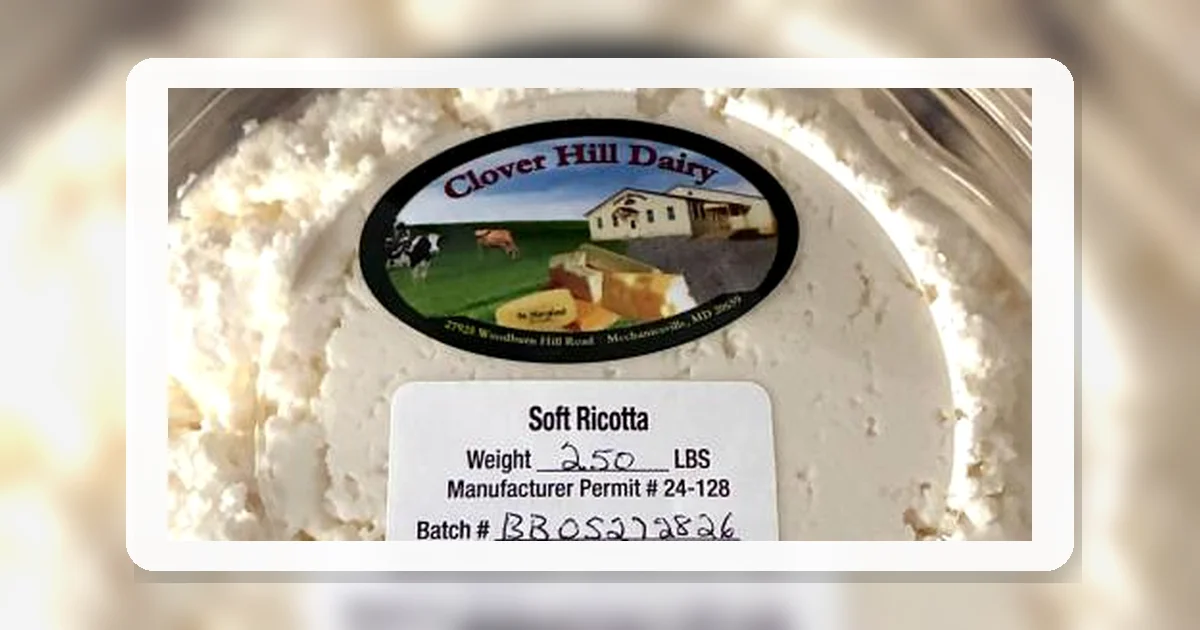
Clover Hill Dairy, LLC voluntarily recalled its requesón and soft ricotta cheese on June 3, 2026. It expanded the recall on June 18, 2026 to include every cheese it made at that Mechanicsville plant.
The same contamination led Nelson & Isa Lacteos to recall requeson cheese and La Ceiba Foods Latin Market to recall its La Colonia and Selectos Latinos requesón. Investigators traced all three recalls to Listeria monocytogenes in Clover Hill Dairy cheese.
Consumers should not eat, sell or serve any recalled cheese and should discard it or return it for a refund. FDA’s investigation into the outbreak closed on August 26, 2026, and the recall is listed as ended.
Recall at a glance
- Action type: Voluntary recall, expanded to all Clover Hill Dairy cheeses
- Announcement and initiation dates: Initiated June 3, 2026; expanded June 18, 2026
- Company and responsible agency: Clover Hill Dairy, LLC (Mechanicsville, MD); FDA and Maryland Dept. of Health. FDA recalls page
- Recall or campaign number: Not assigned; carries permit number 24-128
- Affected models, lots, UPCs, serial numbers, or VINs: Permit 24-128; sold as Nelson & Isa Lacteos, La Colonia or Selectos Latinos requesón
- Number of affected units: Not published in the notices
- Sold at and sale period: Sold directly and through distributors in MD, NJ, NY, NC, VA, D.C.; no price stated
- Hazard: Potential contamination with Listeria monocytogenes
- Reported incidents, injuries, illnesses, and deaths: 15 illnesses, 14 hospitalizations, 1 death across IL, MD, NY, VA
- Remedy: Return recalled cheese for a refund, discard it, or sanitize contacted surfaces
Latest Requeson Cheese Recall Updates
August 26, 2026: FDA Closes the Outbreak Investigation
The FDA outbreak investigation page reported that the Listeria monocytogenes investigation tied to Clover Hill Dairy requesón and soft ricotta cheese is complete [1]. The recall’s status is now listed as ended. The final case count reached 15 illnesses, 14 hospitalizations and 1 death across Illinois, Maryland, New York and Virginia. The last reported illness began on July 8, 2026, and no new cases have been added since.June 29, 2026: La Ceiba Foods Added to the Outbreak Advisory
The FDA’s outbreak investigation page was updated to add La Ceiba Foods Latin Market Inc. to the recall, three days after La Ceiba Foods announced its own cheese recall. La Ceiba Foods repackages Clover Hill Dairy cheese into its own La Colonia and Selectos Latinos brands. The update tied those repackaged products to the same contamination source under one shared federal advisory page.June 26, 2026: La Ceiba Foods Recalls Requesón Salvadoreño and Requesón Mexicano
FDA’s La Ceiba Foods recall notice said the company recalled Requesón Salvadoreño and Requesón Mexicano cheese. Its supplier, Clover Hill Dairy, had reported possible Listeria contamination in the cheese used to make them [2]. The recalled cheese was sold under the La Colonia and Selectos Latinos brand names at Maryland, Virginia and Washington, D.C. supermarkets, retail stores and restaurants between May 11 and June 1, 2026.June 18, 2026: Clover Hill Dairy Expands Recall to All Cheese Products
FDA’s expanded recall notice said Clover Hill Dairy widened its recall on June 18 to cover every cheese product made at its Mechanicsville facility, beyond the requesón and soft ricotta varieties named in the June 9 notice [3]. The expanded list added cuajada and the company’s hard and flavored cheeses, all linked to possible Listeria monocytogenes contamination investigators found at the same Mechanicsville plant.June 14, 2026: Maryland Expands Its Consumer Advisory
The Maryland Department of Health expanded its consumer advisory to cover every Clover Hill Dairy cheese product, widening an earlier warning that had been limited to requesón and soft ricotta cheese [4]. The department said the risk of foodborne illness continued across the company’s full product line. It urged consumers to discard or return any Clover Hill Dairy cheese still sitting in their homes.June 12, 2026: FDA Adds Retail Locations to the Nelson & Isa Lacteos Notice
The FDA updated the Nelson & Isa Lacteos entry on its outbreak investigation page with a full list of New York retail locations believed to have received the recalled requeson cheese. The addition let shoppers check specific store names and street addresses. Before this, they could only rely on the general Bay Shore, New York distribution area named in the company’s original recall notice.June 9, 2026: FDA Publishes the Clover Hill Dairy Recall Notice
The FDA published Clover Hill Dairy’s recall notice for its Soft Ricotta/Requesón Cheese. The product was sold in clamshell tubs and bulk pails marked with the company’s manufacturer permit number 24-128 [5]. The notice covered cheese sold directly from the company’s own retail market and at area farmers markets. It also covered sales through third-party distributors in Maryland, Virginia and neighboring states beginning May 4, 2026.June 5, 2026: Nelson & Isa Lacteos Recalls Requeson Cheese
FDA’s Nelson & Isa Lacteos recall notice said the Bay Shore, New York company recalled 1-pound clamshell packages of requeson cheese sold at New York retail locations. Sales ran from May 15 through May 28, 2026 [6]. State inspectors had traced Listeria monocytogenes to a Clover Hill Dairy-supplied batch, sell-by date June 14, 2026. The company repacked that batch into its own containers before selling it to local retailers.June 3, 2026: Clover Hill Dairy Issues Its Voluntary Recall
Clover Hill Dairy issued a voluntary recall of its requesón and soft ricotta cheese, and the Maryland Department of Health issued its first consumer advisory that same day [7]. The advisory told consumers to discard the cheese right away. It covered buyers from the company’s Mechanicsville retail market or nearby farmers markets. They could also return the cheese for a full refund.May 30, 2026: Maryland Suspends Clover Hill Dairy’s Operating License
The Maryland Department of Health suspended Clover Hill Dairy’s operating license on May 30, 2026. It cited the public health risk that the Listeria monocytogenes contamination at the facility posed. Consumers had bought the affected cheese from the company’s Mechanicsville dairy. State health officials began a follow-up evaluation of the Mechanicsville facility that same week, several days before Clover Hill Dairy made its recall public.May 27, 2026: Inspectors Trace the Cheese to Clover Hill Dairy
New York state inspectors traced the contaminated requeson cheese to Clover Hill Dairy, LLC of Mechanicsville, Maryland. They identified it as the manufacturer behind the products sold under several repackaged brand names, according to the same FDA outbreak investigation page. A sample collected from an unopened 18-pound bucket of the company’s cheese tested positive for the same outbreak strain of Listeria monocytogenes. That same strain had already turned up in samples taken from the sick patients.May 13, 2026: First Listeria Illnesses Reported in New York
The Suffolk County Health Department notified New York’s Department of Agriculture and Markets on May 13, 2026. It reported two related Listeria illnesses in one family living in the area, according to the same FDA outbreak investigation page. Both people had eaten cheese bought from a retailer in Brentwood, New York, marking the first traced report in what state investigators later confirmed was this same statewide outbreak investigation.What Is Listeria?
According to the CDC, Listeria are bacteria that can contaminate many foods, including soft cheeses and deli meats. Eating food carrying Listeria monocytogenes bacteria causes the infection called listeriosis [8]. This outbreak is the reason Clover Hill Dairy cheese, and cheese repackaged under other brand names, was recalled across several states.Which Requeson Cheese Are Affected?
The recall covers the following Requeson Cheese products, identified by the plant number, dates or UPC printed on the package:- Clover Hill Dairy Soft Ricotta/Requesón Cheese – sold in clamshell containers and bulk buckets carrying manufacturer permit number 24-128 on the label
- Clover Hill Dairy cheese relabeled under other names – sold as KESSO, QUESOS LA RICURA, IZALCO, DE MI PUEBLO or RIO LINDO on the package
- All other Clover Hill Dairy brand cheeses – including cuajada and the company’s hard and flavored varieties made at its Mechanicsville, Maryland plant
- Nelson & Isa Lacteos requeson cheese – 1-pound clamshell packages traced to an 18-pound Clover Hill Dairy container, sell-by date 6/14/26, batch number 2AA051526
- La Colonia Requesón Salvadoreño – 14-ounce package, UPC 736846383099, marked with an expiration date of July 10, 2026
- Selectos Latinos Requesón Salvadoreño and Requesón Mexicano – 16-ounce packages, UPC 767787984526 and UPC 767787984519, both marked with an expiration date of July 10, 2026
Why Was Requeson Cheese Recalled?
Requeson Cheese was recalled because state and federal investigators traced Listeria monocytogenes to cheese samples and to an environmental sample collected at Clover Hill Dairy’s Mechanicsville, Maryland facility. Whole genome sequencing matched the plant sample to the strain that was making people sick, linking Clover Hill Dairy’s cheese to illnesses reported as early as May 2026. New York inspectors first traced a contaminated batch to the company on May 27, 2026, days before the company issued its own recall notice. Nelson & Isa Lacteos and La Ceiba Foods Latin Market then recalled their own repackaged cheese for the same reason. Both companies traced their supply back to the same Clover Hill Dairy batches.Reported Incidents, Injuries, or Illnesses
Fifteen people across Illinois, Maryland, New York and Virginia became ill with Listeria monocytogenes infections tied to this outbreak. Fourteen were hospitalized and one person died. Illness onset dates ranged from March 6, 2023 to July 8, 2026. The FDA’s case count reflects reports received through August 26, 2026, when the investigation closed. State and local health departments in the affected states reported the cases to the FDA and CDC as part of the joint investigation. These reports describe what state and federal agencies recorded during the investigation. They are not, by themselves, proof that a specific package of cheese caused any one person’s illness.Were you or a family member hurt by this product?
Schmidt & Clark offers a free, no-obligation case review for people diagnosed with a Listeria infection after eating recalled requesón or other Clover Hill Dairy cheese. A review does not promise you will qualify, receive a settlement or see any particular result.
Start My Free Case Review
What Should Consumers Do?
If you have any of the cheese covered by this recall in your home or business, take the following steps:- Do not eat, sell or serve any recalled cheese, including products listed above or unmarked cheese bought during the sale period.
- Return the cheese to the place of purchase for a full refund, or throw it away if you cannot confirm its brand or plant number.
- Clean and sanitize refrigerator shelves, containers and any surfaces that touched the cheese, since Listeria can survive in cold, damp environments.
- Call Clover Hill Dairy’s recall line, 240-528-8850 extension 327, weekdays from 8:00 a.m. to 4:30 p.m. Eastern time, or report a reaction to the FDA’s Industry and Consumer Assistance channel.
- Watch for symptoms such as fever, muscle aches or a stiff neck. Call a health care provider right away, especially if you are pregnant, older or have a weakened immune system.
Legal Options
This recall does not automatically establish liability for Clover Hill Dairy, Nelson & Isa Lacteos or La Ceiba Foods Latin Market Inc. No multidistrict litigation or class action against any of them appears on the JPML‘s September 1, 2026 pending-MDL docket list [9]. No settlement or verdict involving this outbreak was identified in that search either. A consumer with a medically documented Listeria infection linked to recalled cheese may still have grounds for an individual review. A related lawsuit page covers the La Colonia soft cheese brand from this same outbreak: La Colonia Soft Cheese Lawsuit.Filing Deadlines
Deadlines to file a legal claim come from state law, not from the recall itself, and they can be easy to miss. How much time you have can depend on where you live and when your illness and diagnosis happened. Some states start the clock at diagnosis rather than the date of exposure. Missing a deadline can end a claim even with strong medical evidence, so anyone considering a claim should check with a lawyer promptly.Frequently Asked Questions
What Symptoms Should I Watch for After Eating This Cheese?
Watch for symptoms that start within two weeks of eating contaminated cheese, though onset can range from the same day to 10 weeks. Mild cases bring fever, muscle aches, nausea, vomiting and diarrhea, while severe cases can cause headache, a stiff neck, confusion and convulsions.Who Is at Higher Risk from a Listeria Infection?
Older adults, newborns and people with weakened immune systems face the highest risk from a Listeria infection. Pregnant women may have only mild symptoms themselves but face a higher risk of miscarriage, stillbirth, premature delivery or a life-threatening infection in the newborn.What Evidence Should I Keep If I Got Sick from This Cheese?
If you got sick from this cheese, keep the package or its label showing the plant number or UPC, your purchase receipt, and any photos taken before you discarded it. Medical records documenting a lab-confirmed Listeria diagnosis and treatment dates also support a future legal or insurance claim.How Do I Contact Nelson & Isa Lacteos About This Recall?
You can contact Nelson & Isa Lacteos about this recall by calling 631-334-1055, 9:00 a.m. to 5:00 p.m. Eastern time, or by checking the company’s website for recall updates and current contact information.How Do I Contact La Ceiba Foods About This Recall?
You can contact La Ceiba Foods about this recall through the Southern Maryland Agricultural Development Commission. The commission also handles calls for Clover Hill Dairy, at 240-528-8850 extension 327 during weekday business hours.How Did Investigators Trace the Contamination to Clover Hill Dairy?
Investigators traced the contamination to Clover Hill Dairy through laboratory testing: New York state agriculture officials tested five cheese samples from the Brentwood retailer, and whole genome sequencing confirmed the Listeria strain in a positive sample matched the outbreak strain before the trail led back to the Mechanicsville plant.References
- https://www.fda.gov/food/outbreaks-foodborne-illness/outbreak-investigation-listeria-monocytogenes-soft-cheese-june-2026
- https://www.fda.gov/safety/recalls-market-withdrawals-safety-alerts/la-ceiba-foods-latin-market-inc-recalls-cottage-cheese-products-because-possible-health-risk
- https://www.fda.gov/safety/recalls-market-withdrawals-safety-alerts/clover-hill-dairy-expands-recall-include-all-clover-hill-dairy-brand-cheese-due-possible-health-risk
- https://health.maryland.gov/newsroom/Pages/Consumer%20advisory%20expanded%20for%20all%20Clover%20Hill%20Dairy%20cheese%20products%20due%20to%20continued%20risk%20of%20foodborne%20illness.aspx
- https://www.fda.gov/safety/recalls-market-withdrawals-safety-alerts/clover-hill-dairy-recalls-soft-ricottarequeson-cheese-due-possible-health-risk
- https://www.fda.gov/safety/recalls-market-withdrawals-safety-alerts/nelson-isa-lacteos-llc-recalls-requeson-cheese-due-possible-health-risk
- https://health.maryland.gov/newsroom/Pages/Consumer%20advisory%20issued%20for%20Clover%20Hill%20Dairy%20reques%C3%B3n%20soft%20ricotta%20cheese%20products%20due%20to%20risk%20of%20foodborne%20illness.aspx
- https://www.cdc.gov/listeria/about/index.html
- https://www.jpml.uscourts.gov/sites/jpml/files/Pending_MDL_Dockets_By_Actions_Pending-September-1-2026.pdf