

Table of contents
- Latest Clover Hill Dairy Cheese Lawsuit Updates
- August 26, 2026: FDA Closes Its Outbreak Investigation
- June 29, 2026: FDA Adds La Colonia and Selectos Latinos Products to the Recall
- June 26, 2026: La Ceiba Foods Recalls Repackaged Requesón
- June 24, 2026: Second Environmental Sample Matches the Outbreak Strain
- June 18, 2026: Clover Hill Dairy Expands Its Recall to All Cheese
- June 15, 2026: Testing Finds the Outbreak Strain at the Clover Hill Dairy Plant
- June 14, 2026: Maryland Expands Its Consumer Advisory Statewide
- June 12, 2026: Nelson & Isa Lacteos Updates Its Recall Notice
- June 5, 2026: Nelson & Isa Lacteos Recalls Repackaged Requesón
- June 3, 2026: Clover Hill Dairy Issues Its First Recall
- What Is Listeria?
- Who May Be Affected?
- Reported Injuries or Damages
- Recall and Regulatory Background
- Evidence to Preserve
- Filing Deadlines
- Potential Compensation
- Frequently Asked Questions
- How Long After Eating Contaminated Cheese Do Listeria Symptoms Appear?
- Who Is Most at Risk from This Listeria Outbreak?
- Who Can I Contact About the Clover Hill Dairy Cheese Recall Lawsuit?
- What Does the Research Say About the Clover Hill Dairy Listeria Outbreak?
- What Should I Do with Recalled Clover Hill Dairy Cheese?
- How Was the Listeria Outbreak First Discovered?
- References
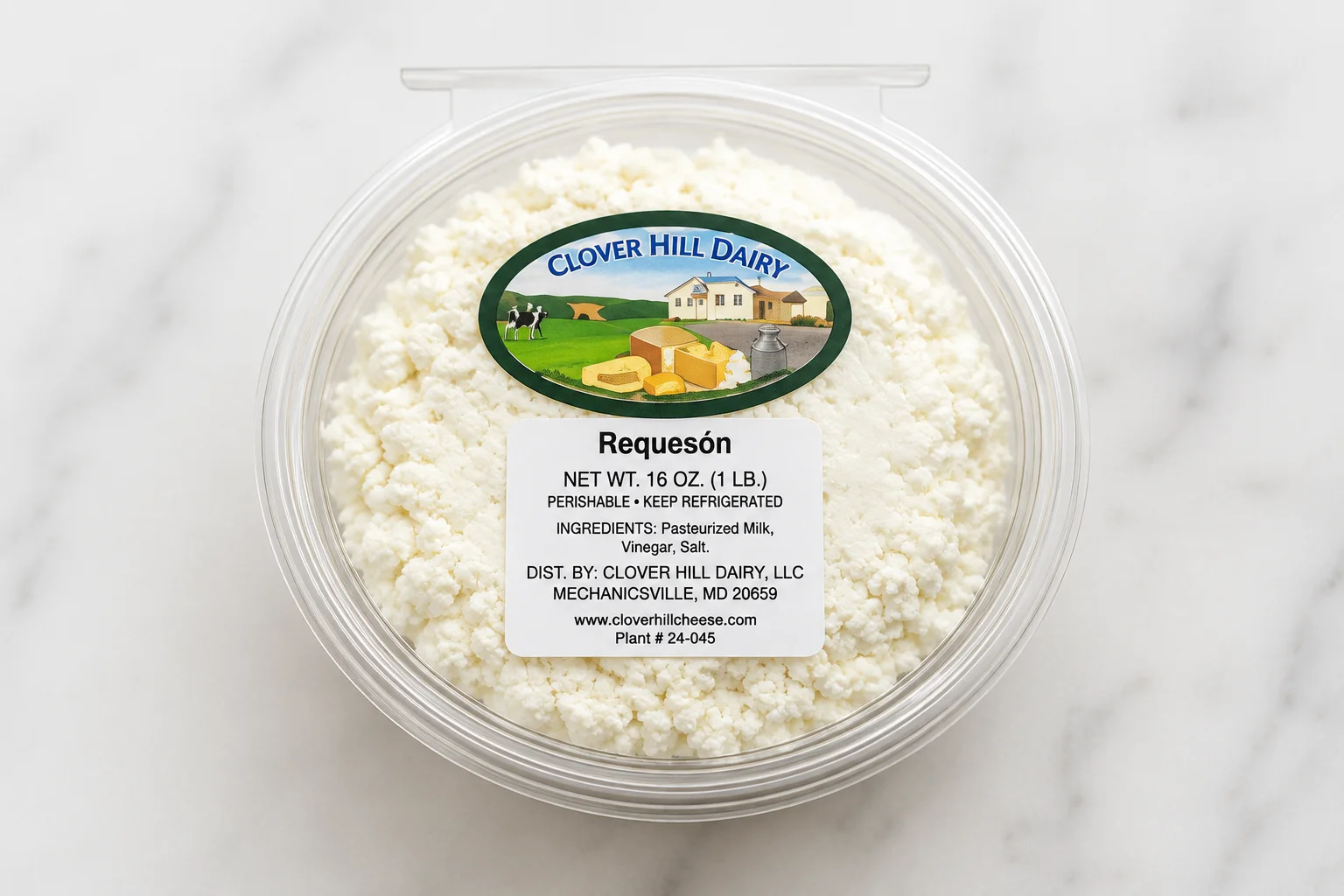
Clover Hill Dairy, LLC’s requesón and other cheeses, made in Mechanicsville, Maryland, were linked to a 2026 Listeria monocytogenes outbreak that reached four states. People who ate the cheese, or a repackaged version sold under another brand, reported becoming ill.
Fifteen illnesses and fourteen hospitalizations, including one death, have been confirmed in the outbreak. Families who lost a loved one, or who were hospitalized after eating the cheese, may have grounds to pursue a legal claim.
No lawsuit, class action or multidistrict litigation has been filed over the outbreak as of September 25, 2026. Attorneys are investigating the claims while the Food and Drug Administration’s outbreak investigation, now closed, documents how the contamination spread.
Lawsuit at a glance
- Case or litigation name: No case filed; an attorney investigation into the Clover Hill Dairy Listeria outbreak
- Defendants: None named in a filed case; Clover Hill Dairy, LLC is the company under investigation
- Court and docket number, when available: No filed case
- MDL number, judge, and case count, when an MDL exists: No MDL
- Filing date: No filing yet
- Main allegations: Product liability and, in the reported death, wrongful-death allegations over Listeria monocytogenes-contaminated Clover Hill Dairy requesón and other cheese products
- Products or people involved: Clover Hill Dairy requesón, soft ricotta and other cheese (including relabeled KESSO, Quesos La Ricura, Izalco, De Mi Pueblo, Rio Lindo, La Colonia and Selectos Latinos) and consumers diagnosed with listeriosis linked to the outbreak strain
Latest Clover Hill Dairy Cheese Lawsuit Updates
August 26, 2026: FDA Closes Its Outbreak Investigation
The FDA closed its investigation into the Listeria monocytogenes outbreak tied to Clover Hill Dairy requesón. The agency’s final count reached 15 illnesses, 14 hospitalizations and one death across Illinois, Maryland, New York and Virginia. Illness onset dates ran from March 2023 to July 2026, and the FDA said the recalled cheese is no longer being sold in any store or restaurant.June 29, 2026: FDA Adds La Colonia and Selectos Latinos Products to the Recall
FDA’s outbreak page update added La Colonia and Selectos Latinos requesón products to the recalled-products list. The reported case count at that point was still well below the final August tally of confirmed illnesses, hospitalizations and deaths. The two products had been repackaged by a downstream distributor and sold again under those same brand names in the same three jurisdictions.June 26, 2026: La Ceiba Foods Recalls Repackaged Requesón
That distributor, La Ceiba Foods Latin Market Inc., recalled Requesón Salvadoreño and Requesón Mexicano sold under the La Colonia and Selectos Latinos brands [1]. The company said the cheese was repackaged from requesón supplied by Clover Hill Dairy. The recalled products were distributed to supermarkets, retail stores and restaurants in Maryland, Virginia and Washington, D.C. between May 11 and June 1, 2026.June 24, 2026: Second Environmental Sample Matches the Outbreak Strain
A second environmental sample collected by Maryland state partners from the plant tested positive for Listeria monocytogenes. Whole genome sequencing confirmed the sample matched the outbreak strain already found there. The finding came nine days after an earlier round of testing, reported June 15, 2026, had already linked six requesón samples and one environmental sample from the same plant to the outbreak strain.June 18, 2026: Clover Hill Dairy Expands Its Recall to All Cheese
Clover Hill Dairy expanded its recall from requesón and soft ricotta to every cheese product made at its Mechanicsville, Maryland facility [2]. The expansion covered hard cheeses, cuajada and flavored varieties sold under the company’s own brand name. Products made at the same plant could also be sold under other brand names, including KESSO, Quesos La Ricura, Izalco, De Mi Pueblo and Rio Lindo.June 15, 2026: Testing Finds the Outbreak Strain at the Clover Hill Dairy Plant
Six requesón samples and one environmental sample collected at the Clover Hill Dairy facility tested positive for Listeria monocytogenes and matched the outbreak strain. The results became the basis for the recall’s later expansion. Maryland state partners worked with Clover Hill Dairy to prepare the broader recall while the FDA continued its outbreak investigation into how the contamination started at the facility.June 14, 2026: Maryland Expands Its Consumer Advisory Statewide
The Maryland Department of Health widened its consumer advisory beyond the original requesón and soft ricotta notice to cover every cheese product Clover Hill Dairy makes [3]. The company agreed to a voluntary recall of its entire cheese line. The department also continued a follow-up evaluation, building on the operating-license action it had already taken against the facility in late May.June 12, 2026: Nelson & Isa Lacteos Updates Its Recall Notice
Nelson & Isa Lacteos, LLC updated its recall notice with a list of New York retail locations that received the recalled requesón cheese [4]. The company said the list might not cover every store that got the product. Consumers were urged to check the store list and the product’s identifying details rather than rely on the list alone to confirm a recall match.June 5, 2026: Nelson & Isa Lacteos Recalls Repackaged Requesón
Nelson & Isa Lacteos recalled one-pound requesón packages sold at New York retail locations from May 15 to May 28, 2026. State testing had found the outbreak strain in Clover Hill Dairy requesón used to repackage the product. Whole genome sequencing confirmed the strain in the repackaged cheese matched the same outbreak strain that had already sickened people across New York and other states.June 3, 2026: Clover Hill Dairy Issues Its First Recall
Clover Hill Dairy voluntarily recalled all Soft Ricotta/Requeson cheese distributed from May 4 through May 30, 2026, after Listeria monocytogenes was linked to its product [5]. Maryland’s health department issued its first consumer advisory the same day, noting it had already suspended the facility’s operating license on May 30, 2026 due to the ongoing public health risk at the plant [6].What Is Listeria?
Listeria are bacteria that can contaminate many kinds of food, including soft cheese, according to the CDC [7]. People who eat food carrying the bacteria can develop listeriosis, a range of illness from mild to life-threatening. Listeria monocytogenes, the species tied to this outbreak, can survive and grow even under refrigeration and spreads easily to other foods and surfaces. Health officials traced the outbreak to Clover Hill Dairy requesón and cheese repackaged from it.Who May Be Affected?
Anyone who ate Clover Hill Dairy requesón, soft ricotta or another cheese made at the company’s Mechanicsville, Maryland plant may be affected. The same is true for anyone who ate a repackaged version sold as KESSO, Quesos La Ricura, Izalco, De Mi Pueblo, Rio Lindo, La Colonia or Selectos Latinos. The cheese was sold in Maryland, Virginia, New York, New Jersey, North Carolina and Washington, D.C. between May and June 2026. People diagnosed with listeriosis during that window fall within the outbreak’s scope. Family members of the person who died after a diagnosed Listeria infection tied to this outbreak may also be affected. Whether a specific case qualifies depends on an individual legal review of the medical and purchase records.Think you may qualify?
Schmidt & Clark offers a free, no-obligation case review for people who got sick after eating recalled Clover Hill Dairy cheese or a relabeled version of it. A review does not guarantee a case will be accepted or that any results will follow.
Start My Free Case Review
Reported Injuries or Damages
The outbreak sickened 15 people across Illinois, Maryland, New York and Virginia, with 14 hospitalizations and one death. Of 13 people interviewed by CDC investigators, 11 ate any cheese, and five ate Clover Hill Dairy requesón [8]. Reported symptoms ranged from fever, muscle aches, nausea and diarrhea to, in severe cases, headache, stiff neck, confusion and loss of balance. Whole genome sequencing matched samples from the Clover Hill Dairy facility to the outbreak strain. A closed regulatory investigation does not settle fault the way a court does. A formal legal claim, if filed, would still need to prove the connection between the cheese and each person’s illness.Recall and Regulatory Background
Clover Hill Dairy voluntarily recalled its requesón and soft ricotta cheese on June 3, 2026, then broadened the recall on June 18, 2026 to its entire cheese line. Two downstream companies, La Ceiba Foods Latin Market Inc. and Nelson & Isa Lacteos, LLC, recalled repackaged requesón sold under other brand names. Read more about Listeria lawsuit claims for cases beyond this outbreak.Evidence to Preserve
Anyone who got sick after eating Clover Hill Dairy cheese, or a family member preparing a possible claim, should keep the following:- Any leftover or frozen Clover Hill Dairy cheese and its packaging, including the manufacturer’s plant number printed on the label
- Store or online purchase receipts showing the date and location the cheese was bought
- Photographs of the product, its label, and any symptoms that developed after eating it
- Medical records documenting a listeriosis diagnosis, hospitalization dates, and any treatment received
- Any communication with the retailer, Clover Hill Dairy, or a health department about the illness
- Names and contact information for witnesses, including family members who also became ill
Filing Deadlines
Filing deadlines for a listeriosis claim are set by state law rather than one nationwide rule. The deadline depends on where the person lives and when the illness, hospitalization or death happened. Some states start the clock on the date of diagnosis rather than the date of exposure, so the timing of a medical record can matter. A deadline that passes unnoticed can end a strong claim before it starts. Anyone thinking about a claim over this outbreak should talk to a lawyer without delay.Potential Compensation
People affected by the Clover Hill Dairy Listeria outbreak may be able to pursue damages. These can include medical expenses, lost income, and pain and suffering tied to a diagnosed illness. In the reported death linked to the outbreak, a wrongful-death claim could seek damages such as funeral costs and loss of companionship for surviving family members. These potential compensation categories are not a promise of any result. Compensation amounts vary by case. Past results do not guarantee future outcomes. Potential compensation depends on the facts of each case, and a lawyer can explain which categories might apply.Frequently Asked Questions
How Long After Eating Contaminated Cheese Do Listeria Symptoms Appear?
Listeria symptoms usually appear within two weeks of eating contaminated cheese, but they can start as early as the same day or as late as 10 weeks later. Mild cases bring fever and nausea, while severe cases can bring headache, confusion and loss of balance.Who Is Most at Risk from This Listeria Outbreak?
Pregnant women, newborns, adults aged 65 or older, and people with weakened immune systems face the highest risk from this Listeria outbreak. Pregnant women may have only mild symptoms themselves, but the infection can cause miscarriage, stillbirth, or a life-threatening infection in a newborn.Who Can I Contact About the Clover Hill Dairy Cheese Recall Lawsuit?
Anyone with questions about the Clover Hill Dairy cheese recall lawsuit can contact the company’s recall line at 240-528-8850, extension 327, and anyone with symptoms of listeriosis should contact a healthcare provider.What Does the Research Say About the Clover Hill Dairy Listeria Outbreak?
Research on the Clover Hill Dairy Listeria outbreak ties the same strain to three separate whole-genome-sequencing matches: two rounds of plant testing and a New York retailer’s repackaged requesón sample, tested by New York state agriculture officials, according to the FDA.What Should I Do with Recalled Clover Hill Dairy Cheese?
Stop eating any recalled Clover Hill Dairy cheese right away and check the label for plant number 24-128, which identifies the recalled product. Return it to the store for a refund or throw it away, and contact a healthcare provider if you feel unwell.How Was the Listeria Outbreak First Discovered?
The Listeria outbreak was first discovered when New York’s Suffolk County Health Department identified two related illnesses in May 2026, after family members who ate requesón became ill. The New York State Department of Agriculture and Markets then traced the contamination to Clover Hill Dairy through product testing.References
- https://www.fda.gov/safety/recalls-market-withdrawals-safety-alerts/la-ceiba-foods-latin-market-inc-recalls-cottage-cheese-products-because-possible-health-risk
- https://www.fda.gov/safety/recalls-market-withdrawals-safety-alerts/clover-hill-dairy-expands-recall-include-all-clover-hill-dairy-brand-cheese-due-possible-health-risk
- https://health.maryland.gov/newsroom/Pages/Consumer%20advisory%20expanded%20for%20all%20Clover%20Hill%20Dairy%20cheese%20products%20due%20to%20continued%20risk%20of%20foodborne%20illness.aspx
- https://www.fda.gov/safety/recalls-market-withdrawals-safety-alerts/nelson-isa-lacteos-llc-recalls-requeson-cheese-due-possible-health-risk
- https://www.fda.gov/safety/recalls-market-withdrawals-safety-alerts/clover-hill-dairy-recalls-soft-ricottarequeson-cheese-due-possible-health-risk
- https://health.maryland.gov/newsroom/Pages/Consumer%20advisory%20issued%20for%20Clover%20Hill%20Dairy%20reques%C3%B3n%20soft%20ricotta%20cheese%20products%20due%20to%20risk%20of%20foodborne%20illness.aspx
- https://www.cdc.gov/listeria/about/index.html
- https://www.fda.gov/food/outbreaks-foodborne-illness/outbreak-investigation-listeria-monocytogenes-soft-cheese-june-2026