

Table of contents
- Latest AUVANNA Fire Pit Lawsuit Updates
- August 13, 2026: CPSC Announces Brookstone Fire Pit Recall
- July 16, 2026: CPSC Warns About Houswise Fire Pits
- May 7, 2026: CPSC Warns About Northlight Fireplaces
- December 19, 2024: CPSC Issues Liquid-Fuel Fire Pit Alert
- What Is a Liquid-Fuel Tabletop Fire Pit?
- Who May Be Affected?
- Reported Injuries or Damages
- Recall and Regulatory Background
- Evidence to Preserve
- Filing Deadlines
- Frequently Asked Questions
- Can Consumers Sue for an Unsafe AUVANNA Fire Pit?
- What Is Flame Jetting?
- Which Fire Pits Does the CPSC Alert Cover?
- How Hot Can Liquid-Fuel Fire Pit Flames Get?
- References
If you were burned by a tabletop fire pit and are wondering whether an AUVANNA fire pit lawsuit exists, this page explains where things stand. The CPSC describes flame jetting and pool fires with liquid-fuel fire pits.
We are not aware of any AUVANNA fire pit lawsuit, class action or MDL, and no CPSC recall or warning names AUVANNA. No notice or filing we found says who makes or imports them.
The CPSC says pour-and-ignite liquid-fuel fire pits violate voluntary safety standard ASTM F3363-19, and it has told consumers to stop using them. They can burn the person using the product and anyone nearby.
Lawsuit at a glance
- Case or litigation name: No AUVANNA-specific case found
- Defendants: None identified
- Court and docket number, when available: No AUVANNA case docket found in CourtListener‘s federal docket search
- MDL number, judge, and case count, when an MDL exists: No MDL found for tabletop fire pits on the JPML’s September 1, 2026 report
- Filing date: No filing found
- Main allegations: No AUVANNA complaint found. The CPSC describes burns from pool fires and flame jetting with pour-and-ignite liquid-fuel fire pits
- Products or people involved: AUVANNA tabletop fire pits, and anyone burned while lighting, refueling or standing near a liquid-fuel fire pit
Latest AUVANNA Fire Pit Lawsuit Updates
August 13, 2026: CPSC Announces Brookstone Fire Pit Recall
The CPSC announced Recall 26-687 of about 48,700 Brookstone-branded tabletop fire pits imported by Southern Telecom Inc. [1]. The remedy is a refund. The indoor/outdoor fire pits carry model numbers BSFIREPIT01, BSFIREPIT02 and BSFIREPIT03. They sold in stores and online from February 2023 through December 2024 for between $20 and $25. The importer is based in Brooklyn, New York.July 16, 2026: CPSC Warns About Houswise Fire Pits
The CPSC issued Warning 26-615 on at least 53,500 Houswise Tabletop Fire Pits [2]. Furmia LLC, the manufacturer, has not agreed to a recall or to offer a remedy. The models are Vesper, Altair, Quad and Astra. They have sold at Houswise.com, Amazon.com, Walmart.com and other websites since March 2023. The fire pits are manufactured in China.May 7, 2026: CPSC Warns About Northlight Fireplaces
The CPSC issued Warning 26-473 on Northlight Bio Ethanol Portable Tabletop Fireplaces [3]. Gordon Companies Inc. sells them under the Northlight brand. It has not agreed to recall them. The CPSC lists NorthlightSeasonal.com, Target.com, Walmart.com, BestBuy.com and HomeDepot.com as sellers. The fireplaces cost about $35 to $90 and are made in China.December 19, 2024: CPSC Issues Liquid-Fuel Fire Pit Alert
The CPSC issued Consumer Alert 25-074 on liquid-fuel fire pits [4]. It associates these fire pits with two deaths and at least 60 injuries since 2019. It says consumers should immediately stop using and dispose of these products.What Is a Liquid-Fuel Tabletop Fire Pit?
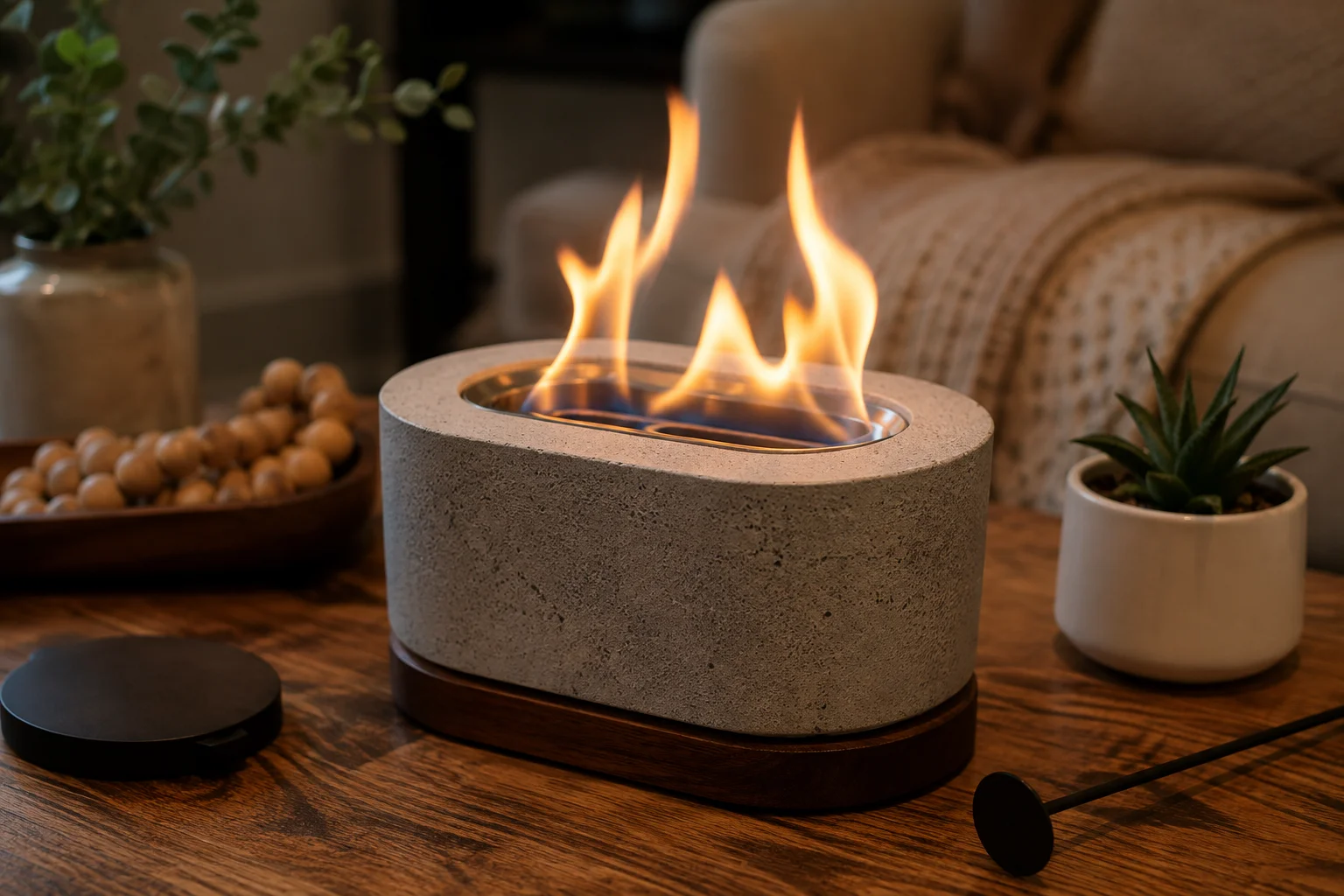
The CPSC describes the Rozato Tabletop Fire Pits as rectangular or round containers that “require consumers to pour liquid fuel into the container and then ignite the pooled liquid in the same location it was poured” [5]. The CPSC’s December 19, 2024 alert says igniting a pool of fuel in an open container “creates an uncontrollable pool fire, which can suddenly produce larger, hotter flames that can spread beyond the fire pit product.”Who May Be Affected?
Anyone who poured fuel into, refilled or lit an open-container liquid-fuel fire pit, or who stood near one, may match. The fire pit has to be an AUVANNA tabletop model for this page to apply. The CPSC describes burning liquid reaching bystanders as well as the person using the product. Whether you qualify depends on an individual legal review of your facts.Think you may qualify?
Schmidt & Clark offers a free case review to people burned by a tabletop fire pit, including an AUVANNA fire pit, to look at the product, the injury and the evidence. A review does not promise eligibility or any result.
Start My Free Case Review
Reported Injuries or Damages
The injury reports on file come from the CPSC and concern other brands or the whole product type. They are not findings about AUVANNA fire pits. Reports like these are not proof that a fire pit caused every injury. In its Houswise warning, the CPSC cited more than two dozen reports of flame jetting, fuel leakage and unexpectedly high flames. Those reports resulted in seven injuries, including third-degree burns. The Brookstone recall notice reports two injuries, including second-degree and third-degree burns. Readers can find recalls and cases on other brands on our page about tabletop fire pit recalls.Recall and Regulatory Background
The CPSC has also warned about Rozato Tabletop Fire Pits. The notice reports one death and multiple burn injuries on another brand. The JPML Pending MDL Dockets By District report lists no MDL for tabletop fire pits [6]. See also our page on alcohol-burning fire pit lawsuits.Evidence to Preserve
Keep every item below that shows what the fire pit was, how it was bought and how you were hurt:- The fire pit and its base, together with the burner or fuel container and the fuel bottle used with it
- The packaging, the instructions and warning labels, and any accessories that came with the fire pit
- The order confirmation and seller details, such as receipts, listing screenshots and account history
- Photographs of the product, the scene, spilled fuel, burn patterns, clothing and injuries
- Emergency, medical and insurance records, plus the names of anyone who witnessed the fire
Filing Deadlines
State law sets filing deadlines. The one that applies to you depends on where you live and when the injury and its cause were discovered. A missed deadline can end a claim, however strong the facts. A lawyer can check which deadline applies to your case, so ask promptly.Frequently Asked Questions
Can Consumers Sue for an Unsafe AUVANNA Fire Pit?
Consumers may sue over an unsafe AUVANNA fire pit when they can prove which product caused the injury. A claim also needs the injury and medical records, the evidence kept, and the chain of makers and sellers. A CPSC alert or a missing recall does not decide it.What Is Flame Jetting?
Flame jetting is an explosion that propels flames and burning liquid at people nearby. The CPSC says it can occur when a fire pit is refilled while any flame is present. A hard-to-see small flame can ignite vapor inside the fuel container.Which Fire Pits Does the CPSC Alert Cover?
The CPSC alert covers liquid-fuel fire pits under several names. The CPSC says they are also sold as tabletop fire pits, fire pots, miniature fireplaces, or portable fires for indoor use.How Hot Can Liquid-Fuel Fire Pit Flames Get?
Liquid-fuel fire pit flames can reach temperatures over 1,600°F, according to the CPSC. It says isopropyl (rubbing) alcohol, ethanol/bioethanol and similar fuels burn this hot. It also says liquid fuels can cause third degree burns in less than one second.References
- https://www.cpsc.gov/Recalls/2026/Southern-Telecom-Recalls-Brookstone-Branded-Tabletop-Fire-Pits-Due-to-Risk-of-Serious-Burn-Injury-or-Death-from-Flame-Jetting-and-Fire-Hazards
- https://www.cpsc.gov/Warnings/2026/CPSC-Warns-Consumers-to-Stop-Using-Houswise-Tabletop-Fire-Pits-Immediately-Due-to-Risk-of-Serious-Burn-Injury-or-Death-from-Flame-Jetting-and-Fire-Hazards
- https://www.cpsc.gov/Warnings/2026/CPSC-Warns-Consumers-to-Stop-Using-Northlight-Bio-Ethanol-Portable-Tabletop-Fireplaces-Immediately-Due-to-Risk-of-Serious-Burn-Injury-or-Death-from-Flame-Jetting-and-Fire-Hazards
- https://www.cpsc.gov/Warnings/2025/Consumer-Alert-Stop-Using-Alcohol-or-Other-Liquid-Burning-Fire-Pits-That-Violate-Voluntary-Standards-and-Present-Flame-Jetting-and-Fire-Hazards-Two-Deaths-and-Dozens-of-Serious-Burn-Injuries-Reported
- https://www.cpsc.gov/Warnings/2026/CPSC-Warns-Consumers-to-Stop-Using-Rozato-Tabletop-Fire-Pits-Immediately-Due-to-Flame-Jetting-and-Fire-Hazards-One-Death-and-Serious-Burn-Injuries-Reported
- https://www.jpml.uscourts.gov/sites/jpml/files/Pending_MDL_Dockets_By_District-September-1-2026.pdf