

Table of contents
- Latest Agguelito Fire Pit Lawsuit Updates
- July 16, 2026: CPSC Warns Consumers to Stop Using Houswise Tabletop Fire Pits
- April 2, 2026: CPSC Warns of Flame Jetting and Fire Risk in Rozato Tabletop Fire Pits
- December 19, 2024: CPSC Issues Category-Wide Alert on Liquid-Fuel Fire Pits
- October 17, 2024: CPSC Recalls About 89,500 Colsen Fire Pits
- What Is an Agguelito Fire Pit?
- Who May Be Affected?
- Reported Injuries or Damages
- Recall and Regulatory Background
- Evidence to Preserve
- Filing Deadlines
- Potential Compensation
- Frequently Asked Questions
- Has the Agguelito Fire Pit Been Recalled?
- Do You Need a Recall to Start an Agguelito Fire Pit Lawsuit?
- Can a Bystander File an Agguelito Fire Pit Lawsuit Claim?
- Why Do Tabletop Fire Pits Explode?
- References
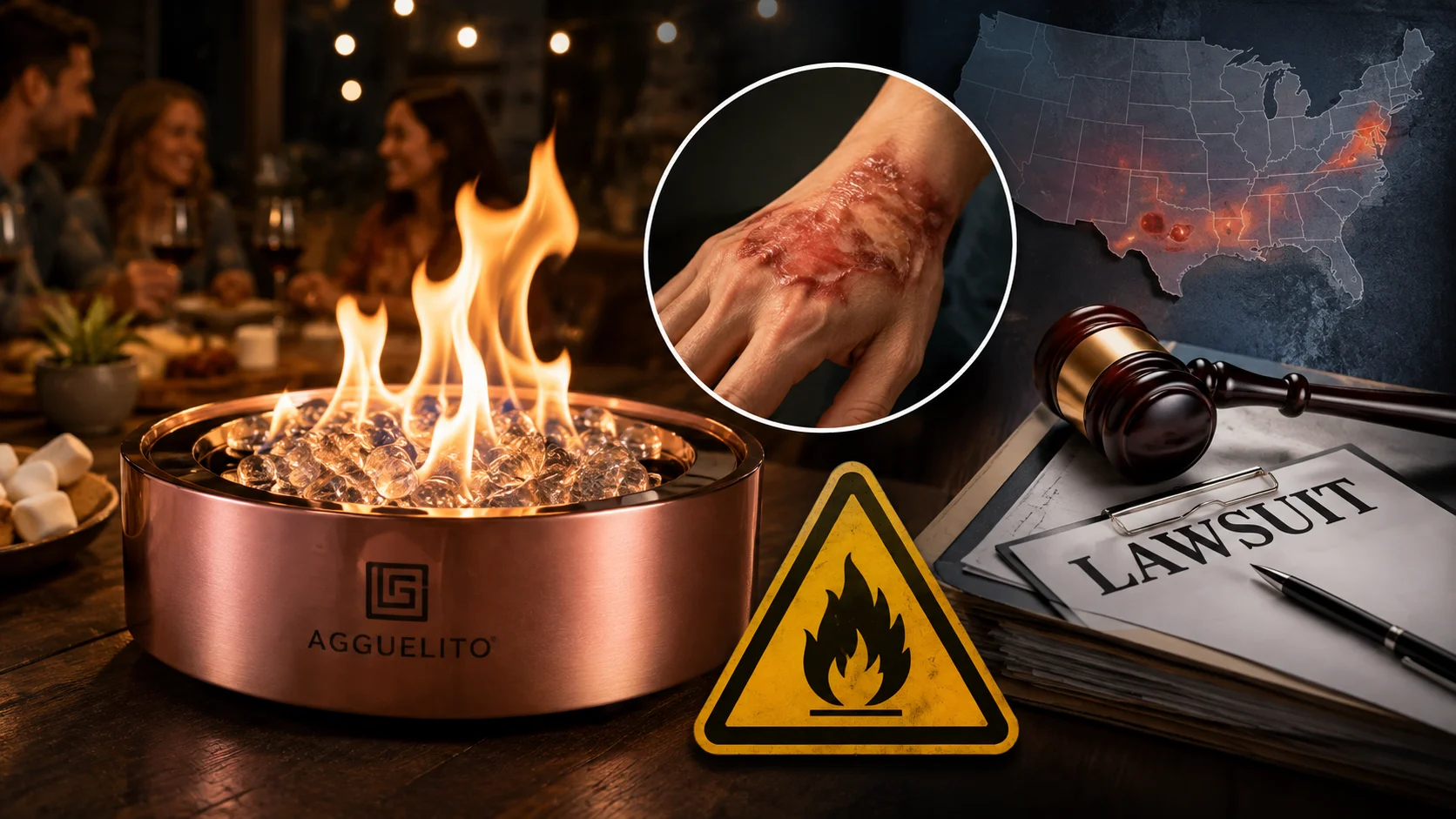
Agguelito sells a 10-inch tabletop fire pit that burns bioethanol fuel poured into an open bowl. This category has caused flare-ups and explosions while people were lighting or refueling it.
The fire pit belongs to a liquid-fuel tabletop category. The Consumer Product Safety Commission has linked this category to pool fires and flame jetting. Both hazards have caused deaths and dozens of serious burns across several brands since 2019.
No recall, lawsuit or multidistrict litigation has been filed against Agguelito specifically. Individual burn-injury claims against liquid-fuel tabletop fire pit sellers, including this brand’s product category, remain under attorney investigation. No case has been filed yet.
Lawsuit at a glance
- Case or litigation name: No named case or MDL – individual burn-injury claims under attorney investigation
- Defendants: Not yet named – online searches and the JPML docket list found no filed Agguelito-specific case
- Court and docket number, when available: No filed case found – online searches and the JPML docket list found none
- MDL number, judge, and case count, when an MDL exists: No MDL – the JPML’s Pending MDL Dockets report (current September 1, 2026) lists no fire-pit MDL
- Filing date: No filing yet
- Main allegations: Defective design and inadequate warnings allegedly let fuel pool and ignite unpredictably (pool fires) or explode during refueling near any flame (flame jetting)
- Products or people involved: Agguelito bioethanol tabletop fire pits for indoor and outdoor use; anyone burned lighting, refueling, extinguishing, moving or sitting near one, including bystanders
Latest Agguelito Fire Pit Lawsuit Updates
July 16, 2026: CPSC Warns Consumers to Stop Using Houswise Tabletop Fire Pits
The Consumer Product Safety Commission warned consumers to stop using Houswise tabletop fire pits. The warning followed more than two dozen reports of flame jetting and pool fires [1]. Seven injuries were reported, including third-degree burns. The manufacturer had not committed to a recall or remedy at the time of the warning. The same liquid-fuel design and hazards appear in Agguelito’s own bioethanol tabletop fire pit.April 2, 2026: CPSC Warns of Flame Jetting and Fire Risk in Rozato Tabletop Fire Pits
CPSC issued a stop-use warning for Rozato tabletop fire pits after pooled fuel caused fires and flame jetting [2]. The warning found isopropyl alcohol, ethanol and similar liquid fuels burn above 1,600 degrees Fahrenheit. Those temperatures can cause third-degree burns in less than one second, CPSC said. The warning tied the product to one death and multiple burn injuries. The retailer had not agreed to a recall or remedy as of the warning.December 19, 2024: CPSC Issues Category-Wide Alert on Liquid-Fuel Fire Pits
CPSC issued a category-wide Consumer Alert, Warning No. 25-074 [3]. It told consumers to stop using alcohol- or other liquid-burning fire pits. These fire pits violate voluntary safety standard ASTM F3363-19, which is meant to prevent these hazards. The agency linked this liquid-fuel fire pit category to two deaths. It also counted at least 60 injuries reported since 2019 alone.October 17, 2024: CPSC Recalls About 89,500 Colsen Fire Pits
CPSC recalled about 89,500 Colsen-branded fire pits [4]. The recall followed 31 reports of flame jetting or flames escaping the concrete containers. Nineteen burn injuries were confirmed, including third-degree burns. At least six incidents required surgery, burn-unit admission, disability or permanent disfigurement. Some burns covered more than 40 percent of a victim’s body.What Is an Agguelito Fire Pit?
The Agguelito fire pit is a 10-inch tabletop model finished in rose gold, sold with glass rocks and an S’mores kit [5]. It burns bioethanol fuel in an open bowl for indoor or outdoor tabletop use. This is the fire pit named on this page: a liquid-fuel tabletop model. It sits in the same category CPSC has warned about for flame jetting and pool fire hazards.Who May Be Affected?
Anyone burned while lighting, refueling or extinguishing a liquid-fuel tabletop fire pit like Agguelito’s may be affected. The same is true for anyone moving it or standing nearby. That includes bystanders who never bought or lit the product themselves. Reported incidents across this fire pit category involve users igniting the bowl. Some added fuel to a fire that looked out. Others were simply standing nearby when a pool fire or flame jetting event occurred. Flame jetting can propel burning fuel and fire well beyond the fire pit’s own bowl and onto anyone standing nearby, CPSC’s warnings note. No multidistrict litigation currently covers this fire pit product category, per the Judicial Panel on Multidistrict Litigation‘s own docket list [6]. Matching your specific injury and circumstances to a possible claim still takes an individual legal review. A generic checklist alone is not enough.Think you may qualify?
Schmidt & Clark offers a free, no-obligation case review for people burned by a liquid-fuel tabletop fire pit. A case review does not guarantee that you qualify for a claim or any particular result.
Start My Free Case Review
Reported Injuries or Damages
Burn injuries are the harm reported across the liquid-fuel tabletop fire pit category. They range from minor burns to third-degree injuries requiring surgery, burn-unit admission or skin grafts. The Rozato warning above found these liquid fuels ignite hot enough to cause third-degree burns. That injury can occur in almost no time, CPSC said. Across the category’s CPSC records, incidents include second- and third-degree burns severe enough to require hospital treatment. Other incidents caused permanent scarring, disfigurement or one of at least three reported deaths since 2019. Complaint-style claims describe these same injuries. The regulator’s incident reports and any individual case still need their own documentation to support a claim.Recall and Regulatory Background
Agguelito’s fire pit has not been the subject of its own CPSC recall. It sits inside a liquid-fuel tabletop fire pit category. CPSC has acted on that category directly, including the Colsen recall and the December 2024 alert. See tabletop fire pit recalls for the recalls and warnings issued across this product category. A recall or warning in this category does not by itself establish that any specific Agguelito unit is defective.Evidence to Preserve
If you were hurt by a liquid-fuel tabletop fire pit, keep every record. Document the product, the incident and your treatment. Evidence worth preserving includes:- The fire pit itself and any remaining fuel container, kept unwashed if possible
- Purchase or order records, receipts and shipping confirmations showing when and where you bought it
- Product packaging, labels, instructions and any online listing screenshots showing how it was marketed
- Photographs of the injury, the fire pit and the scene taken as soon as possible
- Medical records, bills and discharge instructions documenting the treatment you received for the burn
- Any communications with the seller, manufacturer or marketplace about the fire pit
Filing Deadlines
A burn-injury claim must be filed inside a deadline that state law sets. Missing it can end an otherwise strong case. The clock usually starts on the date of the injury, though some states instead count from the date of diagnosis. Where the injured person lives can also change how the deadline is counted. Anyone considering an Agguelito fire pit injury claim should talk with a lawyer promptly.Potential Compensation
Where a fire pit burn claim succeeds, categories of damages may be considered. These can include medical costs, pain and suffering and lost income. In a wrongful-death case, damages may also include funeral and burial expenses. No named settlement or verdict for Agguelito or a directly comparable liquid-fuel fire pit brand has been identified. Compensation amounts vary by case. Past results do not guarantee future outcomes. A lawyer can explain how potential compensation categories might apply to your specific case.Frequently Asked Questions
Has the Agguelito Fire Pit Been Recalled?
No, the Agguelito fire pit has not been recalled. CPSC has not announced any Agguelito-specific action. Similar liquid-fuel tabletop products have drawn CPSC warnings, and a new action remains possible if more incidents are reported.Do You Need a Recall to Start an Agguelito Fire Pit Lawsuit?
You do not need a recall to start an Agguelito fire pit lawsuit. A recall is not a legal requirement for a product-liability claim. Burn victims can pursue individual claims against liquid-fuel fire pit sellers even without one.Can a Bystander File an Agguelito Fire Pit Lawsuit Claim?
Yes, a bystander can file an Agguelito fire pit lawsuit claim. CPSC’s warnings describe flame jetting as capable of striking bystanders as well as the person refueling. Being nearby rather than using the fire pit does not rule out a claim.Why Do Tabletop Fire Pits Explode?
Tabletop fire pits can explode because liquid fuel is meant to be poured into an open bowl. It ignites where it pools. Beyond flame jetting during refueling, fuel can also splash, spill or leak from the reservoir during ordinary use. It can then catch fire unexpectedly.References
- https://www.cpsc.gov/Warnings/2026/CPSC-Warns-Consumers-to-Stop-Using-Houswise-Tabletop-Fire-Pits-Immediately-Due-to-Risk-of-Serious-Burn-Injury-or-Death-from-Flame-Jetting-and-Fire-Hazards
- https://www.cpsc.gov/Warnings/2026/CPSC-Warns-Consumers-to-Stop-Using-Rozato-Tabletop-Fire-Pits-Immediately-Due-to-Flame-Jetting-and-Fire-Hazards-One-Death-and-Serious-Burn-Injuries-Reported
- https://www.cpsc.gov/Warnings/2025/Consumer-Alert-Stop-Using-Alcohol-or-Other-Liquid-Burning-Fire-Pits-That-Violate-Voluntary-Standards-and-Present-Flame-Jetting-and-Fire-Hazards-Two-Deaths-and-Dozens-of-Serious-Burn-Injuries-Reported
- https://www.cpsc.gov/Recalls/2025/Colsen-Recalls-Fire-Pits-Due-to-Risk-of-Serious-Burn-Injury-from-Flame-Jetting-and-Fire-Spreading-Hazards
- https://www.liberia.ubuy.com/product/FHOGMRCNC-agguelito-table-top-firepit-bioethanol-fuel-tabletop-fire-pit-eco-friendly-stove-table-top-fire-bowl-smokeless-and-clean-burning-indoor
- https://www.jpml.uscourts.gov/sites/jpml/files/Pending_MDL_Dockets_By_District-September-1-2026.pdf