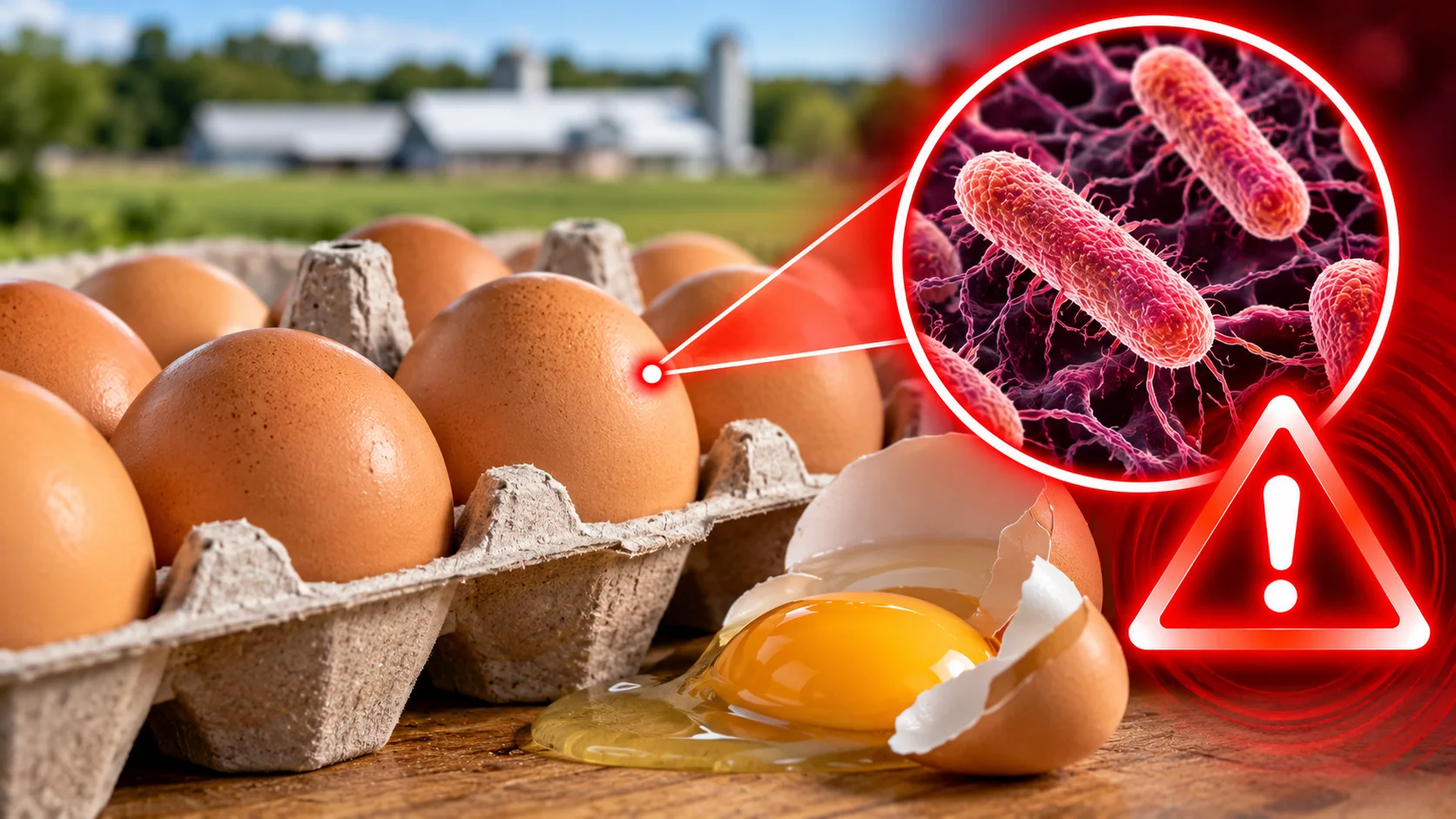
The recall began December 5, 2025 and covered Vega Farms eggs with handler code 2136, Julian dates 328 and prior, and sell-by dates of December 22, 2025 and earlier. A later Sacramento County public health update reported 66 outbreak cases statewide, including 49 in Sacramento County, with 13 hospitalizations and no deaths. Consumers should not eat recalled eggs and should discard them or return them for a refund.
Quick Facts
- Product: Vega Farms brown shell eggs
- Identification: Handler code 2136 with Julian dates 328 and prior
- Hazard: Salmonella Enteritidis contamination linked to an illness outbreak
- Reported impact: 66 statewide cases, 13 hospitalizations, and no deaths in a later county update
Latest Vega Farms Eggs Recall Developments
October 2026
October 2026 – California’s current foodborne outbreak records continue to list Vega Farms in-shell eggs among the 2025 outbreaks involving California patients and identify Salmonella Enteritidis as the responsible pathogen. The state page does not identify a later nationwide Vega Farms outbreak or additional federal recall.
[1]
December 2025
December 2025 – Sacramento County Public Health reported that the statewide Vega Farms-associated outbreak had reached 66 confirmed cases, including 49 cases in Sacramento County. Thirteen people had been hospitalized and no deaths were reported.
[2]
December 12, 2025 – CDPH announced that 63 California residents had been infected with the outbreak strain as of December 5, including 13 people who were hospitalized. Investigators collected eggs and environmental samples at Vega Farms, multiple samples tested positive for Salmonella, and whole genome sequencing showed that at least one Salmonella sample matched the strain found in sick people.
[3]
December 5, 2025 – Vega Farms voluntarily recalled affected in-shell eggs. CDPH’s recall information identifies Vega Farms brand eggs in 12-count cartons and 30-count flats with handler code 2136, Julian dates 328 and prior, and sell-by dates of December 22, 2025 and prior.
[4]
What Is the Vega Farms Eggs Recall?
Vega Farms Inc. of Dixon, California, voluntarily recalled certain brown shell eggs after a Salmonella Enteritidis outbreak was linked to consumption of the company’s eggs.
The products were distributed primarily in Northern California through restaurants, grocery stores, food cooperatives, farmers markets, meal-subscription businesses, caterers, and other foodservice channels.
Which Vega Farms Eggs Were Recalled?
Consumers and businesses should check egg cartons and cases for the following identifying information:
- Brand: Vega Farms
- Product: Brown shell eggs
- Handler code: 2136
- Julian dates: 328 and prior
- Sell-by dates: December 22, 2025 and prior
- Consumer packaging: 1-dozen cartons and 30-egg flats
- Foodservice packaging: 15-dozen cases containing six 30-egg flats
The handler code and date information are important because the recall does not cover every egg ever produced or sold by Vega Farms.
Why Were Vega Farms Eggs Recalled?
California public health officials investigated a cluster of Salmonella Enteritidis illnesses associated with egg consumption and traced suspect eggs to Vega Farms.
CDPH and the California Department of Food and Agriculture inspected the farm and collected both egg and environmental samples. Multiple samples were positive for Salmonella, and whole genome sequencing showed that Salmonella from at least one sample genetically matched the strain causing illnesses in the outbreak.
How Many People Became Sick?
CDPH initially reported 63 California residents infected with the outbreak strain as of December 5, 2025. Thirteen had been hospitalized and no deaths were reported.
A subsequent Sacramento County Public Health update reported 66 statewide cases, including 49 in Sacramento County. The number of hospitalizations remained 13 and no deaths were reported.
Why Was Sacramento County Heavily Affected?
Sacramento County reported 49 of the 66 statewide cases in its later update and said the concentration of cases was consistent with the geographic distribution of Vega Farms eggs in the Sacramento and Davis areas.
The county also reported Salmonella case totals above its three-year averages during September, October, and November 2025, with the increase tied to the outbreak.
Where Were the Recalled Eggs Sold?
CDPH stated that Vega Farms eggs were sold to restaurants, grocery stores, co-ops, and farmers markets in Northern California.
The state’s recall information also identifies distribution through restaurants, meal-subscription services, caterers, and farmers markets. Consumers who ate eggs away from home may therefore not have seen the Vega Farms packaging themselves.
What Is Salmonella Enteritidis?
Salmonella is a group of bacteria capable of causing gastrointestinal illness. Salmonella Enteritidis is a strain frequently associated with poultry and eggs.
People can become infected by eating contaminated eggs or foods prepared with contaminated eggs, particularly when eggs are raw or undercooked or when contaminated egg material spreads to other foods or surfaces.
What Are the Symptoms of Salmonella Infection?
Common symptoms include diarrhea, fever, and stomach cramps. Some people may also experience nausea, vomiting, headache, or loss of appetite.
Symptoms generally begin between six hours and six days after infection and usually last four to seven days. Most people recover without specific treatment, although severe cases may require medical care or hospitalization.
[5]
Who Is at Higher Risk of Serious Salmonella Illness?
Children younger than five, adults age 65 and older, and people with weakened immune systems have a greater risk of developing severe Salmonella infections.
Salmonella can occasionally spread beyond the intestines into the blood or other parts of the body, potentially causing more serious complications.
What Should Consumers Do With Recalled Vega Farms Eggs?
Consumers should not eat recalled Vega Farms eggs. CDPH advises throwing them away or returning them to the place of purchase for a refund.
Items and surfaces that may have touched the recalled eggs should be washed and sanitized with hot soapy water or cleaned in a dishwasher when appropriate.
What Should Restaurants and Businesses Do?
Restaurants, retailers, caterers, meal-subscription companies, and other businesses should not sell or serve affected eggs.
Businesses should check cartons, flats, cases, and inventory records for handler code 2136, qualifying Julian dates, and affected sell-by dates before using stored egg inventory.
Who May Be Affected?
Consumers who ate recalled Vega Farms eggs at home or through a restaurant, caterer, farmers market, meal service, or other business may have been exposed to Salmonella Enteritidis.
People diagnosed with salmonellosis after eating eggs during the outbreak period may want to preserve receipts, packaging, restaurant records, laboratory results, medical records, and other evidence capable of identifying the source of the eggs.
What Evidence May Matter in a Vega Farms Egg Claim?
- The egg carton, flat, or case label
- Handler code 2136
- Julian date and sell-by date
- Purchase receipts or grocery records
- Restaurant or meal-service records
- Dates the eggs were consumed
- Laboratory results confirming Salmonella infection
- Medical and hospitalization records
Foodborne-illness claims generally require evidence connecting a specific food exposure with the diagnosed infection and resulting injuries.
Who May Be Liable for a Salmonella Egg Illness?
Potential liability depends on the circumstances and applicable law. Egg producers, processors, distributors, retailers, restaurants, foodservice businesses, and other entities in the supply chain may potentially be evaluated when contaminated food causes illness.
The Vega Farms recall and outbreak findings do not automatically establish civil liability in an individual case. Product identification, exposure, medical causation, and damages generally require separate evaluation.
Current Vega Farms Eggs Lawsuit and Recall Status
The documented public-health action is the December 2025 Vega Farms voluntary egg recall and California Salmonella Enteritidis outbreak investigation.
As of October 2026, CDPH continues to identify Vega Farms in-shell eggs in its archive of 2025 California foodborne outbreaks. The cited state and county materials do not themselves announce a nationwide class action, multidistrict litigation proceeding, or coordinated settlement involving Vega Farms eggs.
Individual legal review may still be appropriate when a consumer has laboratory-confirmed salmonellosis and evidence connecting the illness to recalled Vega Farms eggs.
Do I Qualify for a Vega Farms Eggs Claim?
- Did you eat Vega Farms eggs covered by the December 2025 recall?
- Were the eggs marked with handler code 2136 and an affected date?
- Were you later diagnosed with Salmonella or treated for a related illness?
- Can you document the egg exposure, laboratory testing, medical care, or resulting losses?
Answering yes to one or more questions does not automatically establish a lawsuit. An attorney can review product identification, exposure records, medical evidence, damages, and applicable filing deadlines.
Legal Process for a Vega Farms Eggs Claim
- Free case review. An attorney reviews the recalled product, exposure history, illness, and available records.
- Investigation. Evidence may include egg packaging, purchase records, restaurant records, laboratory results, medical records, and public-health findings.
- Filing. If the evidence and applicable law support a claim, a foodborne-illness lawsuit may be filed against one or more potentially responsible parties.
- Discovery/negotiation. The parties may exchange records, obtain testimony, consult medical or food-safety experts, and discuss possible resolution.
- Resolution. A claim may conclude through settlement, dismissal, court ruling, or trial depending on its facts.
Compensation in a Salmonella Foodborne Illness Case
Depending on the circumstances, damages may include medical bills, hospitalization expenses, lost income, pain and suffering, future medical care, and other losses permitted under applicable law.
Compensation amounts vary by case. Past results do not guarantee future outcomes.
Important Vega Farms Eggs Recall Developments
| Event |
Month/Year |
Type |
Status |
Source |
Notes |
| CDPH Outbreak Status Listing |
October 2026 |
Public Health Status |
Listed |
[1] |
Listed among 2025 outbreaks |
| Sacramento County Update |
December 2025 |
Outbreak Update |
66 Cases |
[2] |
49 Sacramento County cases |
| CDPH Outbreak Warning |
December 2025 |
Public Health Alert |
Published |
[3] |
Eggs linked to illnesses |
| Vega Farms Egg Recall |
December 2025 |
Voluntary Recall |
Announced |
[4] |
Brown shell eggs recalled |
Frequently Asked Questions
What is the Vega Farms Eggs Lawsuit?
The Vega Farms Eggs Lawsuit topic concerns potential foodborne-illness claims involving recalled eggs associated with a Salmonella Enteritidis outbreak in California. An individual claim generally requires evidence linking affected eggs with a medically documented infection and resulting damages.
Why were Vega Farms eggs recalled?
The eggs were recalled after California investigators linked Vega Farms eggs to a Salmonella Enteritidis outbreak. Multiple egg and environmental samples tested positive for Salmonella, and at least one sample genetically matched the outbreak strain.
How many people became sick?
CDPH initially reported 63 cases as of December 5, 2025. A later Sacramento County Public Health update reported 66 statewide cases, including 49 in Sacramento County, with 13 hospitalizations and no deaths.
Which Vega Farms eggs were recalled?
The recall covers Vega Farms brown shell eggs with handler code 2136, Julian dates 328 and prior, and sell-by dates of December 22, 2025 and prior. Packaging included 12-count cartons, 30-egg flats, and foodservice cases.
Where were Vega Farms eggs sold?
The eggs were distributed in Northern California through grocery stores, restaurants, cooperatives, farmers markets, caterers, meal-subscription businesses, and other foodservice channels. Because some eggs were served through restaurants and other prepared-food settings, consumers may have eaten affected eggs without seeing Vega Farms packaging.
What are the symptoms of Salmonella?
Common symptoms include diarrhea, fever, and stomach cramps and may also include nausea or vomiting. Symptoms typically begin six hours to six days after infection and usually last four to seven days.
What should I do if I still have recalled eggs?
Do not eat them. Throw them away or return them to the place of purchase for a refund, and thoroughly clean and sanitize surfaces or containers that may have contacted the eggs.
Can I file a Vega Farms Eggs Lawsuit?
A person diagnosed with salmonellosis after eating recalled Vega Farms eggs may warrant individual legal review. The recall and outbreak findings do not automatically establish liability, and a claim depends on evidence of exposure, causation, injury, and damages.
Do I Have a Vega Farms Eggs Lawsuit?
If you or a loved one developed a serious Salmonella infection after eating recalled Vega Farms eggs, you may have legal options. Contact Schmidt & Clark for a free case review.
Start My Free Case Review
References
[1] https://www.cdph.ca.gov/Programs/CID/DCDC/Pages/FoodborneDiseasesandOutbreaks.aspx
[2] https://www.saccounty.gov/us/en/articles/2025-articles/rise-in-local-salmonella-case-data-linked-to-statewide-outbreak.html
[3] https://www.cdph.ca.gov/Programs/OPA/Pages/NR25-025.aspx
[4] https://www.cdph.ca.gov/Programs/CEH/DFDCS/CDPH%20Document%20Library/FDB/FoodSafetyProgram/FoodRecalls/December2025/fdbFrVEGA1n.pdf
[5] https://www.cdc.gov/salmonella/signs-symptoms/index.html