

Table of contents
- Latest Family Farmstead Cheddar Cheese Recall Developments
- October 2026
- What Is the Family Farmstead Cheddar Cheese Recall?
- Which Family Farmstead Cheese Was Recalled?
- Why Was Family Farmstead Raw Cheddar Recalled?
- How Was the E. coli Contamination Discovered?
- Where Was the Recalled Cheese Distributed?
- Were Any Illnesses Reported?
- What Is Shiga Toxin-Producing E. coli?
- What Are the Symptoms of E. coli Infection?
- What Is Hemolytic Uremic Syndrome?
- Why Can Raw-Milk Cheese Carry E. coli Risk?
- What Should Consumers Do With Recalled Family Farmstead Cheese?
- Who May Be Affected?
- What Evidence May Matter in a Family Farmstead Cheese Claim?
- Who May Be Liable for an E. coli Cheese Illness?
- Current Family Farmstead Cheddar Cheese Lawsuit and Recall Status
- Do I Qualify for a Family Farmstead Cheddar Cheese Claim?
- Legal Process for a Family Farmstead Cheddar Cheese Claim
- Compensation in an E. coli Foodborne Illness Case
- Important Family Farmstead Cheddar Cheese Recall Developments
- Frequently Asked Questions
- What is the Family Farmstead Cheddar Cheese Lawsuit?
- Which Family Farmstead cheese was recalled?
- Why was the Family Farmstead cheddar recalled?
- Were any illnesses reported?
- Where was the recalled cheese sold?
- What are the symptoms of E. coli infection?
- What should I do if I still have recalled cheese?
- Can I file a Family Farmstead Cheddar Cheese Lawsuit?
- Do I Have a Family Farmstead Cheddar Cheese Lawsuit?
- References
FDA posted the recall on October 15, 2026 and later corrected the notice to update the distribution pattern and E. coli serotypes associated with the affected cheese. No illnesses had been reported when the recall was announced. Consumers should not eat the recalled cheese and should discard it or return it to the place of purchase for a full refund.
Quick Facts
- Product: Family Farmstead Dairy Raw Mild Cheddar Cheese
- Lot code: 7/22/27
- Hazard: Potential contamination with E. coli O26:H11 and O45:H2
- Illnesses: No illnesses reported when the recall was announced
Latest Family Farmstead Cheddar Cheese Recall Developments
October 2026
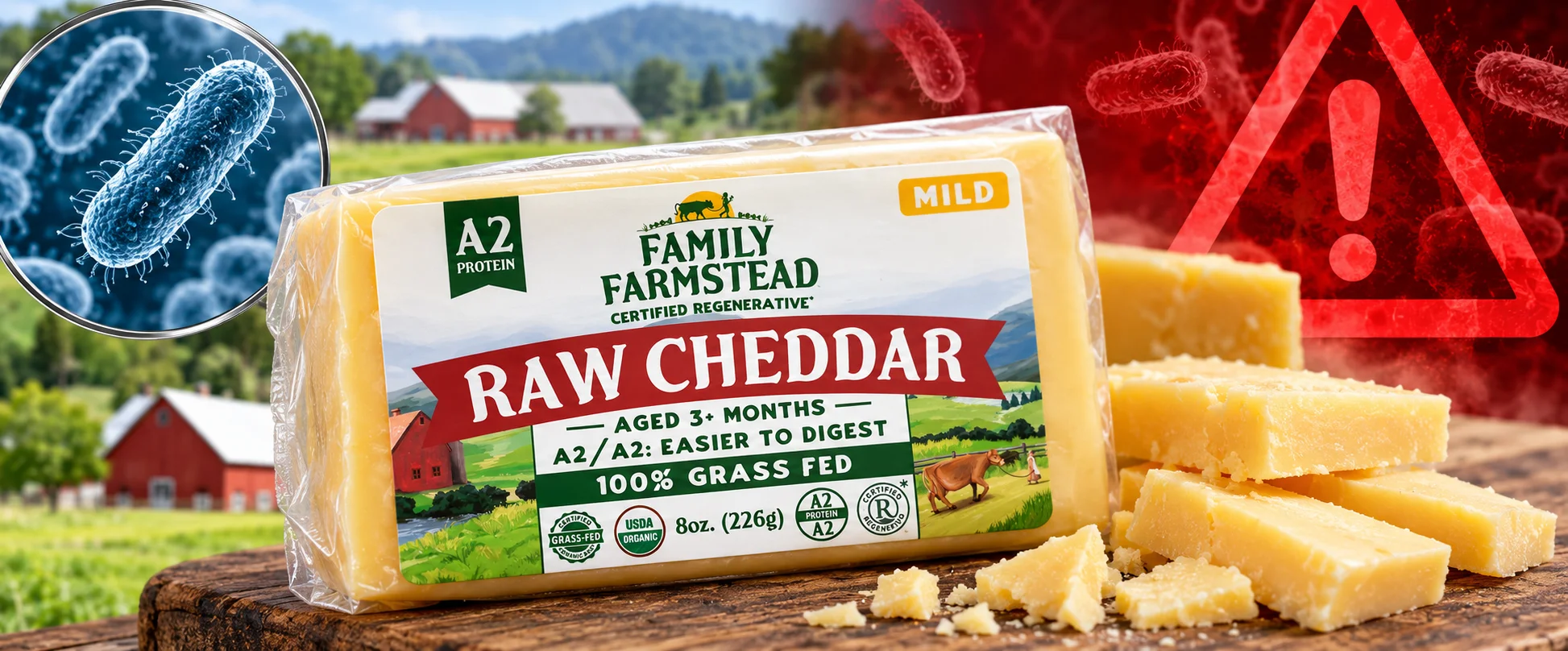
October 15, 2026 – Family Farmstead Dairy of Worcester, New York, recalled a specific lot of Raw Mild Cheddar Cheese because samples tested positive for Shiga toxin-producing E. coli. FDA’s corrected recall notice identifies the organisms as E. coli O26:H11 and O45:H2. [1]
October 15, 2026 – FDA’s updated notice corrected the original distribution information and serotype identification. The corrected notice states that the cheese was distributed to grocers in New York, Pennsylvania, New Jersey, Connecticut, Maryland, Virginia, and Massachusetts, with possible additional distribution through downstream distributors. [1]
October 15, 2026 – FDA reported that the issue was discovered after a Maryland laboratory sample isolated two strains of Shiga toxin-producing E. coli from two samples of Family Farmstead A2 Raw Cheddar in 8-ounce packages. No illnesses had been reported in connection with the recalled product at that time. [1]
What Is the Family Farmstead Cheddar Cheese Recall?
The recall involves Family Farmstead Dairy Raw Mild Cheddar Cheese manufactured by Family Farmstead Dairy LLC of Worcester, New York.
The affected cheese was recalled because testing identified two Shiga toxin-producing E. coli strains in product samples. No other Family Farmstead Dairy products are included in the recall described by FDA.
Which Family Farmstead Cheese Was Recalled?
The affected product is:
- Brand: Family Farmstead
- Product: Raw Mild Cheddar Cheese
- Package size identified in testing: 8 ounces
- Lot code: 7/22/27
- Best-by date: 7/22/27
Consumers should compare the lot code and best-by date on their cheese with the recall information before eating the product.
Why Was Family Farmstead Raw Cheddar Recalled?
The recall was initiated after testing detected Shiga toxin-producing E. coli in samples of the cheese.
FDA’s corrected notice identifies the strains as E. coli O26:H11 and O45:H2. These organisms can cause serious gastrointestinal illness and, in some cases, hemolytic uremic syndrome.
How Was the E. coli Contamination Discovered?
FDA states that the issue was discovered after a laboratory sample in Maryland isolated two strains of Shiga toxin-producing E. coli from two samples of Family Farmstead A2 Raw Cheddar.
The affected samples were 8-ounce packages bearing the 7/22/27 lot and best-by date.
Where Was the Recalled Cheese Distributed?
The corrected FDA recall notice states that the affected cheese was distributed to grocers in New York, Pennsylvania, New Jersey, Connecticut, Maryland, Virginia, and Massachusetts.
FDA also cautioned that the cheese may have been distributed to additional states through downstream distributors, meaning some affected product could have reached locations outside the specifically listed states.
Were Any Illnesses Reported?
No illnesses or allergic reactions had been reported when the recall notice was issued.
The recall was based on laboratory detection of Shiga toxin-producing E. coli rather than a reported outbreak of illnesses linked to the cheese.
What Is Shiga Toxin-Producing E. coli?
Shiga toxin-producing E. coli, often abbreviated STEC, is a group of E. coli bacteria capable of producing toxins that can cause severe intestinal illness.
Some STEC infections can become serious and may lead to hemolytic uremic syndrome, a complication that can damage the kidneys and require hospitalization. [2]
What Are the Symptoms of E. coli Infection?
Common symptoms include severe stomach cramps and diarrhea that may be bloody. Some people also experience vomiting or a low-grade fever.
CDC states that symptoms vary depending on the type of E. coli involved. People with bloody diarrhea, prolonged vomiting, high fever, dehydration, or signs of HUS should seek medical care. [2]
What Is Hemolytic Uremic Syndrome?
Hemolytic uremic syndrome, or HUS, is a serious complication that can occur after infection with Shiga toxin-producing E. coli.
Signs can include reduced urination, unusual fatigue, pale skin, unexplained bruising, blood in the urine, and decreased alertness. HUS can lead to kidney failure, permanent health complications, or death.
Why Can Raw-Milk Cheese Carry E. coli Risk?
Raw-milk cheese is made from milk that has not undergone pasteurization, a heat-treatment process used to reduce harmful bacteria.
If pathogenic bacteria are present in the raw milk or introduced during processing, handling, or packaging, they may remain in the finished cheese unless other controls effectively eliminate the hazard.
What Should Consumers Do With Recalled Family Farmstead Cheese?
Consumers should not eat cheese that matches the affected lot code and best-by date.
FDA states that recalled product should be discarded or returned to the place of purchase for a full refund. Consumers should also clean surfaces, utensils, and containers that may have contacted the recalled cheese.
Who May Be Affected?
Anyone who ate recalled Family Farmstead Raw Mild Cheddar Cheese may have been exposed to Shiga toxin-producing E. coli.
A person who develops gastrointestinal illness after eating the recalled cheese may want to preserve the packaging, receipt, lot information, laboratory results, medical records, and any remaining product if public-health authorities advise retaining it.
What Evidence May Matter in a Family Farmstead Cheese Claim?
- The original cheese packaging
- Lot code 7/22/27
- Best-by date 7/22/27
- Purchase receipt or store record
- Dates the cheese was consumed
- Laboratory results confirming E. coli infection
- Medical and hospitalization records
- Documentation of lost income or other damages
Foodborne-illness claims generally require evidence connecting the recalled product with the diagnosed infection and resulting injuries.
Who May Be Liable for an E. coli Cheese Illness?
Potential liability depends on the facts and applicable law. Dairy producers, processors, distributors, retailers, and other companies in the supply chain may potentially be evaluated when allegedly contaminated food causes illness.
The existence of a recall does not automatically establish civil liability. A claimant generally must establish product identification, exposure, causation, injury, and legally recoverable damages.
Current Family Farmstead Cheddar Cheese Lawsuit and Recall Status
The documented regulatory action is the October 2026 recall of Family Farmstead Dairy Raw Mild Cheddar Cheese bearing lot code 7/22/27 because of potential E. coli O26:H11 and O45:H2 contamination.
FDA’s current recall listings continue to identify the product among 2026 food recalls. The cited FDA and CDC materials do not themselves announce a nationwide class action, multidistrict litigation proceeding, or coordinated personal-injury settlement involving the recalled cheese. [3]
Individual legal review may still be appropriate if a consumer develops laboratory-confirmed STEC infection after eating cheese traceable to the recalled lot.
Do I Qualify for a Family Farmstead Cheddar Cheese Claim?
- Did you eat Family Farmstead Raw Mild Cheddar Cheese from lot 7/22/27?
- Were you later diagnosed with Shiga toxin-producing E. coli?
- Did you require medical treatment or hospitalization after eating the cheese?
- Can you document the product, exposure, diagnosis, or resulting losses?
Answering yes to one or more questions does not automatically establish a lawsuit. An attorney can review the recalled product, medical evidence, causation, damages, and applicable filing deadlines.
Legal Process for a Family Farmstead Cheddar Cheese Claim
- Free case review. An attorney reviews the recalled product, exposure history, diagnosis, and available documentation.
- Investigation. Evidence may include packaging, purchase records, laboratory results, medical records, recall materials, and distribution records.
- Filing. If the evidence and applicable law support a claim, a foodborne-illness lawsuit may be filed against one or more potentially responsible parties.
- Discovery/negotiation. The parties may exchange evidence, obtain testimony, consult medical or food-safety experts, and discuss possible resolution.
- Resolution. A case may conclude through settlement, dismissal, court ruling, or trial depending on its facts.
Compensation in an E. coli Foodborne Illness Case
Depending on the circumstances, damages may include emergency treatment, hospitalization, diagnostic testing, lost income, pain and suffering, kidney-related treatment, future medical expenses, and other losses permitted under applicable law.
Compensation amounts vary by case. Past results do not guarantee future outcomes.
Important Family Farmstead Cheddar Cheese Recall Developments
| Event | Month/Year | Type | Status | Source | Notes |
|---|---|---|---|---|---|
| Corrected Family Farmstead Recall | October 2026 | FDA Recall Update | Published | [1] | Serotypes and distribution corrected |
| Raw Mild Cheddar Recall | October 2026 | Food Recall | Announced | [1] | Lot 7/22/27 affected |
| FDA Recall Listing | October 2026 | Regulatory Listing | Listed | [3] | Recall remains listed |
Frequently Asked Questions
What is the Family Farmstead Cheddar Cheese Lawsuit?
The Family Farmstead Cheddar Cheese Lawsuit topic concerns potential foodborne-illness claims involving recalled Raw Mild Cheddar Cheese and alleged Shiga toxin-producing E. coli infections. An individual claim generally requires evidence connecting the recalled product with a medically documented illness and resulting damages.
Which Family Farmstead cheese was recalled?
The recall involves Family Farmstead Dairy Raw Mild Cheddar Cheese bearing lot code 7/22/27 and a best-by date of July 22, 2027. FDA states that no other Family Farmstead Dairy products are included in this recall.
Why was the Family Farmstead cheddar recalled?
Testing detected Shiga toxin-producing E. coli in samples of the product. FDA’s corrected notice identifies the strains as E. coli O26:H11 and O45:H2.
Were any illnesses reported?
No illnesses had been reported when the recall was announced. The recall resulted from laboratory findings rather than a reported outbreak linked to the cheese.
Where was the recalled cheese sold?
The cheese was distributed to grocers in New York, Pennsylvania, New Jersey, Connecticut, Maryland, Virginia, and Massachusetts. FDA also states that downstream distributors may have sent the product to additional states.
What are the symptoms of E. coli infection?
Symptoms can include severe stomach cramps, diarrhea that may be bloody, vomiting, and sometimes fever. Some infections can progress to hemolytic uremic syndrome, a serious condition that can cause kidney failure.
What should I do if I still have recalled cheese?
Do not eat it. FDA advises consumers to discard the affected product or return it to the place of purchase for a full refund.
Can I file a Family Farmstead Cheddar Cheese Lawsuit?
A consumer who developed laboratory-confirmed STEC infection after eating cheese traceable to the recalled lot may warrant individual legal review. The recall itself does not establish liability, and any claim depends on exposure evidence, causation, injury, and damages.
Do I Have a Family Farmstead Cheddar Cheese Lawsuit?
If you or a loved one developed a serious E. coli infection after eating recalled Family Farmstead Raw Mild Cheddar Cheese, you may have legal options. Contact Schmidt & Clark for a free case review.
References
[1] https://www.fda.gov/safety/recalls-market-withdrawals-safety-alerts/family-farmstead-dairy-announces-recall-raw-mild-cheddar-cheese-due-potential-e-coli-o26h11-and
[2] https://www.cdc.gov/ecoli/signs-symptoms/index.html
[3] https://www.fda.gov/safety/recalls-market-withdrawals-safety-alerts