

Table of contents
- Latest Baby Einstein Rocker Safety Developments
- October 2026
- September 2024
- June 2022
- What Is the Problem With Baby Einstein Rockers?
- Can a Baby Einstein Rocker Cause Suffocation?
- Why Is Sleeping in a Rocker Dangerous?
- What Does CDC Recommend for Safe Infant Sleep?
- Did a Baby Einstein Rocker Cause an Infant Death?
- Have Baby Einstein Rockers Been Recalled?
- Are Baby Einstein Rockers the Same as Recalled Kids2 Rocking Sleepers?
- What Other Problems Has CPSC Identified With Infant Rockers?
- Can Baby Einstein Rockers Tip Over?
- Why Are Restraints Important in Infant Rockers?
- Should Parents Add Blankets or Pillows to a Baby Einstein Rocker?
- What Should Parents Do if a Baby Falls Asleep in the Rocker?
- Why Might Parents Mistakenly Use a Rocker for Sleep?
- Who May Be Affected by Baby Einstein Rocker Problems?
- What Evidence May Matter in a Baby Einstein Rocker Injury Claim?
- Who May Be Liable for a Baby Einstein Rocker Injury?
- Current Baby Einstein Rocker Warning and Legal Status
- Do I Qualify for a Baby Einstein Rocker Claim?
- Legal Process for a Baby Einstein Rocker Claim
- Compensation in a Baby Einstein Rocker Injury Case
- Important Baby Einstein Rocker Safety Developments
- Frequently Asked Questions
- What is the Baby Einstein Rocker Lawsuit?
- Were Baby Einstein Rockers recalled?
- What is the main problem with Baby Einstein Rockers?
- Did a baby die in a Baby Einstein Rocker?
- Can babies sleep in Baby Einstein Rockers?
- What should I do if my baby falls asleep in the rocker?
- What other hazards can infant rockers present?
- Can I file a Baby Einstein Rocker Lawsuit?
- Do I Have a Baby Einstein Rocker Lawsuit?
- References
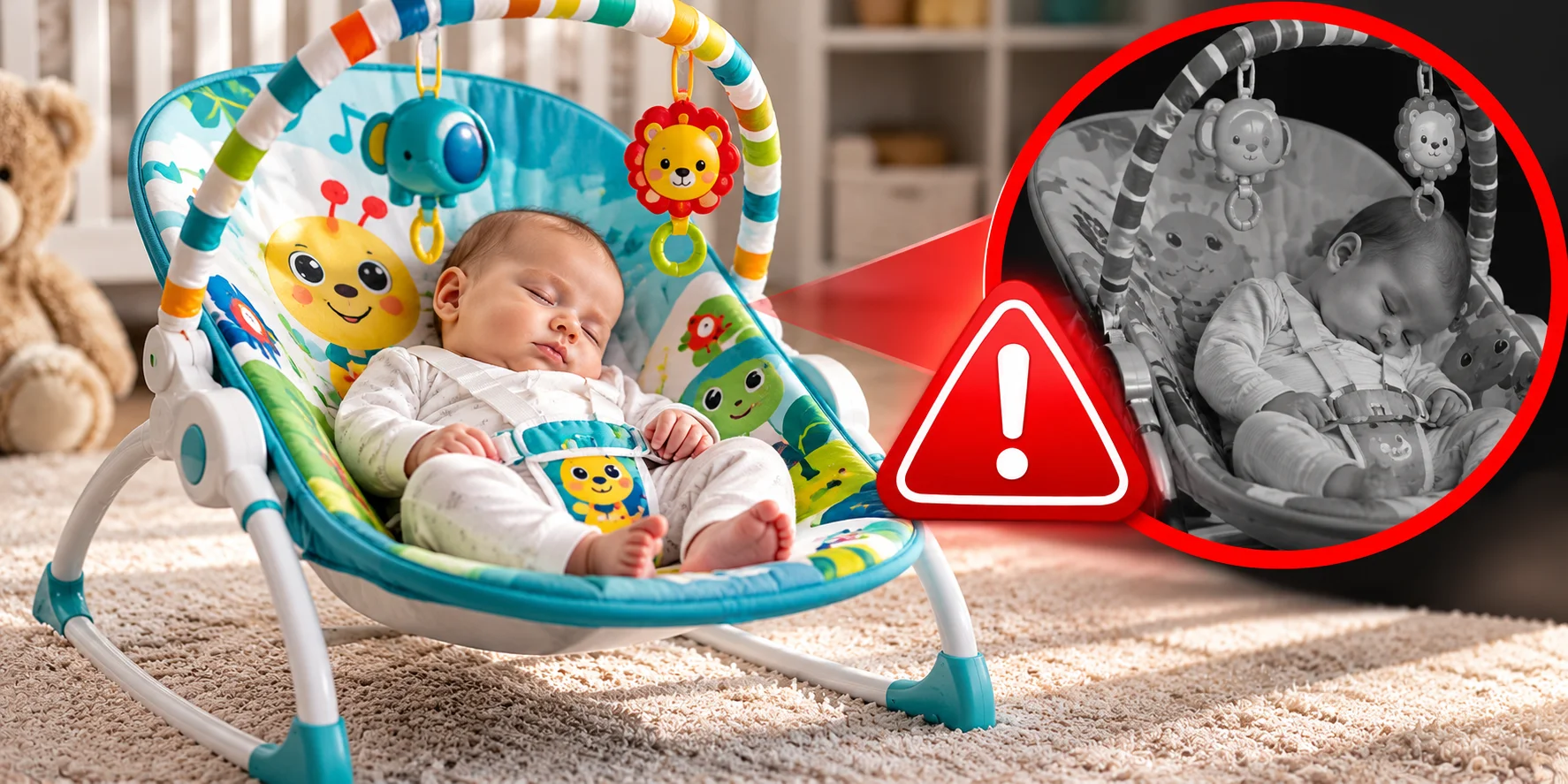
The June 2022 warning followed at least one reported infant death involving a Kids2 Bright Starts Rocker, although CPSC did not attribute that death specifically to a Baby Einstein-branded rocker. The broader concern involves inclined positioning, potential positional asphyxia, falls, inadequate restraint, and the possibility that caregivers may mistakenly treat a rocker as a safe sleeping space.
Quick Facts
- CPSC and Kids2 warned in June 2022 that Baby Einstein and Bright Starts Rockers should never be used for infant sleep.
- The federal warning followed at least one reported infant death involving a Kids2 Bright Starts Rocker in 2019.
- CPSC has identified suffocation, positional asphyxia, falls, stability problems, and restraint-related hazards across the broader infant rocker product category.
- The 2022 Baby Einstein Rocker action was a safety warning rather than a formal product recall.
Latest Baby Einstein Rocker Safety Developments
October 2026
October 27, 2026 – CPSC’s June 2022 warning concerning Kids2 Bright Starts and Baby Einstein Rockers remains publicly available and continues to advise that these products should never be used for infant sleep. A current review of the cited CPSC materials identifies the continuing safety warning and broader infant-rocker regulatory concerns but does not identify a Baby Einstein Rocker recall, nationwide litigation proceeding, or settlement in those materials. [1]
September 2024
September 2024 – CPSC continued work on a proposed mandatory safety standard for infant and infant/toddler rockers. Agency materials addressing rocker incidents have focused on hazards including positional asphyxia, falls, stability, restraints, and the risk that caregivers may use inclined rockers for sleep. [2]
June 2022
June 14, 2022 – CPSC and Kids2 issued a safety warning concerning Bright Starts and Baby Einstein Rockers. The agencies said the products should never be used for sleep and that infants should not be left unsupervised or unrestrained in the rockers. [1]
June 14, 2022 – CPSC reported at least one infant death in 2019 involving a Bright Starts Rocker. Kids2 had sold more than 1.8 million Bright Starts and Baby Einstein Rockers worldwide since 2012 at the time of the warning. [1]
What Is the Problem With Baby Einstein Rockers?
The central concern is that Baby Einstein Rockers are inclined products and are not safe infant sleeping environments.
An infant positioned in a reclined rocker can move or slump into a position that interferes with breathing. Younger infants may lack the head and neck control needed to reposition themselves if their airway becomes compromised.
CPSC therefore advises caregivers never to use inclined products such as rockers, gliders, soothers, or baby swings for infant sleep. Infants should also not be left in these products unsupervised, unrestrained, or with bedding material.
Can a Baby Einstein Rocker Cause Suffocation?
Inclined rockers can present a suffocation or positional-asphyxia hazard if an infant falls asleep in an unsafe position.
CPSC’s broader review of infant-rocker incidents found that positional asphyxia or probable asphyxia accounted for most reported fatalities in the category. Agency staff identified 11 reported fatalities involving infant rockers from January 2011 through November 2022, although those figures involve the product category generally and are not Baby Einstein-specific. [3]
Parents should not interpret those broader statistics as proof that 11 deaths involved Baby Einstein products. CPSC’s 2022 Kids2 warning specifically identified at least one reported death involving a Bright Starts Rocker.
Why Is Sleeping in a Rocker Dangerous?
Infants need a firm, flat sleeping surface that does not place them at an incline.
When a baby sleeps in a seated or reclined position, the child’s head can fall forward or the body can shift into a position that restricts breathing. Soft padding, added blankets, or unrestrained movement can increase the danger.
CPSC advises that babies who fall asleep in a rocker, swing, bouncer, or similar product should be moved to a safe sleep environment such as a crib, bassinet, play yard, or bedside sleeper. [4]
What Does CDC Recommend for Safe Infant Sleep?
CDC recommends placing infants on their backs for all naps and nighttime sleep.
The sleep surface should be firm and flat rather than inclined, and the baby’s sleep area should not contain pillows, blankets, bumper pads, soft toys, or other loose bedding. [5]
These recommendations are consistent with CPSC’s warning that Baby Einstein and other infant rockers should not be used as sleeping products.
Did a Baby Einstein Rocker Cause an Infant Death?
The June 2022 CPSC warning did not state that an infant death occurred specifically in a Baby Einstein-branded rocker.
CPSC reported at least one death in 2019 involving a Bright Starts Rocker, another Kids2 brand. The warning nevertheless applied its safe-use recommendations to both Kids2 Bright Starts and Baby Einstein Rockers.
This distinction is important because describing the reported Bright Starts death as a Baby Einstein death would go beyond what the CPSC source establishes.
Have Baby Einstein Rockers Been Recalled?
The June 14, 2022 action involving Baby Einstein Rockers was a CPSC and Kids2 safety warning, not a recall.
CPSC advised caregivers not to use the rockers for sleep and not to leave infants unsupervised or unrestrained in them. The cited warning did not instruct all Baby Einstein Rocker owners to return the products for a refund.
Are Baby Einstein Rockers the Same as Recalled Kids2 Rocking Sleepers?
No. Kids2 Rocking Sleepers are a different product category and were subject to a formal recall.
Kids2 recalled approximately 694,000 Rocking Sleepers in 2019, and CPSC reannounced that recall in 2023 after additional infant deaths were reported. CPSC ultimately reported 15 infant fatalities involving those recalled Kids2 Rocking Sleepers. [6]
Those Rocking Sleeper deaths should not be attributed to Baby Einstein Rockers. The products and regulatory actions are separate, although both illustrate the danger of using inclined infant products for sleep.
What Other Problems Has CPSC Identified With Infant Rockers?
CPSC’s work on the infant rocker product category has identified hazards beyond unsafe sleep.
Agency staff reported 88 nonfatal injuries involving infant rockers between January 2011 and November 2022. Most of the nonfatal injuries were head injuries associated with falls, and 70 of the 88 injured children were younger than one year old. [3]
CPSC has also examined stability, restraints, hardware failures, product collapse, and the possibility that rockers can tip over with an infant inside.
Can Baby Einstein Rockers Tip Over?
CPSC staff has identified multiple tipping incidents within the broader infant-rocker category while evaluating whether existing safety standards adequately address forward stability.
A tipping rocker can expose an infant to falls, head injuries, entrapment, or other trauma. Whether a particular Baby Einstein model presents such a defect would require examination of the specific product and incident rather than assuming every rocker has the same problem.
Why Are Restraints Important in Infant Rockers?
Restraint systems are intended to help keep infants properly positioned while they are awake and using a rocker under supervision.
CPSC specifically warns against leaving infants unrestrained in rockers. An unrestrained infant may slide, roll, fall, or shift into a position that creates breathing or fall hazards.
Restraints do not make an inclined rocker safe for sleep. Even a properly restrained infant should be transferred to a firm, flat sleep surface if the child falls asleep.
Should Parents Add Blankets or Pillows to a Baby Einstein Rocker?
No. CPSC warns caregivers not to leave infants in rockers with bedding material because of the risk of suffocation.
Pillows, blankets, cushions, and other soft materials can obstruct an infant’s nose or mouth or make it harder for the child to move away from an unsafe position.
What Should Parents Do if a Baby Falls Asleep in the Rocker?
A sleeping infant should be moved from the rocker to a firm, flat sleep surface as soon as possible.
CPSC and CDC recommend a safety-approved crib, bassinet, play yard, or other approved flat sleep environment. The infant should be placed on their back with no loose bedding or soft objects around them.
Why Might Parents Mistakenly Use a Rocker for Sleep?
Rockers are designed to comfort infants, and the rocking motion can cause a baby to fall asleep during ordinary supervised use.
That can create confusion between a product designed for awake soothing and one that is approved for sleep. CPSC has specifically examined how product names, instructions, imagery, and marketing can communicate whether caregivers are likely to perceive a product as appropriate for sleep.
The agency’s infant sleep rules treat sleep-related marketing seriously because descriptions involving naps, sleeping, snoozing, or dreaming can lead caregivers to believe a product is an acceptable sleep environment.
Who May Be Affected by Baby Einstein Rocker Problems?
Parents, grandparents, babysitters, daycare providers, and other caregivers who use Baby Einstein Rockers may be affected by the CPSC warning.
Families may face greater concerns if an infant was left sleeping in a rocker, fell from the product, became trapped or improperly positioned, suffered breathing difficulties, or sustained another documented injury.
What Evidence May Matter in a Baby Einstein Rocker Injury Claim?
- The Baby Einstein Rocker involved in the incident
- Product name, model number, and manufacturing information
- Photographs and video of the rocker
- Instructions, warning labels, and packaging
- Purchase records
- Photographs or video of the incident scene
- Witness statements
- Emergency medical and hospital records
- Information concerning how the infant was positioned
- Prior complaints or communications involving the product
The evidence needed for a claim depends on the specific product, circumstances, alleged defect, injury, and applicable law.
Who May Be Liable for a Baby Einstein Rocker Injury?
Potential liability depends on the facts of the incident and the law in the state where the injury occurred.
A manufacturer, distributor, retailer, or another company involved in placing a product into commerce could potentially be evaluated in a product-liability case. Possible claims may involve defective design, inadequate warnings, manufacturing defects, negligence, or breach of warranty.
A CPSC warning does not by itself prove that a Baby Einstein Rocker was defective or that a company is legally liable for a particular injury.
Current Baby Einstein Rocker Warning and Legal Status
As of October 27, 2026, the cited CPSC materials continue to document the June 2022 safety warning advising that Baby Einstein and Bright Starts Rockers should never be used for infant sleep.
The warning is distinct from the separate formal recall of Kids2 Rocking Sleepers. The cited sources do not themselves establish liability in an individual Baby Einstein Rocker injury case.
Do I Qualify for a Baby Einstein Rocker Claim?
- Was your child injured while using a Baby Einstein Rocker?
- Did your child suffer breathing difficulties, a fall, entrapment, or another documented injury?
- Can you identify the specific Baby Einstein Rocker and preserve the product or photographs?
- Did the incident result in medical treatment, hospitalization, or other documented losses?
Answering yes to one or more questions does not automatically establish a lawsuit. An attorney can evaluate the rocker, instructions and warnings, circumstances of use, medical evidence, causation, damages, and applicable filing deadlines.
Legal Process for a Baby Einstein Rocker Claim
- Free case review. An attorney reviews the rocker, incident circumstances, injury, and available documentation.
- Investigation. Evidence may include the product, photographs, instructions, medical records, witness accounts, safety reports, and expert analysis.
- Filing. If the evidence and applicable law support a claim, a lawsuit may be filed against one or more potentially responsible parties.
- Discovery/negotiation. The parties may exchange documents, take testimony, retain product-safety or medical experts, and discuss possible settlement.
- Resolution. A case may conclude through settlement, dismissal, court ruling, or trial depending on the evidence and circumstances.
Compensation in a Baby Einstein Rocker Injury Case
Depending on the circumstances, damages may include emergency medical care, hospitalization, future medical treatment, lost income for caregivers, pain and suffering, and other losses recoverable under applicable law.
Compensation amounts vary by case. Past results do not guarantee future outcomes.
Important Baby Einstein Rocker Safety Developments
| Event | Month/Year | Type | Status | Source | Notes |
|---|---|---|---|---|---|
| Baby Einstein Warning Review | October 2026 | Safety Status | Warning Remains Published | [1] | No sleep use |
| Infant Rocker Safety Review | September 2024 | Regulatory Review | Ongoing | [2] | Rocker hazards evaluated |
| Kids2 Rocker Warning | June 2022 | Safety Warning | Issued | [1] | Sleep warning issued |
| Infant Rocker Incident Review | 2023 | Safety Analysis | Published | [3] | Deaths and injuries analyzed |
Frequently Asked Questions
What is the Baby Einstein Rocker Lawsuit?
The Baby Einstein Rocker Lawsuit topic concerns potential injury claims involving Baby Einstein rockers and safety concerns identified by CPSC. The federal agency warns that Baby Einstein and Bright Starts Rockers should never be used for infant sleep.
Were Baby Einstein Rockers recalled?
The June 2022 federal action involving Baby Einstein Rockers was a safety warning rather than a formal recall. A separate Kids2 product category called Rocking Sleepers was recalled, but those products should not be confused with the Baby Einstein Rockers covered by the warning.
What is the main problem with Baby Einstein Rockers?
The primary CPSC concern is that caregivers may allow infants to sleep in inclined rockers. Inclined sleep can create suffocation and positional-asphyxia risks, particularly for young infants who cannot reposition themselves easily.
Did a baby die in a Baby Einstein Rocker?
CPSC’s 2022 warning reported at least one infant death involving a Bright Starts Rocker, not specifically a Baby Einstein-branded rocker. Baby Einstein Rockers were nevertheless included in the same Kids2 safety warning.
Can babies sleep in Baby Einstein Rockers?
No. CPSC specifically advises that Baby Einstein and Bright Starts Rockers should never be used for sleep.
What should I do if my baby falls asleep in the rocker?
Move the baby to a firm, flat sleep surface such as a safety-approved crib, bassinet, or play yard. The infant should be placed on their back without pillows, blankets, or other soft bedding.
What other hazards can infant rockers present?
CPSC has identified falls, head injuries, instability, restraint issues, and positional asphyxia in its broader review of infant rockers. Those category-wide findings do not mean every incident involved a Baby Einstein product.
Can I file a Baby Einstein Rocker Lawsuit?
A family whose child suffered a documented injury while using a Baby Einstein Rocker may warrant individual legal review. Whether a claim exists depends on the product, alleged defect, circumstances, medical evidence, causation, damages, and applicable law.
Do I Have a Baby Einstein Rocker Lawsuit?
If your child suffered a serious injury while using a Baby Einstein Rocker, you may have legal options. Contact Schmidt & Clark for a free case review.
References
[1] https://www.cpsc.gov/Newsroom/News-Releases/2022/CPSC-and-Kids2-Warn-Consumers-About-Death-in-a-Kids2-Rocker-Advise-Rockers-Should-Never-Be-Used-for-Sleep
[2] https://www.cpsc.gov/s3fs-public/Notice-of-Availability-and-Request-for-Comment-Data-Regarding-Incidents-Associated-with-Infant-and-Infant-Toddler-Rockers.pdf
[3] https://www.cpsc.gov/s3fs-public/Notice-of-Proposed-Rulemaking-Safety-Standard-for-Infant-Rockers-and-Infant-and-Toddler-Rockers.pdf
[4] https://www.cpsc.gov/SafeSleep
[5] https://www.cdc.gov/sudden-infant-death/sleep-safely/index.html
[6] https://www.cpsc.gov/Recalls/2023/Kids2-Reannounces-Recall-of-694-000-Rocking-Sleepers-Four-Additional-Deaths-After-Recall