
A dietary supplement lawsuit may arise when vitamins, herbal products, or performance supplements cause unexpected side effects, serious injuries, or long-term health complications
Unlike prescription drugs, dietary supplements are not required to undergo FDA approval before entering the market, which can increase the risk of unsafe or mislabeled products reaching consumers
When a supplement causes harm due to contamination, misleading claims, or dangerous ingredients, injured consumers may have legal options to pursue compensation and hold manufacturers accountable
GNC Fined $2.5 Million for DMAA in OxyElite Pro
GNC in Dec. 2016 agreed to pay $2.25 million to settle a lawsuit with the U.S. Department of Justice resolving allegations that the company marketed supplements that contained hidden drug ingredients.
Per the settlement, GNC agreed to tighten regulations over the supplements it sells, remove products that contain illegal and unsafe ingredients, and keep a list of safe-to-sell products.
Please note that our lawyers are no longer accepting OxyElite Pro lawsuits.
What is a Dietary Supplement?
A dietary supplement is any product that you take orally which adds to the content of your ordinary diet. These products come in the form of pills, capsules, powders, gel tabs, extracts, and liquids.
People take supplements for many different reasons: for weight loss or to gain muscle, to restore nutrients, to support functions like eyesight, to improve sleep, and to increase energy.
Diet supplements typically contain a variety of ingredients including:
- Vitamins
- Minerals
- Amino acids (protein building blocks)
- Enzymes
- Botanical products/herbs
- Glandular extracts
- Organ products
What's the Problem?
Dietary supplements do not require approval from the Food & Drug Administration (FDA) before they can be sold on the U.S. market, which means that consumers who fall prey to supplement advertising may be putting themselves at risk of injury.
A study by JAMA Internal Medicine [1] found that dietary supplements accounted for more than 50% of the FDA’s Class I drug recalls from 2004 to 2012. Class I drugs are those that contain ingredients with a reasonable probability of causing “serious adverse health consequences or death.”
Our lawyers believe that supplement manufacturers should be held to a higher standard due to the severe potential health risks associated with the products they sell and must take responsibility for conducting ingredient research and voluntarily recall supplements when safety concerns arise.
 Dietary Supplements Side Effects
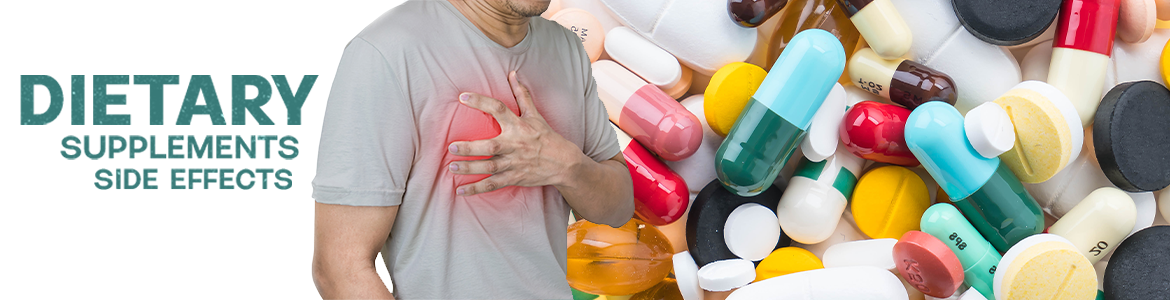
While the potential health effects vary greatly from product to product, in general, dietary supplements increase the risk for the following types of injuries:
- Heart disease/heart attack
- Blood clots
- Stroke
- Kidney failure / renal disease
- Neurological injuries
- Liver damage
- Sudden death
- And more
Common Warning Signs of a Dangerous Dietary Supplement
Certain red flags may indicate that a dietary supplement poses serious health risks. Products that promise rapid weight loss, muscle growth, or “miracle” cures often rely on exaggerated or unsupported claims.
Supplements sold without clear ingredient lists or manufactured outside regulated facilities may also increase the risk of contamination or mislabeling.
Reports of side effects such as liver damage, heart complications, severe allergic reactions, or hospitalization are strong indicators that a supplement may be unsafe. In some cases, harmful products are only identified after multiple consumers experience similar injuries, making early reporting and documentation especially important.
Types of Diet Supplements
Dietary supplements can pose serious health risks, especially when they contain harmful ingredients or are marketed without proper safety testing.
Below are key supplement categories, associated risks, notable settlements, and linked injuries.
1. Pre-Workout Supplements
Pre-workout supplements are designed to boost energy and endurance but often contain stimulants that can elevate heart rate and blood pressure, leading to severe cardiovascular problems.
- Products and Risks:
- C4 Original: High levels of caffeine and stimulants.
- Jack3d: Previously contained DMAA, a banned substance linked to health issues.
- N.O. Xplode: Known for stimulant-induced cardiovascular risks.
- Injuries Reported:
- Heart attacks
- Strokes
- Severe hypertension
- Legal Action: In 2020, a lawsuit against a leading pre-workout brand resulted in a $1.5 million settlement for heart-related injuries.
2. Weight Loss Products
Weight loss supplements and diet pills are commonly linked to serious side effects due to the presence of stimulants like ephedra and other harmful compounds.
- Products of Concern:
- Hydroxycut: Associated with liver damage and heart problems.
- Fen-Phen: Linked to severe heart and lung complications, resulting in a $13 million settlement.
- Alli (Orlistat): Causes gastrointestinal issues and liver damage.
- Common Injuries:
- Heart attacks
- Liver damage
- Severe gastrointestinal problems
- Settlements: Hydroxycut lawsuits led to a $5 million settlement compensating affected consumers.
3. Testosterone Boosters
Testosterone boosters claim to enhance hormone levels but are tied to severe heart and liver injuries.
- Notable Products:
- Testosterone Booster by GNC: Increased heart attack risk.
- AndroGel: A prescription product linked to serious side effects.
- TestoFuel: Marketed as natural but associated with adverse effects.
- Health Risks:
- Heart attacks
- Liver damage
- Hormonal imbalances
- Lawsuit Outcomes: A class-action lawsuit against multiple testosterone booster manufacturers resulted in a $100 million settlement.
4. Performance Enhancers
Performance enhancers aim to improve athletic output but often come with significant health risks.
- Products and Concerns:
- Creatine Monohydrate: High doses linked to kidney damage.
- Nitric Oxide Boosters (e.g., NO2): Associated with cardiovascular complications.
- Anabolic Steroids: Linked to liver damage and hormonal disruptions.
- Reported Injuries:
- Kidney damage
- Liver failure
- Hormonal imbalances
- Settlements: A lawsuit involving anabolic steroids resulted in a $2 million settlement for affected users.
The dietary supplement industry continues to grow, but it is not without significant risks to consumers. Many products have caused severe injuries, leading to millions in legal settlements.
Before using any supplement, consult a healthcare provider and stay informed about potential dangers. Legal recourse may be available for those harmed by unsafe products.
Workout Supplements
Workout supplements -- sometimes referred to as “pre-workouts” -- are multi-ingredient dietary formulas designed to boost energy and athletic performance.
Most of these products are powdered substances that you mix in water and drink before exercise and include a wide variety of ingredients, including amino acids, B vitamins, caffeine, creatine, and artificial sweeteners.
Unfortunately, people who take these and other similar pre-workout supplements on a regular basis may encounter serious physical drawbacks.
It is important to understand that pre-workout supplements are not for everyone and, even worse, can have severe health effects if not used properly.
Some of the most popular pre-workout supplements include:
- OxyElite Pro
- Jack3D
- BPI Sports 1.M.R Vortex
- MuscleTech Vapor X5 Neuro
- BSN N.O-Xplode
- GAT Sport Nitraflex
- Jacked Factory Nitrosurge
- Cellucor C4 Extreme Energy
- Kaged Muscle PRE-Kaged
- ENGN Pre-Workout by Evlution Nutrition
- Craze
- Grenade Thermo Detonator
- Turbo Shred
- Alpha Amino Xtreme
- LGD MAX
Pre-Workout Supplements Side Effects
| Side Effect | Severity Level | Frequency of Occurrence | Typical Supplements | Related Settlement Amounts |
|---|---|---|---|---|
| Testicle Shrinkage | Moderate | Rare | Testosterone boosters (e.g., AndroGel) | $100 million (various claims) |
| Infertility in Males | Severe | Rare | Testosterone boosters | $100 million (various claims) |
| Breast Enlargement | Moderate | Rare | Testosterone boosters | $100 million (various claims) |
| Masculinization of Women | Severe | Moderate | Testosterone boosters | $100 million (various claims) |
| Short Stature in Children | Moderate | Rare | Growth hormone supplements | $5 million (specific cases) |
| Acute Liver Injury | Severe | Moderate | Weight loss products (e.g., Hydroxycut) | $5 million (Hydroxycut case) |
| Kidney Failure | Severe | Rare | Creatine supplements | $2 million (anabolic steroids) |
| Heart Attack | Severe | Moderate | Pre-workout supplements (e.g., C4, Jack3d) | $1.5 million (various claims) |
| Stroke | Severe | Rare | Pre-workout supplements | $1.5 million (various claims) |
| Adverse Effects on Blood Lipid Levels | Moderate | Common | Weight loss products, testosterone boosters | $100 million (various claims) |
| Blood Clots | Severe | Rare | Testosterone boosters | $100 million (various claims) |
| Pulmonary Embolism | Severe | Rare | Testosterone boosters | $100 million (various claims) |
| Deep Vein Thrombosis | Severe | Rare | Testosterone boosters | $100 million (various claims) |
| Death | Severe | Very Rare | Various supplements | Varies by case |
If you or someone you know has experienced adverse effects from dietary supplements, it is crucial to seek legal advice regarding potential compensation.
What’s the Problem with DMAA?
Dimethylamylamine (DMAA) is a powerful stimulant that was contained in many popular pre-workout supplements, including OxyElite Pro and Jack3d, which has similar effects on the body as amphetamines.
DMAA was originally marketed as a “natural” stimulant with many benefits, including as a bodybuilding aid, athletic performance enhancer, and weight-loss drug. However, although DMAA was once approved as a nasal decongestant drug, no medical use for the substance is recognized today.
Additionally, the FDA has found that no reliable studies indicate the substance exists naturally in plants. DMAA was finally banned in the U.S. in 2012 after being linked to multiple deaths.
DMAA Side Effects
- Hyperthermia
- Irregular heartbeat
- Seizures
- Heart attack
- Stroke
- Liver damage/liver failure
- Kidney damage/kidney failure
- Psychiatric side effects
- Elevated blood pressure
- Sudden cardiac death
What are SARMs?
Often touted as “legal steroids,” selective androgen receptor modulators, or SARMs, are unapproved and potentially adulterated dietary supplements that have been linked to serious side effects including liver damage, blood clots, heart attacks, and stroke.
In July 2017, the U.S. Anti-Doping Agency (USADA) [2] issued a supplement warning on Ostarina, a trademarked SARM that has not been approved for use in the U.S., after authorities noted a significant increase in positive doping test results for the supplement.
SARMs vs. Steroids
SARMs are similar to steroids in that both work by binding to androgen receptors, which trigger changes to the user’s DNA, increasing the muscles’ ability to grow.
However, steroids affect other parts of the body, increasing the risk for serious side effects, including prostate cancer, hair loss, and acne.
SARMs, on the other hand, are said to be "tissue-selective" in that they target a person’s muscles without setting off the same dangerous chain of reactions. They're also taken in pill form rather than injected.
BMPEA
Beta-methylphenylethylamine, or BMPEA, is a powerful stimulant found in many widely-used pre-workout supplements that have been linked to cases of hemorrhagic stroke and other serious side effects.
BMPEA belongs to the phenethylamine family of chemicals, which also includes amphetamines and hallucinogens like mescaline.
Although it is currently unknown specifically how phenethylamines react in the human body, they have been found to raise blood pressure and heart rates in laboratory animals. BMPEA is classified as a doping agent by WADA because it is chemically similar to amphetamine.
Diet Pills
Diet pills include prescription and over-the-counter supplements that are intended to help the user control their weight. These products work by interfering with body processes that affect weight by suppressing appetite, increasing metabolism, or preventing fat absorption.
Considering the epidemic of obesity and obsession with weight loss in the U.S., it’s no surprise that diet pills are widely available in multiple forms. Whether over the counter or prescription, each supplement carries its own significant potential health risks. Some of the most commonly abused diet pills include:
- Didrex (generic: benzphetamine) - Amphetamine-like anorectic drug whose main function is to reduce appetite in obese individuals.
- Tenuate / Tepanil (generic: diethylpropion) - Prescribed for short-term use to suppress appetite.
- Mazanor / Sanorex (generic: mazindol) - Approved for use only to treat Duchenne muscular dystrophy; typically abused for its ability to suppress appetite.
- Adipex / Lonamin (generic: phentermine) - Used short-term to reduce weight in overweight individuals. Works by curbing appetite.
Diet Pill Abuse
All diet pills contain a significant potential for dependence and addiction. The supplements cause increased energy and feelings of euphoria, increasing the risk for addiction.
Other factors that may affect the development of a diet pill addiction include biological factors, environmental factors, home and family, peers and school, early use, and how the drug is taken.
Weight Loss Enhancers Lawsuits We've Taken:
- ACE Diet Pills Lawsuit
- Bella Vi Weight Loss Supplement Lawsuit
- Green Tea Lawsuit
- Belviq Weight Loss Drug Lawsuit
Diet Pills Side Effects
- Insomnia
- Dizziness
- Hallucinations
- Chest pain
- Rash/itching
- Swelling of legs and ankles
- Vomiting
- Yellowing of skin or eyes
- Dark urine
- Light-colored stools
Testosterone Boosters
Testosterone boosters are a class of herbal supplements and other compounds designed to increase sex drive or improve sexual function, muscle mass, sperm count, and body composition. The drugs work by replacing the testosterone that the body is not producing.
Some of the most popular testosterone boosters include:
- AndroGel
- Androderm
- Axiron
- Bio-T-Gel
- Delatestryl
- Depo-Testosterone
- Fortesta
- Striant
- Testim
- Testopel
More than 25,000 lawsuits have been filed against the manufacturers of these products, alleging that the companies put healthy men in danger by marketing the hormones to treat sexual dysfunction, age-related fatigue, and other symptoms that go beyond the use approved by the FDA.
Because of the large number of cases, the U.S. Judicial Panel on Multidistrict Litigation (JPML) created a testosterone multidistrict litigation (MDL) [3] in June 2014. As of June 2020, there were still nearly 3,500 product liability cases pending in the federal court system.
Our law firm has concluded our involvement in these lawsuits and was able to obtain settlements for our clients. Please note that we are no longer accepting cases on the testosterone supplements listed above. However, if you have been harmed by a testosterone-boosting supplement, you may have a case.
Testosterone Side Effects
- Heart attack
- Stroke
- Blood clots
- Pulmonary embolism (PE)
- Deep vein thrombosis (DVT)
- Prostate cancer
- Death
GNC Supplements
For decades, GNC has been one of the largest retailers of unregulated dietary supplements in the United States.
A recent class-action lawsuit filed in California alleges that GNC’s sale of certain dietary supplements is illegal in that the products fail to contain a disclaimer stating the FDA has not approved them.
Specifically, the lawsuit contends that GNC misled, deceived, and profited off consumers by selling supplements with labels that lack a prominently displayed disclaimer that reads, “These statements have not been evaluated by the Food and Drug Administration. This product is not intended to diagnose, treat, cure, or prevent any disease.”
GNC supplements named in the class action include:
- GNC Men’s Prostate Formula Dietary Supplement (“Prostate Health”)
- GNC Diabetic Support Dietary Supplement (“Diabetic Support”)
- GNC Preventive Nutrition Healthy Blood Pressure Formula Supplement
- GNC Women’s Ultra Mega Active Supplement
- GNC Mega Men Healthy Testosterone (“Mega Men Performance”)
The lawsuit is RICHA ARORA, RANDY CLINTON, and WALTER JOHNSTON v. GNC HOLDINGS, INC. Case No. 3:19-cv-02414. U.S. District Court, Northern District of California.
Dangerous Ingredients Found in Dietary Supplements: CBS News Video / Consumer Reports
FDA Regulation of Dietary Supplements
Understanding the regulatory landscape surrounding dietary supplements is crucial for both consumers and manufacturers. The following section provides key information regarding FDA regulations, recent enforcement actions, state-specific regulations, and documentation requirements.
FDA Regulations
- Dietary Supplement Health and Education Act (DSHEA): Enacted in 1994, this act classifies dietary supplements as foods rather than drugs[4]. Manufacturers are responsible for the safety and health claims of their products but do not require FDA approval before marketing.
- Labeling Requirements: According to DSHEA, dietary supplement labels must include:
-
- A descriptive name indicating it is a “supplement”
- The name and address of the manufacturer, packer, or distributor
- A complete list of ingredients
- The net contents of the product
- New Dietary Ingredient Notification (NDIN): Manufacturers must submit a premarket safety notification to the FDA for any new dietary ingredient that has not been present in the food supply.
Recent Enforcement Actions
- GNC Settlement: In December 2016, GNC agreed to a settlement of $2.25 million for selling dietary supplements containing harmful ingredients without proper disclosures.
- Hydroxycut Case: The company faced a $5 million settlement due to liver damage claims associated with its weight loss products.
- Testosterone Booster Claims: A class-action lawsuit against several testosterone boosters resulted in a settlement of approximately $100 million due to health claims.
State-Specific Regulations
- Various states have enacted their own regulations regarding dietary supplements, often requiring additional labeling or safety standards beyond federal requirements. For example:
-
- California Proposition 65: Requires warnings for products containing chemicals known to cause cancer or reproductive harm.
- New York State Regulations: Mandates stricter labeling requirements for dietary supplements sold within the state.
Documentation Requirements
- Manufacturers’ Responsibilities: Companies must maintain documentation proving the safety and efficacy of their dietary supplements. This includes:
- Evidence of ingredient safety
- Manufacturing practices compliance
- Records of adverse event reports
- Consumer Reporting: Consumers are encouraged to report adverse effects related to dietary supplements to the FDA through its MedWatch program.
Tips to Keep in Mind Before Taking Supplements
- Always consult your doctor about your options before choosing any supplement.
- Take supplements as directed according to the label and your healthcare provider’s instructions.
- Read the labeling, including ingredients, drug interactions, and percent daily value (% DV).
- Be wary of extreme claims, such as “completely safe” or “works better than (insert prescription drug).”
- Remember that the term “natural” doesn’t necessarily equal “safe.”
- Keep supplements stored properly and away from children.
FAQs
What Evidence Is Required to Support a Claim in a Dietary Supplement Lawsuit?
Required evidence includes medical records showing harm, proof of supplement use, product labels, recall notices, and expert testimony linking the supplement to the health issues experienced.
How Do Regulatory Actions or Investigations Impact Dietary Supplement Lawsuits?
Regulatory actions or investigations can provide evidence of wrongdoing, impact the credibility of claims, and influence legal outcomes by highlighting safety issues or regulatory non-compliance.
What Steps Should Consumers Take if They Believe a Dietary Supplement Has Caused Them Harm?
Consumers should stop using the supplement, seek medical attention, document their symptoms, report the issue to the manufacturer and regulatory authorities, and consult a lawyer for potential legal action.
Do I Have a Dietary Supplement Side Effect Lawsuit?
The Dietary Supplement Litigation Group at our law firm is an experienced team of trial lawyers that focus on the representation of plaintiffs in dietary supplement lawsuits. We are handling individual litigation nationwide and currently accepting new injury and death cases in all 50 states.
Please remember, it is impossible to list all the types of dietary supplements that cause side effects or even list all the supplements our lawyers have filed lawsuits against. Regardless of the type of dietary supplement, you have taken; if you suffered side effects, we would like to speak with you.
If the side effects of dietary supplements have injured you or a loved one, you should contact our law firm immediately by using the form below or dialing (866) 588-0600. You may be entitled to a settlement by filing a dietary supplement lawsuit and we can help.